
Snow helps crops
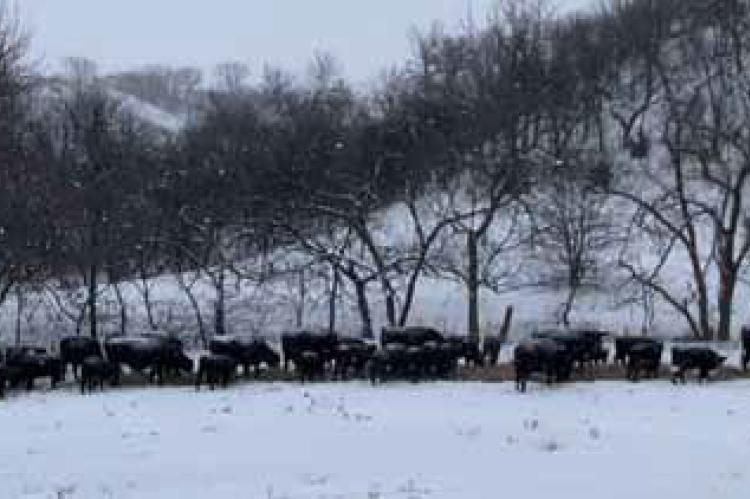
For three years, the Sunflower State has been dry — drought dry. The lack of moisture has taken a toll on agriculture across the board. From crops to cattle, living creatures need water, and that has been scarce.
“We definitely need some moisture to recover from the summer,” Kansas State Research and Extension Midway District Crops and Horticulture Agent Craig Dinkel said.
Without a lot of rainfall in 2023, Kansas farmers have been desperate to receive even the slightest amount of moisture. According to the National Weather Service, Ellsworth County got more than six inches of snow last week.
“It’s great,” Dinkel said, “but we definitely need more before April.”
Snowfall resumed Monday morning across the county.
Snowfall doesn’t provide the same amount of moisture as rain does. The snow to water equivalent is a formula that determines how much water is in a snowfall. It depends on a number of factors, including inches of snow and density. Even temperature at the time of the snowfall can play a role according to the U.S. Department of Agriculture. However, the recent winter weather is a good start for the wheat harvest.
The benefits of snow go beyond watering the crops, Dinkel said. The snow helps fertilizer to set into the ground. With bitter temperatures hitting the area after the snowfall, it also acts as an insulator for the wheat, protecting the crown roots from the freezing temperatures. Crown roots, or secondary roots, take up most of the water and nutrients from the soil and are very important for the plant to survive the winter. The crown also anchors the crop into the ground.
Snow at this point in the winter doesn’t usually have a downside for crops, however, once spring hits, wheat can sustain cold weather damage. The perfect scenario, according to the USDA, would be a nice blanket of snow in March to just sit on the crop and keep it dormant until spring warms things up and no cold fronts come in and cause damage.
While the crops are basking in the moisture, the upcoming cold weather could be detrimental to cattle production. Cattle are hearty animals and can handle the cold pretty well with their winter coats, however, one issue that could arise is in the birthing of calves. According to the Kansas Department of Health and Environment, the first hour of a calf ’s life is critical as this is when they are wet and more susceptible to the cold, infection and illness. In Kansas, it’s more likely cattle will fall prey to the heat.