
Showing its Age
Capacity shrinks in Kanopolis and other reservoirs
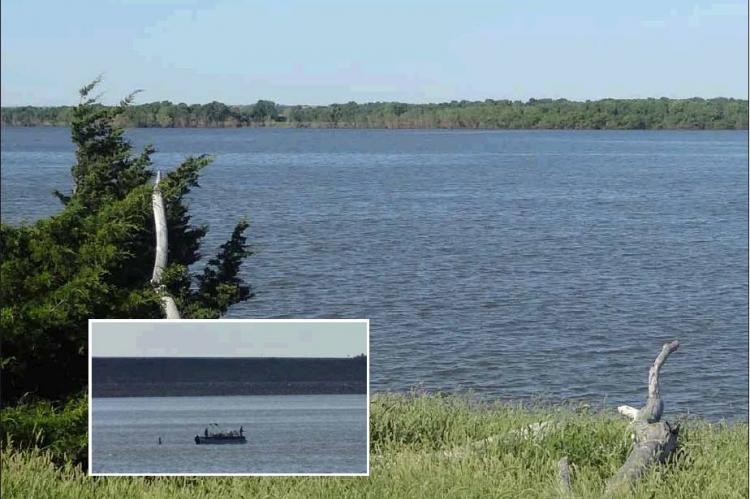
Year after year, Kanopolis Reservoir continues to fill with sediment — a gooey mixture of dirt and water forming a gloppy base at the bottom of the lake.
And while it may not seem like a big deal, state water experts have spent more than a decade examining the problem, which is slowly reducing storage capacity and affecting water quality in Kansas lakes and reservoirs.
But the solutions aren’t easy or cheap as state and federal officials continue working together to tackle the issue head-on.
The oldest in the state
In the early 1900s, the Mississippi Valley region experienced multiple devastating floods. Those terrifying events highlighted the deficiencies in the nation’s levee system, forcing the federal government to pass the first Flood Control Act in 1917.
Because the bill only applied to the Mississippi and Sacramento rivers, Kansas and the rest of the country continued relying on levees for flood control.
It wasn’t long before the federal government passed another version of the Food Control Act in 1936. Congress not just saw the legislation as an opportunity to improve flood protection, but a chance to provide work for many unemployed Americans still struggling during the Great Depression.
The first reservoir built in Kansas, Kanopolis Lake, was authorized a few years later.
The U.S. Army Corps of Engineers broke ground in June 1940, but soon, World War II suspended the project for a little more than three years. Construction eventually resumed, and the project was completed in 1948.
The $12.3 million reservoir was originally designed for flood control, but eventually provided the area with a public water supply, storage and recreational opportunities.
Today, Kanopolis is one of 24 federally operated reservoirs in Kansas, attracting an estimated half-million visitors each year.
With a century-long lifespan, the 70-year-old reservoir has three decades left by design standards.
Across the state, the average age of these large reservoirs is 54 years old — most of which have a life expectancy of 50-100 years.
One in a system of lakes in the Smoky Hill and Kansas River basins, Kanopolis operates in conjunction with Cedar Bluff Reservoir, to regulate flows in the Smoky Hill River Basin. A portion of lake storage also provides water to the Post Rock Rural Water District.
Currently, the state has approximately 200,000 constructed impoundments of all sizes — from the smallest farm pond to the largest reservoir.
Of the 24 federally operated ones, 21 provide drinking water to 60 percent of Kansans.
And all of these are filling with sediment.
To get a better idea of how much infill had taken place, water experts with the Kansas Biological Survey initiated a survey program measuring reservoir storage capacity and sediment accumulation. In October 2007, KBS officials surveyed Kanopolis Reservoir.
Shrinking capacity
After comparing the newly collected data to original 1939 topographic maps, officials learned the reservoir lost nearly 34 percent of its capacity. By 2016, those numbers were closer to 39 percent.
Based on current rates, KBS officials believe 50 percent of Kanopolis Reservoir will be infilled with sediment by 2036. Core samples taken in 2008 and again in 2009 showed sediment measurements ranged from nearly 13.5-inches thick in the shallow southwestern part of the reservoir to a little more than 8 feet thick in the far southeastern portions and upper end of the reservoir near its inflow. Of those samples, most were composed of clay.
Tuttle Creek, near Manhattan, has lost 45 percent of its capacity — the most so far.
"This is one of the things we’ve always looked at, and it’s always been on the radar since the early 2000s."
Matt Unruh
Kansas Water Office
“This is one of the things we’ve always looked at, and it’s always been on the radar since the early 2000s,” said Matt Unruh, water resource planning chief with the Kansas Water Office.
“And with water quality monitoring, it’s given us the opportunity to do sediment examinations, and assessments from the watershed, allowing us to focus and engage local stakeholder groups.”
But it was John Redmond Reservoir in Coffey County that forced state officials to do something.
“This was one of the reservoir watersheds with a great deal of erosion, and we had to take immediate action,” Unruh said.
The reservoir was already projected to lose 50 percent of its capacity by 2018, and back-to-back droughts in 2011 and 2012 only increased water demands, making the situation worse.
Releases from John Redmond into the Neosho River not only provide drinking water to communities downstream, but are used for cooling at the Wolf Creek nuclear power plant near Burlington.
First of its kind
Kansas lawmakers passed legislation during the 2014 session, issuing $20 million in bonds to dredge and dispose of the sediment build-up and complete streambank stabilization above the reservoir to reduce incoming sediment.
Unruh, who managed the project, collaborated with the USACE to develop a plan of attack before dredging began in 2017. After six months, 3 million cubic yards of sediment was pumped out of the lake and transferred to five confined disposal facilities on private and federal properties. The project was the first of its kind in the nation.
“Dredging is pretty costly,” he said. “But it would cost hundreds of millions of dollars to construct a new reservoir, so this was the most economical way. Either way, we’ve been able to extend the life of the reservoir and protect the streambank using best management practices.”
A majority of the reservoirs in Kansas came online in the 1950s and 1960s — the result of the 1951 floods that inundated parts of eastern Kansas, causing nearly $800 million in damages.
One of those was John Redmond, which became operational in 1963. Unruh said officials are now focusing on a similar dredging project at Tuttle Creek, which went live in 1962.
Currently, officials are developing a feasibility study. Unlike the process used at John Redmond, this project would use water-injection dredging technology.
A bigger problem
Milford Lake, the state’s largest reservoir, has also lost capacity — but numbers there are minimal at just 12 percent.
The bigger problem lies on the surface.
Each summer, Milford Lake struggles with stubborn blue-green algae, which can make humans and animals seriously ill.
Known as blue-green algae, it’s actually a form of bacteria called cyanobacteria, which are normally found in lakes. The bacteria thrives in warm, nutrient-rich water, and can grow quickly, forming blooms.
When soil washes off farmland and into nearby streams, it often contains high levels of chemical fertilizer like nitrogen. Once that sediment settles to the bottom of a lake, nitrogen is released into water, stimulating bacterial growth.
The blooms, in turn, can produce foul-smelling toxins, turning water into a turbid mixture often resembling pea soup. These toxins not only affect water quality, but can kill fish, animals and even humans as well as preventing swimming, boating and fishing in these waters.
From 2010 to 2017, more than 50 of the state’s reservoirs had what are known as harmful algal blooms — including 24 reservoirs in 2017, according to Kansas Biological Survey officials.
Since 2010, 10 of the state’s 24 federal reservoirs have had harmful algal blooms, while two — Milford and Marion — experienced blooms in seven out of eight years.
From 2010-17, Milford experienced a bloom more than 40 percent of the time.
Kansas Biological Survey researchers have studied reservoir conditions around the state since the early 2000s, conducting lake-bottom contour mapping of more than 75 Kansas lakes, including most of the state’s big federal reservoirs.
Researchers also extracted sediment cores from lake bottoms to gain information about harmful algal blooms. Each year, sediment and billions of dead algal cells settle to the bottom of Kansas reservoirs, resting on top of deposits from previous years. By collecting sediment cores, researchers are able to analyze a layered timeline of sedimentation and harmful algal bloom occurrences.
“Once the sediment and algal blooms sink to the bottom, their pigments don’t degrade,” said Ted Harris, an assistant research professor with Kansas Biological Survey who specializes in harmful algal blooms as part of the center’s reservoir research program.
Harris also takes core samples to look for biological markers preserved in the sediment.
“So when we take sediment core samples, we’re able to slice those to get some sort of idea when this occurred in the past,” he said.“In most cases, we don’t see a lot of changes. But by being able to date sediment, we can see when the rate of sediment infill increased, and when it slowed down, and where it came from.”
Preparing for the future
Former Gov. Jeff Colyer more than a year ago announced the Kansas Reservoir Protection Initiative aimed at reducing sediment rates and soil erosion above four federal reservoirs, including Kanopolis, Fall River, John Redmond and Tuttle Creek.
State water officials hoped to attract the attention of landowners with property located within the sub-watersheds feeding into these reservoirs. The Big Creek Middle Smoky Hill River Kanopolis Lake Watershed was among them .
A drainage waterway for the Smoky Hill River and its tributaries, the watershed begins at the dam below Cedar Bluff Reservoir in Trego County and continues eastward to the dam below Kanopolis Lake.
To sweeten the deal, $900,000 in assistance was up for grabs to property owners implementing best management practices. But of the estimated 100 applications submitted, the majority were located in the Tuttle Creek watershed. Of those who applied, more than half were from Marshall County.
“ The program was not as successful for us as in other parts of the state,” Pamela Hays, Ellsworth County Conservation district manager, said.“We only had one contract approved for converting a field from conventional tillage to no-till.”
Unruh said the initiative provided an opportunity to be proactive and take a team approach to accomplishing long-term sedimentation goals.
“In Year One, 100 percent of the funding went to financial assistance for watershed conservation,” he said.“Which is exciting ... so in fiscal years 2020 and 2021, the water authority has requested $1.8 million for both years, which would give us an opportunity to enhance and maybe expand to other watersheds as well.”
Early estimates show the accepted initiative applications would save 33,000 tons of soil from erosion, Unruh said.
The initiative was funded by the 2018 Kansas Legislature as part of a partial restoration of the State Water Plan Fund to address priority Kansas Water Vision projects recommended by the Kansas Water Authority.
State water experts and members of several regional advisory committees, including the Smoky-Hill Saline committee, collaborated to prioritize projects yielding the greatest sediment reduction per dollar invested.
More study planned
In late 2018, the U.S. Army Corps of Engineers announced authorization of $1.5 million in federal funds for the Kansas River Reservoirs Flood and Sediment Study. The study is expected to be completed over a five-year period, with $3 million in total funding and a required 25 percent non-federal/sponsor cost share. The study’s purpose is to investigate water resource problems and opportunities in the Kansas River Basin, and to recommend comprehensive long-term solutions, officials said.
Kansas Water Office officials recently met with corps representatives to discuss the general approach to the study. The next steps include the execution of a feasibility costsharing agreement and the development of a project management plan.
“A reservoir represents a pool of water used for drinking water, irrigation, recreation and sediment decreases its capacity to hold water,” Harris said. “So any programs like the Kansas Reservoir Protection Initiative that keeps sediment on the land also mean longer life.
“Dredging is very difficult and labor intensive. As a state, we don’t have the money to do that at every reservoir. It’s like driving a car, you have to change the oil to keep the car running. It’s always nice to keep nutrients on the land. We only get so much topsoil before it’s lost, and nutrients go downstream.”