
Weather patterns threaten more storms in 2019
NWS meteorologist appeals to public for help with watches
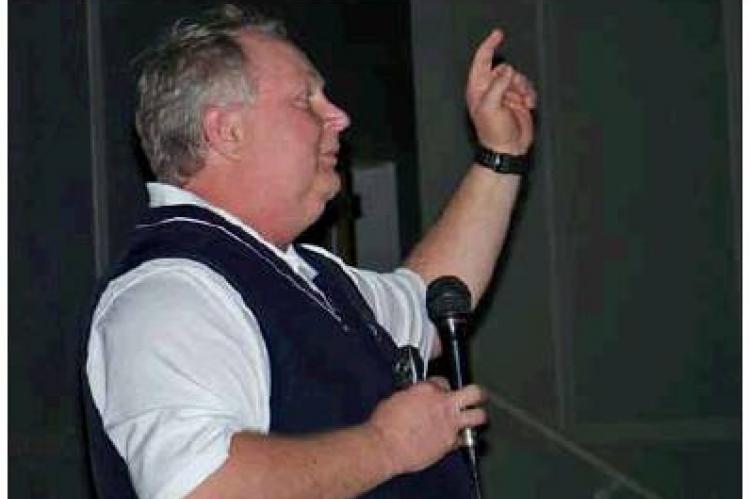
Eyes on the Ground
Chance Hayes, warning coordination meteorologist with the National Weather Service in Wichita, is predicting an above average tornado season this year in Kansas.
“My gut feeling leads me in the direction that it might be a little bit busier season for us,” he said Wednesday, March 27, at Ellsworth Junior-Senior High School’s Performing Arts Center during ‘Storm Fury on the Plains,’ the annual storm spotter training program.
Hayes said there is more moisture in Kansas this year compared to previous years because of the wet winter.
“If we get the storm systems to move through, there will be more moisture for them to tap into,” he said. “If those systems continue to come through like they have in years past, it could be a little bit stronger season for us.”
According to the NWS website, Kansas averaged 62 tornados annually from 1950-2018. Hayes said the prime season for tornadoes is mid-April through mid-June, with May being the one month that sees the most significant number of tornadoes.
Communication is key
In addition to the expected schooling on super cells, wall clouds, squall lines, hook echoes inbound and outbound flows and just plain old scary looking clouds, Hays emphasized the need for the weather service to receive accurate ground level information from storm spotters and the general public during the upcoming tornado season.
“We want to be a part of the community,” he said.“The National Weather Service relies very heavily on the citizens of Kansas to help us out in the warning decision process.”
Even though the weather service has a ton of information coming to them, including radar, satellite and environmental data, Hayes said many times nothing can substitute what the eyes see in the area where severe storms occur.
“We come out and train these folks on what to look for in the clouds,” he said. “Hopefully, they will take that information and share it with us.”
Hayes said the beam broadcast by weather service radars cannot see what is happening at ground level — that is why reports from storm spotters and the public are so important.
Hayes said the National Weather Service office in Wichita serves 26 counties in Kansas, ranging from Russell and Ellsworth, to Reno and Sedgwick.
“We feel it is extremely important to get out there, meet the folks, be a part of that community and build that trust,” Hayes said.
Meteorologists from other NWS offices in Kansas provide similar storm spotter programs annually to the counties they serve.
Valuable information
Keith Haberer, emergency management director for Ellsworth and Russell counties, said information provided during events such as this is valuable.
“It (the storm spotter meeting) not only talks about how to spot storms and call them in to the National Weather Service, it’s about public safety — what you’re supposed to be doing when you are out on the highway and what you need to be doing when you’re at home.”
A clearer picture
Hayes said if weather service meteorologists don’t know what is happening in the public’s backyard, it can’t serve residents as well and keep them as safe as they could with the information..
“We want to make sure they are sharing their knowledge as to what is happening in their location,” he said.“We want to paint that picture completely. If they (the public) is here to learn about storms, I consider them trained because they know more than their neighbor.”
Hayes said people can call the NWS Reporting Hotline in Wichita, (800) 367-5736, with information on severe weather. They can also tweet information using Twitter or share it with the weather service on Facebook.
In addition to the time, location of the storm, direction it is traveling and a description of the storm with as many details as possible, Hayes said it is useful to meteorologists to have the storm spotters and the public send pictures and videos of the severe storms to them as well.
Think safety
Hayes said when it comes to severe storms, safety is job one.
“We want to ensure that when folks are on the road, they can look at the clouds and understand what the clouds mean,” he said. “And also the ability to look at radar on their mobile device and understand where areas are bad and where they need to avoid while they are traveling.”
Taking heed
Hayes said storm spotting started in Sumner County in the late 1950s.
“We need to get the community involved,” he said. “When we issue our warnings and it states that it is Doppler radar indicated for the basis of our warnings, I don’t know that people actually heed that information or act as quickly on that information as opposed to when our source is a trained spotter, a storm chaser or law enforcement or fire personnel. People resonate with that because someone has actually seen it (the tornado or severe storm) so it’s more believable.”
The Eureka storm
As part of his presentation, Hayes talked in depth about the EF-3 tornado that hit Eureka last June.
The tornado struck the community without warning.
He showed ground level pictures and video taken of the storm by the public which could have been of great value to weather service meteorologists if they would have had that information in a timely fashion to help with their warning decisionmaking process.
Important steps to take
Anytime there is a severe thunderstorm warning issued for an area, Hayes said residents need to move away from the exterior walls of the building they are in.
“Because if we get wind speeds 75 miles-per-hour or greater, which is hurricane force, we can get flying debris — trees can fall over on structures. We want them (residents) to be safe in the center part of their home.”
Hayes urged the public not to ignore either severe thunderstorm warnings or tornado warnings.
“For tornado warnings they need to go to their shelter,” he said.
Hayes said the weather service is making their warnings for a smaller area — the area of higher risk to the public.
“We want them to act immediately,” he said.
As the public enters their tornado shelter, Hayes said they need to have some important items with them:
• They need to make sure they have some way to get updated weather information such as a weather radio or cell phone.
• They need to have on some sturdy shoes so they don’t puncture their feet in the debris caused by the tornado.
• They need to have a whistle so first responders can find them if they are trapped in debris.
• If possible, have something strong to protect your head from falling debris, such as a football helmet. Hayes also suggests getting underneath something sturdy so debris doesn’t hit you.
Other hazards
Hayes wrapped up his presentation by giving information on lightning and flooding.
“Use common sense,” he said. “Don’t take a risk. Pay attention to your surroundings. Turn around, don’t drown. “