
Always Young for Liberty
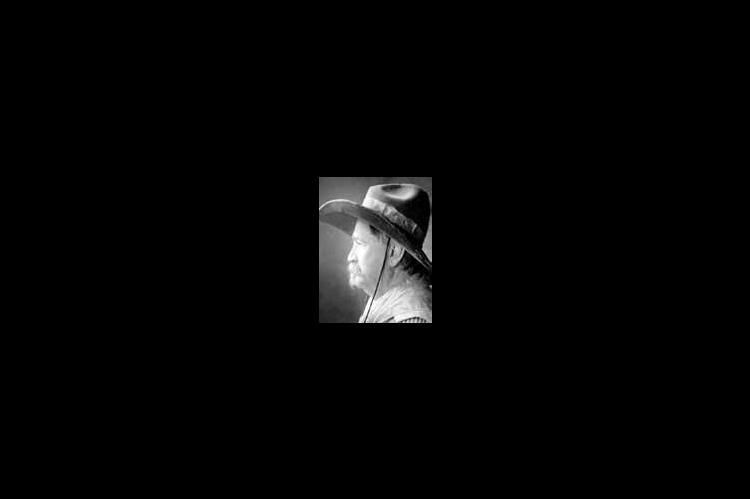
Richard Josiah Hinton was born in London, into relative poverty on Nov.
26, 1830. His early life was described as “one of hardship — a struggle for bread.”
However, according to his friend, colleague, and Kansas historian William Connelly, “discouraging circumstances proved his greatest blessing, for they developed in him those sturdy qualities for which the Briton is so world famous.”
Not content to remain on the lower rung of society, Hinton spent every spare moment “poring over his books,” to “secure an education.”
That hard-won education instilled in him a desire to recognize and raise the condition of those who struggled for their daily bread. He soon turned to America, the land of freedom and broader opportunities.
In America, Hinton championed the idea of liberty under a stable government for all citizens. It was plain to him that the sources of all power in government are in the people.”
After arriving in New York City in June of 1851, Hinton pursued the printer’s trade, studied medicine, and attained a degree in topographical engineering.
But it was writing that captured his passion.
Having mastered the art of shorthand, he became a reporter for several New York and Boston newspapers.
America in the 1850s was a tinderbox, uneasily expecting the spark of misfortune to flare at any moment. As we have written before, Hinton determined in 1856 “to cast his lot with the struggling patriots” in the Kansas Territory. He was with the first wagon train of emigrants to travel across Iowa and Nebraska to Kansas on the Lane Trail. Hinton led 30 Massachusetts men through Topeka to Lawrence, arriving Aug.
31, 1856.
Territorial Gov. Wilson Shannon had resigned.
Acting Gov. Daniel Woodson declared the territory was in a state of open insurrection and rebellion. Woodson called on the pro-slavery “territorial militia” to restore order. With Lawrence as his headquarters, Richard Hinson fervently wrote to eastern newspapers, reporting on the daily horrors of “bleeding Kansas.”
John W. Geary arrived on Sept. 9, 1856, having been charged with bringing peace to the territory as the newest Territorial Governor. Reversing Woodson’s call for the militia, Geary ordered all militias to disband.
At Franklin, a short distance southeast of Lawrence, pro-slavery officers commanding 2,700 men refused to listen to the governor’s proclamation. Meantime, Jim Lane, in compliance with the proclamation, moved his forces away from Lawrence. The town seemed to be at the mercy of its enemies.
Hinton reported that the small defensive force had no apparent leader until John Brown mounted a dry-goods box along Massachusetts Avenue.
He assured the 300 men, boys and women to remain calm, to wait until they were within 25 yards, and to shoot low.
Closing with a “Come out quick,” the defenders took their places on the outskirts of town. John Brown, revolver in hand, walked slowly along the line giving directions.
Scattered small skirmishes played out before Gov.
Geary, as the representative of the President of the United States, intervened and forced the southerners to retreat.
Ultimately the entire militia at Franklin was forced to disband.
Lawrence was saved for the time-being.
Hinton had witnessed a true hero for freedom that Sept. 15. He became a devoted John Brown disciple. Brown exemplified the heroic devotion to the principles of liberty and Christianity that Hinton had sought in coming to America. Hinton had found “one who cast everything away but that which he could use for the benefit of humanity.”
As one of John Brown’s closest confidants, Hinton was very aware of his plan to take the United States Arsenal at Harper’s Ferry. Indeed, he made a dangerous failed effort to reach Brown. Many who died with Brown were Hinton’s friends.
At the outbreak of the Civil War, Hinton helped recruit the first regiment of black troops for the war, the 1st Kansas Colored Volunteers. By the close of the war, he had been breveted to the rank of Colonel.
He was appointed commissioner of emigration in Europe in 1867, later Inspector of U. S. Consulates in Europe. In 1873, President Grant employed him as special agent to Vienna. In 1883, he served as special agent on the frontier and in Mexico, where he was recognized as an irrigation specialist for the Department of Agriculture. In that time, he wrote many reports and books on various subjects, the most important of which was “John Brown and His Men.”
Hinton always fought for the rights of the downtrodden. He became associated with the labor movement.
“Wherever words were to be said for liberty and prosperity for all, there up spoke Richard Hinton.” He and Isabell, his wife, counted among their friends Susan B. Anthony, Elizabeth Cady Stanton, Lucretia Mott and Clara Barton.
Keeping with his interest in defending the rights of the less fortunate, Hinton took an active part in the Progressive Labor Party and the Social Democracy Party. He died suddenly Dec. 20, 1901, while in London gathering information for a second book on his hero entitled “The John Brown Papers.” To the end he remained true to his ideals. Richard Josiah Hinton “was always young for liberty,” and always for the noble sons of Kansas on The Way West.
“The Cowboy,” Jim Gray can be reached at 220 21st Road, Geneseo, Kan. Phone: (785) 531-2058 or kansascowboy@kans.com.