
An amazing trek
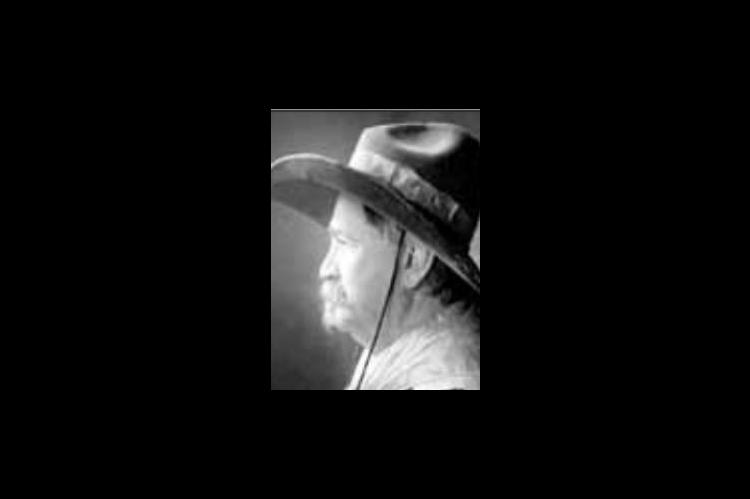
In the late summer of 1825, James Pattie traveled through a virtual paradise with a large pack train consisting of 120 men.
All about him every kind of creature lived in a natural precarious balance. Mr. Pattie published an extraordinary account of his experiences in 1833, “The Personal Narrative of James O. Pattie, Of Kentucky.”
The trading company that he and his father joined began their journey using the Pawnee Trail, an ancient trading route from Nebraska’s Platte River to the Saline River in central Kansas.
The evening of Oct. 14, 1825, the caravan of over 300 pack horses and mules reached a stream that Pattie called a fork of the “Smoke River.” The location was the Saline River at the present site of Wilson Lake.
On the 15th they left the Pawnee trail turning west along the river. One of their party had been mauled by a big grizzly bear several days before and not being able to travel, two men stayed behind to tend to him and give him a proper burial, as he was not expected to live. The men were assured that the caravan would wait for them when they reached the Arkansas River. As the massive pack
As the massive pack train trekked westward along the Saline, Pattie counted 220 grizzly bears in one day. Ducks and geese were killed, but there were few buffaloes owing, they believed, to the great number of grizzly’s in the area.
Pattie describe another fountain “boiling up from the plain and forming a basin of crystal-clear water five feet deep.” No historical record of this spring is known. It may have been on Salt Creek, north of Gorham or Walker.
The traders eventually began a southerly route toward the Arkansas River. The landmarks are pretty vague making it difficult to know the exact route on which “Great numbers” of elk and wild horses were seen on Sept. 18.
Along the way hunters killed buffalo, elk, geese, and just about anything to feed the large entourage of men. While hunting alone Pattie killed “two fat buffaloe cows.” Laying aside his shotpouch, gun, and pistols he approached a calf he had not killed. Instead of running away the calf turned and charged, butting him over and over until Pattie fell flat on his back. Every time he tried to get up the calf laid him down again! Luckily, Pattie had kept his knife, with which he dispatched the calf before it could butt him to death!
All during the day of Sept. 21 they saw great herds of buffalo running south as though being pursued, but nothing seemed to be following them.
Pattie wrote, “They appeared in the same confusion all night. On the 22nd we marched fast all day, the buffaloes still running before us.”
They reached the Arkansas River that evening as storm clouds threatened a coming storm. Tents were pitched and fires were kindled before the rain began to fall.
In the distance a band of Indians were seen approaching in the rain. As they drew near, they called out “Amigo, Amigo.” They were Comanches and their chief was invited into the tent of Sylvester Pattie, James Pattie’s father. The chief insisted that the traders should move to his camp, which, because of the rain, Sylvester Pattie refused to do. The chief then threatened to attack them and left in a huff as the rain continued to fall.
The next morning 600 to 800 mounted warriors appeared armed with lance and shield, with faces painted “as though they had come from the infernal regions.”
Conflict with the Comanches was averted by the arrival of a larger band of friendly Comanches that called themselves Iotan. To protect the trade caravan the Iotans moved their village, pitching their lodges all around the trader camp. The Chief of the Iotan Comanches placed his tipi in the center of traders, expressing his friendship for them.
They hunted and traded with the Iotans until the two men that had been left behind on the Saline River rejoined them on Nov. 4. They reported that their comrade, mauled by the grizzly, died five days after the caravan had left them. His body was put to rest on the banks of the Saline River.
The caravan immediately prepared to resume their march toward Santa Fe. They crossed the Arkansas River on Nov. 5 with the Iotans leading them south through rolling sand hills. Soon they were on level plains, “stretching off in all directions beyond the reach of the eye.” From a high mound Pattie looked down on, “innumerable droves of wild animals (that) seemed to forget their savage natures, and fed, or reposed in peace.”
They reached the Cimarron River on Nov. 14 as they continued southwest to New Mexico’s Sangre de Cristo mountains. Pattie and his companions reached Santa Fe on Dec. 19, 1825.
In three months’ time, James Pattie had crossed the vast open plains and witnessed incredible scenes. Nearly 200 years later his memoir provides a rare opportunity for us to take an amazing trek with him through a wondrous land on The Way West.
“The Cowboy,” Jim Gray is author of the book Desperate Seed: Ellsworth Kansas on the Violent Frontier, Ellsworth, KS. Contact Kansas Cowboy, 220 21st Road, Geneseo, Kan. Phone: (785) 531-2058 or kansascowboy@kans.com.