
Answering the Call
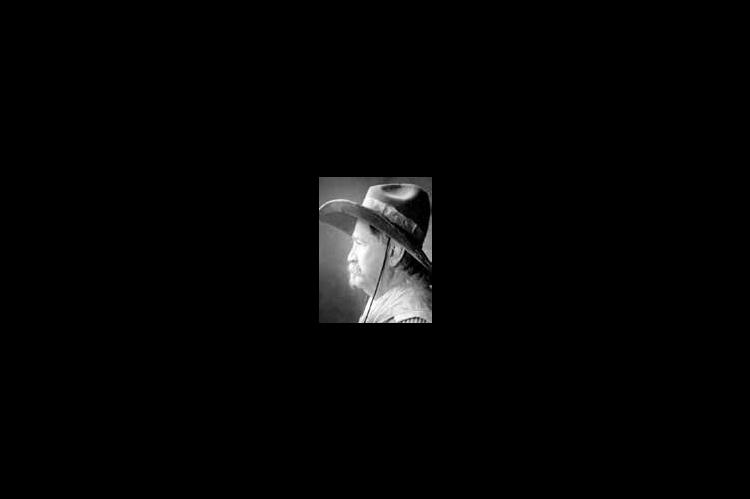
“The Troubles” over slavery in Kansas Territory brought hundreds of people to Kansas in 1856. Aspiring young newspaperman, Hovey Evert Lowman and his brothers, John G. Lowman and Lyman L. Lowman, went to Kansas “to seek fame and fortune in that new territory.”
Hovey Lowman was described as “young, brilliant, and forceful with a ready pen.”
Lowman’s early months in Kansas Territory are not well documented. At some time, he gained a position with George W. Martin on staff with the Herald of Freedom at Lawrence. When Martin fell ill in September, 1857, Lowman was recognized for his efforts in keeping the paper running. While employed with the Herald of Freedom, Lowman met printer Josiah Chapin Trask.
The Herald of Freedom suspended operations in 1859, giving Trask and Lowman an opportunity to produce a paper of their own. They purchased the material of the Herald of Freedom and moved into the same office to produce the Kansas State Journal, “A Family Republican Newspaper.”
In the early morning hours of Aug. 21, 1863, Quantrill’s bushwhacker army charged through the streets of Lawrence, waking sleeping citizens to a day of horror. Lowman, his wife and five children, awoke to the commotion.
Realizing the danger, they hurried to the cellar below. Beneath the main floor of the house, the family trembled in terror as they heard the raiders cursing and ransacking their home. Fortunately, the open kitchen door covered the cellar door concealing their hiding place. But the Lowman’s were not shielded from the cries of desperation from their friends and townsfolk.
Lowman’s partner, Josiah Trask, and his wife lived in the home of Dr. J. F. and Mrs. Griswold along with State Senator S. M. Thorpe and wife, and the grocer Harlow W. Baker and his wife. The Griswold house was among the very first of Lawrence homes to be attacked, being on the west edge of town.
Quantrill’s men called to Trask and his friends boarded up inside the house. They insisted that the town was to be burned, but all would be safe from harm if they surrendered peacefully. Trask told his friends that for the good of the town they should do as they were told. The four men stepped outside, and as they marched toward town the bushwhackers opened fire, cutting their prisoners down in cold blood. Trask and Griswold were dead before they hit the ground. Thorpe and Baker were wounded, lying as though dead upon the ground, but one of the raiders shot into their bodies. After the bushwhackers moved on, the women found Thorpe and Baker still alive. Thorpe suffered for several hours before dying. Baker lingered near death, but eventually recovered.
Hovey Lowman wasn’t wounded, not even a scratch, but the unseen wounds suffered that day would not heal. “We must trust in God it may never happen again. To guard against it, we must watch without ceasing. Eternal vigilance alone is our protection.”
Lowman chronicled the attack on Lawrence in succeeding issues of the State Journal. The compiled articles were published in Narrative of the Lawrence Massacre. Lowman couldn’t put the terror of that day behind him. Too, many friends were lost that day. He wrote his “final adieu” in the Aug. 18, 1864, edition of the paper, and left Kansas for Flint, Mich., where he joined his brother, John G. Lowman, in the lumber business. After several years the family moved to Waverly, N.Y., on property inherited by his wife.
In Kansas, Lowman had known the deepest heartbreak, but like a siren song, Kansas was calling. He returned in September of 1870 to take the helm as chief editor and stockholder of the Leavenworth Daily Times. Under his direction, the Times was enlarged to a 40-column paper with a greater amount of reading material than any paper in the State.
His family remained in New York as he periodically returned to the home in Waverly. On a visit in January, 1871, a bout of sickness confined him to his bed.
In March of 1871, Lowman was back in Kansas, visiting in Lawrence. In the March 31, 1871, issue of the Times, Mr. Lowman advised readers that his relations as editor “conclude with this issue.” Lowman took a new position as editor of the Lawrence Tribune. The move was unfortunate. The atmosphere at the poorly managed Tribune was chaotic and unstable. Lowman soldiered on until Sept. 22, 1872, when, worn and fatigued, he arrived at his home in Waverly in a dangerous condition.
It was said that “the assassination of his friends, and the sleepless nights and constant alarms that followed that murderous morning (in Lawrence), struck him a blow from which he never recovered.” With all the tender care of family and friends Lowman failed to rally as he had done before. In the end, “the best of medical attendance” was found wanting. Hovey Evert Lowman met his death the 27th day of September, 1872. He was 44.
Kansas had called his name in 1856 and again in 1870. Each took its toll. And though that toll could not be redeemed, his spirit lives on in the words that flowed from his ready pen while answering that call on The Way West.
“The Cowboy,” Jim Gray can be reached at 220 21st RD, Geneseo, KS. Phone (785) 531-2058 or kansascowboy@kans. com.