
Bleached Bones
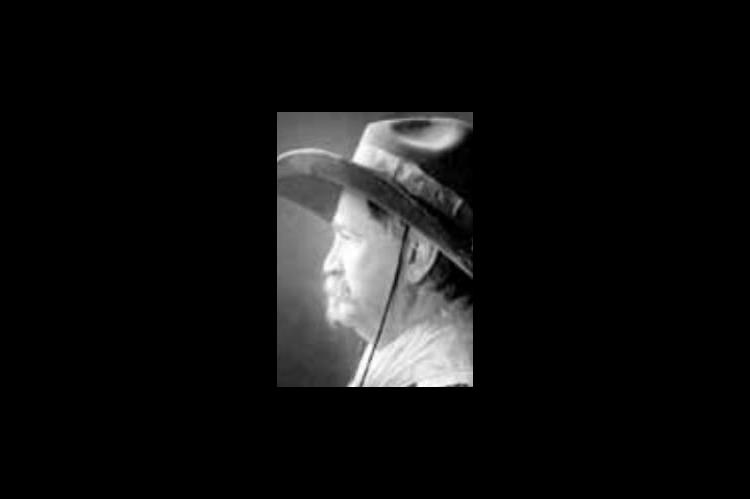
At 61 years of age, Nelson Buck was a reputable Illinois surveyor. In Nebraska he was about to realize his dream of “seeing the West.”
However, in late July, 1869, Buck was about to lead his surveying crew out of Fort Kearny despite being unable to gain the protection he had expected.
In a letter to the Surveyor General, Buck wrote that, “... several of my company, feel discouraged at hearing of Indians ... and want arms so that if we must fight Indians, all can take part in the matter.”
Military authorities were unbudging. There would be no support. Having waited as long as his funds and supplies could stand, Buck left the post.
The young men who hired out to Buck were between 17 and 20 years old. Surveying offered the chance to earn money during the summer months, often to finance college in the fall Five of them were from his home of Pontiac, Ill. Only two of the six additional men picked up at Plattsmouth, Neb., were over 20.
Near the Kansas-Nebraska border in the Republican River valley Buck’s party established their camp in early August. The camp was southwest of Fort Kearny only one-half mile from the Kansas border on Beaver Creek (near present-day Marion, Neb. or approximately 12 1/2 miles north of today’s Oberlin, Kan.).
Once the campsite was located Buck sent John Nettleton and H. B. McGregor back to Fort Kearny in hopes that the needed arms and military support would finally be available. It was the last that anyone from the outside world would see Nelson Buck and the rest of the survey party alive.
The timing of the survey was unfortunate. Dog Soldiers, the leading warrior society of the Cheyenne, Arapaho, and Sioux, swept through north-central Kansas in late May and early June, killing and plundering as they went.
Maj. Eugene Carr’s 5th Cavalry supported by Maj. Frank North’s Pawnee Scouts scoured north-central Kansas in search of the Dog Soldier village. The Dog Soldiers were tracked to northeast Colorado and completely routed at Summit Springs (near presentday Sterling, Colo.). Their leader, Tall Bull, was killed, but the Ogallala war leader, Pawnee Killer, survived.
Pawnee Killer fiercely defended his beloved Republican River valley of northwest Kansas and southwest Nebraska. The same valley that Nelson Buck was preparing to survey. Buck likely did not even begin his task when he was discovered by some of Pawnee Killer’s people.
A report was published in October that Buck’s surveying party was missing and feared dead. Their camp was discovered but mysteriously no sign of the surveyors could be found. The prairie seemed to have swallowed them up.
Speculation spawned differing stories; physical evidence remained lost until settlers, over the next decade, began to move into the area. Findings should have resolved the mystery. Nevertheless, confusion persisted for decades until Dr. Leo Lemonds of Hastings, Neb., published a review of the evidence in 2001. As Dr. Lemonds pieced the series of events together the mystery neatly unfolded.
Nettleton and McGregor failed to get help on their return to Fort Kearny. They made no attempt to rejoin Buck’s party. Buck and his crew were likely attacked before Nettleton and McGregor had reached Fort Kearny.
The 5th Cavalry learned from captured Indians that confrontation began on the open prairie when two of the surveyors shot at a small band from Pawnee Killer’s people. Three Indians were killed. One surveyor died in the fight. Pawnee Killer and his warriors tracked the survivor and killed five of the surveyors in a dramatic fight along the banks of Beaver Creek. Buck and his men fought from behind wagons under the cover of the brush growing along the creek.
Homesteaders later found two abandoned wagons in the creek. A lone skull was found somewhere in the area. Settlers of the prairie regularly found scattered animal bones, but near the original campsite human bones were believed to be found among animal bones.
The four surveyors that escaped with their lives turned two wagons east toward Fort Kearney, staying close to Beaver Creek. They were attacked a second time, approximately 50 miles to the east (south of present-day Hollinger, Neb.). Pawnee Killer claimed his people were not at the second fight.
The remnants of two burned wagons were found by settlers. The men escaped three or four miles down the Beaver to a place known today as Wild Cat Canyon. Settlers found two skeletons in the canyon, indicating either a running battle o a renewed fight at that location.
Buck and another man made their way from Wild Cat Canyon toward the confluence of Beaver Creek and Sappa Creek. In 1880, a saddle and a pistol, both with Buck’s name on them, were found with skeletal remains of the last of the Nelson Buck surveying party. Bleached bones and remnants of possessions were stark evidence of the mysterious disappearance of the Nelson Buck surveying party on The Way West.
“The Cowboy,” Jim Gray is author of the book Desperate Seed: Ellsworth Kansas on the Violent Frontier, Ellsworth, KS. Contact Kansas Cowboy, 220 21st Road, Geneseo, Kan. Phone: (785) 531-2058 or kansascowboy@kans.com.