
A bold, bad Border Man
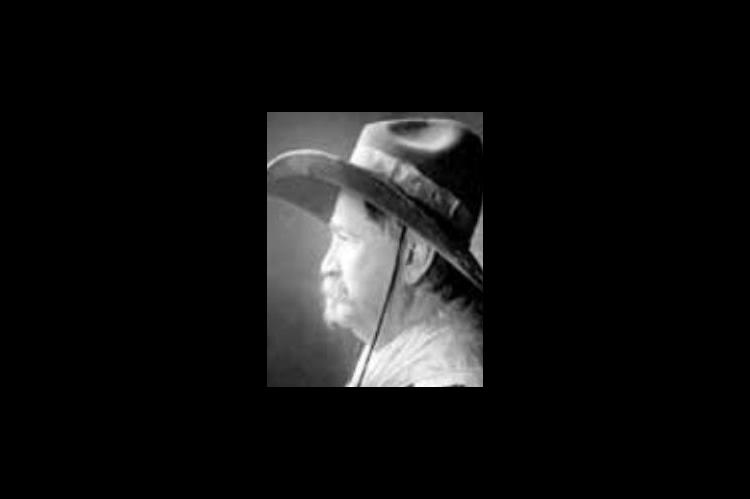
The origins of Hunnewell, Kan. rose out of railroad competition for the Texas cattle trade that was coming up the Chisholm Trail.
The town was named for Horatio Hollis (H. H.) Hunnewell, president of the Kansas City, Lawrence, and Southern Railroad. The railroad reached Hunnewell on June 16, 1880.
The cattle trade brought a lot of cowboys to Hunnewell. Texas drover Harry H. Halsell classed the cowboy into three categories. The serious, sober man, the jolly fellow out for a good time, and the bad man whose chief aim was to drink, gamble and do evil.
Robert V. Dodd and Pat Hanley were cowboys of the latter category. Hanley killed Dodd over the affections of Hanley’s wife. Dodd tried to “buffalo” Hanley to make him leave Hunnewell. They argued and when Hanley turned away, Dodd hit him over the head with a pistol. They fought and Hanley shot Dodd to protect his own life.
There may have been more to the story. Rumors seemed to persist in spite of the coroner’s verdict of selfdefense. Many believed that the wife had actually shot Dodd to protect “her man.” Perhaps it was because the fatal wound was in the back of Dodd’s head.
Hanley moved on to the Texas panhandle where, in 1882, he ran afoul of the law over cattle hides that had been found with various brands that were not his own. Hanley’s luck held. He was released when the primary witness against him supposedly left the country. Hanley returned to Hunnewell to open a saloon along “Smoky Row,” a street lined with saloons and dance halls filled with cowboys.
Several of “the boys” rode into town Tuesday, Aug. 12, 1884. They proceeded to go on a hurrah, “doing the town” in a cowboy free-for-all. Soon they were “discharging their six-shooters,” endangering innocent lives. Hunnewell lawmen chased them out of town with a few volleys of their own.
That evening the cowboys came back and settled into Pat Hanley’s saloon. Around midnight the cowboys began making “noisy demonstrations.” Marshal Ham Raynor and his assistant Ed Scotten arrived and warned the Texans to keep a lid on the noise.
According to a report in the Caldwell Advance, “The boys said they had come to have a time, and asked the marshals if they wanted a fight.”
But the festive cowboys checked the confrontation with an invitation to drink.
Thinking all was well after a friendly drink, the lawmen stepped through a side door just before gunfire erupted. Hot lead ripped through Deputy Scotten’s neck. Raynor was hit in the leg, but got off a shot that hit one of the cowboys in the side before they escaped into Indian Territory.
A letter from Fort Reno printed in the Aug. 21, 1884, Caldwell Advance reported that Clem Barfoot (Barefoot) had died in camp on Washita River, Indian Territory. He had come to his death from “a wound received in the Hunnewell fight with marshals on Tuesday night of last week.”
Assistant Marshal Scotten, in desperate condition, died while undergoing a “surgical operation” on Sept. 2, 1884. The Sumner County Press noted that whiskey was the cause of the trouble.
Complaints were filed against men openly selling whiskey against the laws of prohibition on March 4, 1885. Officers moved to arrest whiskey sellers across Sumner County. At Hunnewell, Deputies Ben Ellsworth and William Gainer found Pat Hanley tending a crowded saloon. Hanley took the arrest quietly but expressed a desire to see his family before leaving.
Trouble was in the works. Lum Brown had been in the saloon at the time of the arrest and slipped out without notice to mount a cow pony. As Hanley and Deputy Ellsworth reached the far side of the street Brown rode out of an alley and dismounted. Hanley quickly swung into the saddle as Brown raised his pistol and fired. Deputy Ellsworth instinctively drew and fired his own six-shooter. The bullet ripped into Brown’s leg, but in the chaotic seconds that transpired another cowboy rode to his rescue. Brown was pulled aboard and in the blink of an eye Hanley and his cowboy friends “had flown to the free air of Indian Territory.”
However, Hanley didn’t stop in Indian Territory. He was arrested in the Texas panhandle in 1887. Cap Arrington, the sheriff of Wheeler County, was known as “the iron-handed man of the Panhandle.” The bones of the 1882 witness to Hanley’s cattle rustling were found buried along Gageby Creek and Hanley’s partner implicated him in the murder. Hanley was reportedly sentenced to life imprisonment.
His wife married a soldier from nearby Fort Elliot and went to New York. Strange to say, Hanley somehow got clear of prison, for in 1890 the Wellington Daily Mail noted that Hanley, “a famous man among the Cheyenne and Arapahoe,” was in town on his way to Iola, Kan., to join a wild west show.
Pat Hanley lived the life of a bold, bad border man. Where he ended his adventurous life is not known at this time. Perhaps that story will yet find its way into the pages of The Way West.
“The Cowboy,” Jim Gray is author of the book Desperate Seed: Ellsworth Kansas on the Violent Frontier, Ellsworth, KS. Contact Kansas Cowboy, 220 21st Road, Geneseo, Kan. Phone: (785) 531-2058 or kansascowboy@kans.com.