
A bold desperado
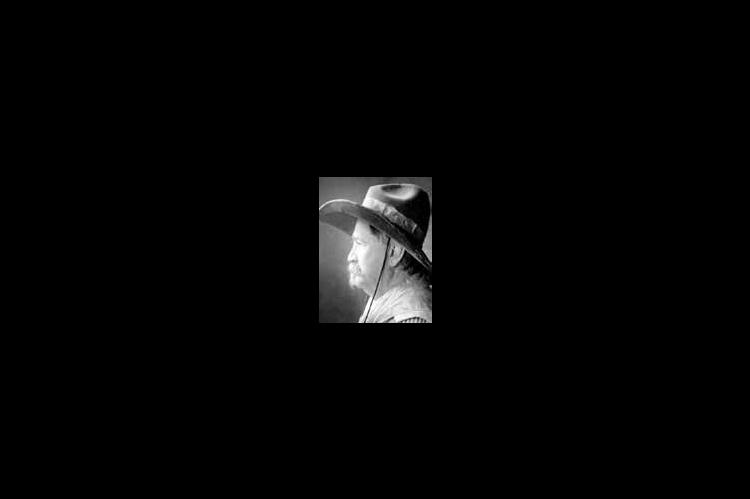
They say that Curly Walker came down to Wichita from the “hell on wheels” end-of-track frontier towns of Hays City and Ellsworth.
At Wichita he was known to run with another “Curly,” John “Curly” Marshall, also a graduate of the tough little hole they called Ellsworth.
Marshall was said to have killed at least one man in Ellsworth. He surrounded himself with a gang of questionable characters, usually found loafing around one of Wichita’s drinking houses. Curly Walker was one of his closest friends.
Walker was a man of large frame, coal black eyes, full black beard and long curly hair flowing from under a broadbrimmed sombrero. Clad in buckskin with a pair of six-shooters strapped to his waist, Walker at once filled the bill as an ideal hero of a dime store novel.
But Walker was not the good guy in a white hat.
Curly Walker was, without a doubt, a desperate man. It was said that he placed no higher value upon the life of a fellow being than that of a fly. To contradict him meant a fight to the death, and as he was a desperate man, he was feared by all who knew him.
Marshall and Walker surrounded themselves with recognized desperate characters. It seemed their main goal in life was to get drunk, get in a row and shoot the lights out of something. Shooting was a favorite pastime.
At the Buckhorn Tavern and Hotel operated by Henry Vigus and his wife, boarders included cattlemen, merchants, gamblers and a few of Marshall and Walker’s friends. At dinner the boys especially enjoyed throwing dishes in the air and shooting at them with blazing six-shooters, all while never leaving their place at the table.
An article in the June 20, 1889, Wichita Beacon recalled that there was but one person in the town that dared to rebuke them for their conduct, and that was Mrs. Vigus.
“These desperadoes, who would not hesitate to kill a man upon the least provocation, respected the only woman in the camp, and were as obedient to her commands as though she were a sister or mother...”
Mrs. Vigus was no matronly woman. She was 23. Almost everyone on the frontier was young.
“Whenever (the boys) became too hilarious and began shooting through the roof, she would enter the room and, after mildly rebuking them with, ‘boys, ain’t you ashamed of yourselves?’ every sixshooter would instantly go back into its holster.”
Ike Elder accidentally discovered the most persuasive way to gain respect from the “sporting.”
Elder had been elected the first marshal of Wichita in 1870. He had a reputation as a dead shot, but according to an old-timer quoted in the Wichita Beacon of March 10, 1090, Elder “couldn’t hit the side of a barn 50 feet away.”
His reputation began with a ride along Chisholm Creek (about where Interstate 135 crosses 21st Street). Elder came upon Curly Walker shooting at an oyster can with Jack Ledford, another wellknown desperado. The can was on a post “fully 100 feet away.” Both men were crack shots, but this day neither one had hit his mark.
Riding up, Elder questioningly called out, “Let me try a shot at it.” In that instant he raised his six-shooter and sent a bullet into the center of the can. The boys were truly impressed. So was Elder.
A few nights later, Elder entered the Spirit Bank saloon to find a member of the gang showing off a new six-shooter. He handed it to Elder to examine, and as Elder grasped the pistol it accidentally discharged. The bullet struck a picture on the wall, passing through the eye of a the great General Sheridan.Thinking quickly, Elder confidently offered to bet $25 that he could do it again.
The bluff worked and “the most desperate men ...treated him with the utmost respect.”
Walker may have respected Marshal Ike Elder, but no matter who it was, when push came to shove Walker would never back down from a fight. However, Walker made a fatal error when he rustled cattle from Captain John H. Wemple. Not knowing who had taken the cattle, the Captain tracked them to a ranch near Fort Dodge. There he was told that Curly Walker had brought them in.
Walker was gambling in a saloon, dressed in his finest gambling attire, when a messenger informed him that Captain Wemple was calling him out. Mounting his horse, he galloped away to meet the challenge. In a cloud of dust his horse slid to a stop in front of Captain Wemple with rifle in hand.
Walker stepped effortlessly from the saddle and the fight was on. Bullets from two Navy six-shooters filled the air. Captain Wemple jacked his rifle sending lead toward the bold outlaw. The horse collapsed from a bullet to the heart. Walker dived behind the dead horse and Wemple took refuge behind a wagon. Suddenly, Walker charged forward, but he tripped over the wagon tongue. Wemple fired his final shot and Curly Walker, the bold desperado, died as he had lived on The Way West.
“The Cowboy,” Jim Gray can be reached at 220 21st RD, Geneseo, KS. Phone (785) 531-2058 or kansascowboy@kans.com.