
California Charley
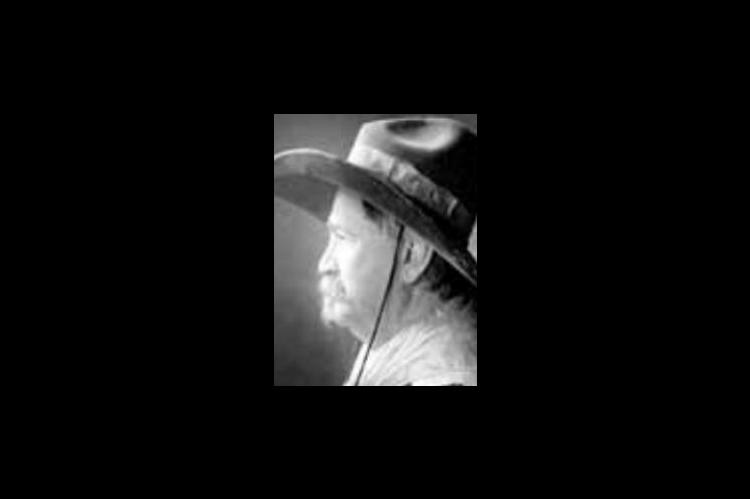
Malachai R. Cordeiro settled on the Smoky Hill River somewhere along its southern bend into present-day McPherson County in 1867.
Whether he had been in Kansas for days, months, or years has not been found. His granddaughter, Bess Cordeiro Kennedy related that as a young man Cordeiro left New York to sail around Cape Horn, South America, for Eureka, Calif. Cordeiro was just one of thousands that were seeking fortunes in the great California gold rush. “California Charley,” as
“California Charley,” as he called himself, must have spent a very short sojourn at his homestead on the Smoky, for he was said to have become a scout for Company H., 7th U. S. Cavalry under Capt. Frederick W. Benteen.
Near the confluence of the Arkansas and Little Arkansas Rivers, the army established a military presence in 1868 that came to be known as Camp Beecher.
Several tribes were living in the valley, having left Confederate-held Indian Territory during the Civil War. Their presence brought Indian trading posts to the vicinity; the beginnings of what would become Wichita, Kan. It is reasonable to assume that Cordeiro was introduced to the emerging settlement while Benteen’s troops were stationed there in August of 1868.
Cordeiro’s name is mentioned among several soldiers discharged while serving in the 5th Infantry in 1869. He and John Hurt were listed as scouts who served in a civilian capacity. Finding himself out of work, Cordeiro opened a saloon among the denizens of early Wichita.
California Charley Cordeiro was no ordinary entrepreneur. He dressed the part of a dashing Mexican vaquero, wearing a big sombrero with a red sash around his waist. A “Colt’s” pistol was always within reach. He was often described as Mexican, however researchers now believe that his heritage was Portuguese.
Cordeiro held sway in the rough and tumble atmosphere of the frontier saloon. On Dec. 27, 1869, an intoxicated O. H. Whitman threatened Cordeiro. Whitman made one move too many. Cordeiro drew his revolver and shot. It was the last threat Whitman ever made.
The Emporia Weekly News-Democrat recorded that Cordeiro had been taken to Emporia to be lodged in a jail away from Wichita on Jan. 19, 1870. The charge was murder in the first degree. Cordeiro asserted self-defense and was apparently released on bail.
In spite of having a murder charge hanging over his head, Cordeiro returned to Wichita to open the Arbor Restaurant at Fourth and Main Street in late 1870. The Arbor offered
The Arbor offered “FRESH OYSTERS,” raw or cooked. “MEALS AT ALL HOURS,” and although branded as a restaurant, lodging could also be obtained by the day or week. Early in 1871 the Arbor won the bid to serve “county prisoners and paupers,” at 50 cents per meal and if needed, lodging was also 50 cents. A bill for the Arbor was presented and accepted for $122 at the March 4, 1871, meeting of the Sedgwick County Commissioners.
The murder charge against Cordeiro was eventually reduced to second degree for a jury trial held during the June term of 1871. Cordeiro was found “not guilty.” However, there was something in Charley Cordeiro’s nature that occasionally brought out the fight in a man. In the early morning hours of Saturday, March 23, 1872, Jim Hudson menacingly walked into the room where Cordeiro was sleeping. Hearing his approach, Cordeiro jumped out of bed and wrestled a drawn revolver away from Hudson, who was later arrested for threatening Cordeiro’s life.
Amid the precarious drama of life on the streets of early-day Wichita, Cordeiro found his life-mate. Inexplicably Cordeiro’s marriage announcement to Miss Celestia Clark was published as though it had taken place on two completely different dates, the first being June 2, 1872. Almost seven weeks later, on July 20, Cordeiro opened a new hotel, the Texas House. Again, the marriage was reported in the July 26, 1872, Wichita Weekly Eagle. This time the marriage ceremony was performed at the Texas House on July 22, 1872. By January of 1873, having closed the Texas House,
By January of 1873, having closed the Texas House, Cordeiro opened the Texas Saloon in a new location on Wichita Street.
The story was told of Cordeiro’s introduction to the notorious “Hurricane Bill” Martin. The “wild looking fellow,” rushed into the Texas Saloon with his “Texas Gang” where he unceremoniously, “leveled his revolver on Charley and told him to set ‘em up; I am Hurricane Bill, the terror of the plains.”
Cordeiro set up the drinks as Hurricane laid his pistol on the bar to take a drink. Quick as thought Cordeiro raised a pair of six-shooters from under the counter. Leveling them on Hurricane, Cordeiro announced, “I am Charley Cordeiro, and now you pay for them drinks.” Hurricane looked Cordeiro over and replied, “All right old fellow, you have got the drop on me.”
Hurricane took a liking to California Charley and soon the Texas Saloon became his headquarters. But the revelry was brought to an early end when Cordeiro lost the place over a lawsuit. Strapped for cash, California Charley Cordeiro left Wichita for Black Hills gold, but that is another story to be told on The Way West.
“The Cowboy,” Jim Gray is author of the book Desperate Seed: Ellsworth Kansas on the Violent Frontier, Ellsworth, KS. Contact Kansas Cowboy, 220 21st Road, Geneseo, Kan. Phone: (785) 531-2058 or kansascowboy@kans.com.