
Capt. Jack
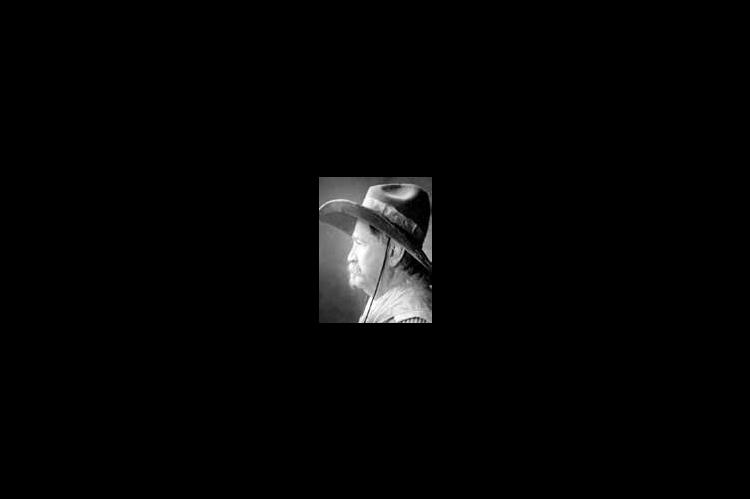
The early history of Kansas is filled with enough daring and intrigue to fill a goodsized library, and yet we know so little about those who rode the dark trails of destiny and the remarkable events that drew them to live extraordinary lives.
One such individual was John “Jack” Harvey. Harvey’s early life is shrouded behind a curtain of uncertainty. We learn from the Kansas census that John Harvey was enumerated at Leavenworth on June 22, 1865. He was living in a boarding house operated by Abram St. Clair. He was 25 years old and born in the state of New York. His occupation was listed as “scout.” Later information revealed that his unnamed parents reportedly lived in Dunkirk, N.Y., and, by inference, we suppose Dunkirk was his boyhood home.
Jack Harvey began a life of danger and intrigue as a scout for the army on the Kansas-Missouri border in 1862. Major James Pond recalled riding with Capt. Tough’s Buckskin Scouts in the autumn of 1862. The expedition was to find the camp of Capt. Ryan. Ryan was the leader of a band of Missouri “Home Guards.” They were more commonly known to the Kansans as bushwhackers, for their penchant of shooting from ambush under the cover of bushes along Missouri roads.
Four riders, including Jack Harvey and Walt. St. Clair, fearlessly rode directly into the jaws of death. Capt. Tough had a way of riding into an enemy camp, gaining their confidence and taking his prey unaware before they realized the danger. Thinking the riders were messengers from a nearby Confederate camp, Capt. Ryan rode out of camp with Capt. Tough to be quietly taken captive out on the road.
By Nov. 12, 1862, the Leavenworth Times noted that Jack Harvey and Walter St. Clair had returned from “many exciting adventures in Missouri and Arkansas” as members of Gen. Blunt’s scouts. In one account, they “overhauled” a Confederate paymaster near Fort Scott, relieving him of $17,000 of “rebel gray backs.”
The Times reveled at the departure of Gen. Blunt’s Buckskin Scouts in the July 22, 1863, issue.
“The gallant bravery of these men (Walt St. Clair, Jonny Fry and other members) has been shown on many a field...”
However, by Sept. 12, 1863, the Times confirmed rumors of the death of “the brave and daring young scout,” John E. Sinclair, Walt. St. Clair’s brother. From this notice forward, the last name was nearly always entered as Sinclair instead of St. Clair. John was killed by a bushwhacker who was concealed by the side of the road. Jack Harvey had just ridden past the killer when John was shot. Walt charged the bushwhacker and killed him before retrieving his brother’s body “amid a shower of bullets” from a full band of bushwhackers.
In the fall, Walt Sinclair and Jack Harvey joined Lt. Chaley Gordon, formerly of the 7th Kansas Cavalry, to operate as scouts on the war front. According to the Nov. 5. 1863, Leavenworth Bulletin, “The boys know how to fight, and they are on it.” They saw action in the Boston Mountains somewhere north of Fort Smith, Ark.
The Oct. 19, 1864, Leavenworth Times published a letter from Jack Harvey that gave an insight into the mind of a federal scout in the war on the border.
“For a long time I have been employed as a scout, and for months I have placed myself in the most imminent danger — never have I refused to go when ordered, no matter what the peril was. I love my country as well as any man living.” There were no regrets.
A change of scenery offered the scout a glimpse of a future life. Jack Harvey experienced the vast open plains of western Kansas in the spring of 1865 scouting for McDowell’s wagon train. According to the April 19 Leavenworth Times, “Jack says that country may suit some people, but its dazzling allurements would not tempt him to a lengthy residence.” A looming Indian war would change that perspective and provide consistent employment as a scout on the plains.
Harvey was paid well for his services. An indication of the lucrative aspect of the profession was the news of his purchase of a carriage in the May 11, 1866, Leavenworth Times. “It is a fine two-horse carriage, the easiest we have had a seat in, and will be at its place on Fourth Street at all times when not otherwise engaged.”
Harvey was known as Capt. Jack on the plains, stemming from his days with the Buckskin Scouts. In addition to scouting operations, Capt. Jack and Wild Bill were employed as government detectives on the plains. As Deputy U.S. Marshals, they roamed as far west as the Colorado border.
On Jan. 1, 1867, John Tobin and William Wilson had the misfortune of crossing paths with Capt. Jack and Wild Bill after selling mules that they had stolen at Fort Riley. Once the pair confessed, Capt. Jack started a search for the mules while Wild Bill swore out a warrant to arrest the thieves.
There were many adventures ahead of these hard riding, sharp shooting vanguards of the plains. The end was sure to come, for one sooner rather than later. But for now, all eyes were cast toward Capt. Jack Harvey and Wild Bill Hickok on The Way West.
“The Cowboy” Jim Gray can be reached at 220 21st Rd., Geneseo, KS 67444, (785) 531-2058 or kansascowboy@ kans.com.