
Child of the Prairie
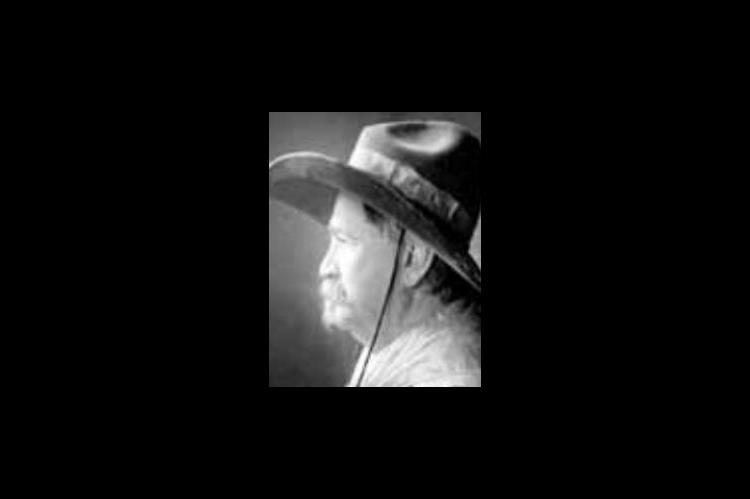
A prized book in my collection of western history isn’t the story of a famous gunslinger, or a wild and woolly cattle town, but the memoir of a little Swedish girl who came to the Kansas prairie with her parents in 1869.
Anna was only 3 years old in 1869, but the events of coming to a new world were evidently indelibly etched into her memory. Almost 50 years later in 1917, Anna recorded those memories as seen through a child’s eyes. “Anna Olsson, A Child of the Prairie” was translated from the original Swedish language by Martha Winblad and edited by Elizabeth Jaderborg.
Anna’s family settled one-half mile south of “the bluff”, known today as Coronado Heights, on the invitation of the Swedish Agricultural Company of McPherson County.
The company purchased the land in 1868 from the Kansas Pacific Railway. At the time the land company house, at the center of over 13,000 acres, marked Lindsborg’s humble beginnings, a few miles southeast of the bluff along the Smoky Hill River. Anna’s father, the Rev. Olaf Olsson subsequently established the Swedish (Bethany) Lutheran Church in 1870, holding services in the land company house.
The prairie was an intimidating landscape extending into what seemed to be a limitless horizon.
Once “a big thick snake” crossed Anna’s path, crawling along a walking trail. Most everyone walked from place to place. “I was so scared:’ But Maja, the hired girl that lived with the family, wasn’t scared. Maja lifted Anna onto her back and carried her all the way home.
After dark wolves howled and frightened Anna. She had heard that a neighbor lady was bitten on the arm as she walked home over a prairie trail.
“Emma Lundgren says wolves eat up little children. I am so scared that a wolf will come to our house and eat me up.
“Mamma was afraid of wolves, but pappa wasn’t scared of them. Papa wasn’t scared of anything:’
He often went far out on the “Big Prairie” to preach, “he dares to go clear to Salina,” a distance of about 20 miles.
The Indians that came begging for meat and bread scared Anna. But, Papa wasn’t scared.
“He goes outside to talk to them for a long time:’ Mama was a little scared, but she always fed them when they said “How! How!” and point with a finger where she should cut off the meat for them.
The Olssons sometimes went to the river to visit the Indians in their teepees. Anna thought that living in a teepee would be fun.
Anna wasn’t afraid of antelopes. Once she saw a beautiful antelope along the road. It stopped to look at her for a long time. She tried to feed it some bread but, “he galloped away so fast I couldn’t catch him ... I wish I had an antelope of my own! They are so pretty and so nice:
The great cattle drives from Texas brought cowboys to Anna’s prairie home. She thought that cowboys were nice. They left their pistols and knives out in the corral when Papa explained that weapons in the house would frighten the women and children. They called Anna “little girl: and were always nice to her.
After supper and coffee, Papa talked to them late into the night. Anna didn’t always understand their talk because they spoke English, although she heard them repeat “I s’pose” many times.
The cowboy’s long, long, file of longhorn cattle scared Anna when they stamped the ground and raised so much dust that she could hardly see them. A lone longhorn cow once caught Anna’s grandmother Mormor on its wide horns and carried her away, but she was able to jump free and ran away. Anna liked cowboys but she was afraid that a longhorn cow would carry her away.
Anna’s father was elected to the Kansas House of Representatives. In January, 1871, Rev. Olsson took his family to Topeka to see where the Legislature meets. “Little children can never go there when they meet. Mammas can’t either, just Papas:’
While in Topeka, the Grand Duke Alexis of Russia came in on a special Kansas Pacific excursion train. The Olsson’s watched his arrival and Anna waved a big red handkerchief as the train passed by. They soon returned to their prairie home.
Loss was a constant companion to the little collection of Swedish pioneers. Anna wrote of the death of her “little brother:’ Anna was so happy when little brother had come. But now that he was dead, she couldn’t stop crying.”He is so white-so white. And so quiet. Mamma cries all day long:’ Little brother was buried up on the bluff. “It is so dark down in the grave:’
Anna’s poignant little book, “A Child of the Prairie;’ is not just a memoir, but a touching tribute to the struggle that confronted the brave families that settle the prairie on The Way West.
The Cowboy;’ Jim Gray is author of the book Desperate Seed: Ellsworth Kansas on the Violent Frontier, Ellsworth, KS Contact Kansas Cowboy, 220 21st RD Geneseo, KS Phone 785-531-2058 or kansascowboy@kans.com.buried up on the bluff. “It is so dark down in the grave:’
Anna’s poignant little book, “A Child of the Prairie,” is not just a memoir, but a touching tribute to the struggle that confronted the brave families that settle the prairie on The Way West.
“The Cowboy,”Jim Gray is author of the book Desperate Seed: Ellsworth Kansas on the Violent Frontier, Ellsworth, KS Contact Kansas Cowboy, 220 21st RD Geneseo, Kan., Phone (785) 531-2058 or kansascowboy@kans.com.