
Confounding Justice
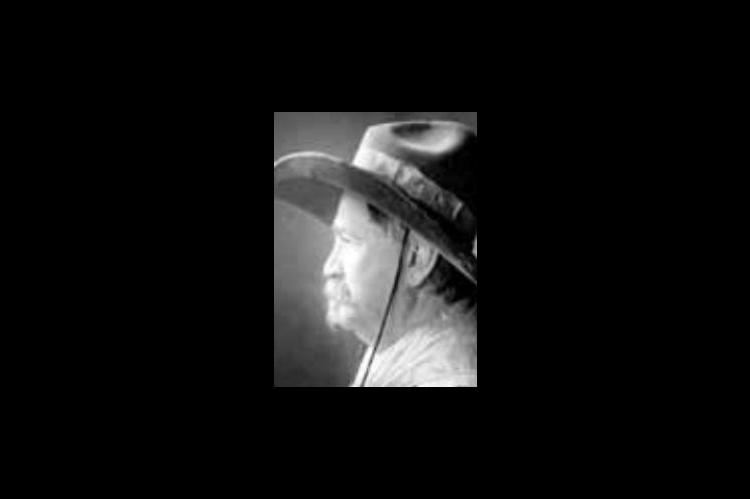
On a fine Friday morning, May 6, 1892, John Timm stepped behind W. R. Warren and shot him in the back as Warren was preparing to enter the Sumner County Courthouse at Wellington, Kan.
Apparently Warren realized at the last minute that someone was behind him and began to turn just as a gunshot resonated and he was struck by a “ball.”
Warren pulled his own weapon and compelled John Timm “to turn his weapon down.” Two bystanders, W. S. Nelson and R. L. Davidson “tore the revolvers away from the men,” to prevent more shooting. Timm was handed over to the sheriff while Warren was taken to the office of Drs. Freeman and Elliott
The trouble between the two men had begun 16 months earlier on Dec. 22, 1890, when Warren suddenly closed his bank at Mulvane, Kan. Timm lost $2,000 of hard-earned savings with no chance of recovering the money. After months of litigation over the bank failure, the prosecution, on Jan. 11, 1892, failed to convince the jury of Warren’s criminal intent when he closed the bank.
The news that Warren would not be held responsible for the loss of depositor’s funds was more than John Timm could take. Timm’s $2,000 deposit a few months before the doors were closed was, “practically all his worldly wealth.”
According to newspaper reports, Timm “became almost crazed over his loss.” During the past summer of 1891 Timm tried to shoot the banker, was arrested, and served a term in the county jail. He was released in January and was believed to have left for Oklahoma.
However, Timm had apparently learned that Warren was expected in Wellington and planned the encounter that led to the shooting.
Warren left Wellington by train Saturday morning at 1 a.m. He arrived at his brother, Capt. S. B. Warren’s home in Emporia, with the ball still in his body. Another investigation by Dr. Jacobs examined the shallow wound but also could not find the ball. While leaving a ghastly wound, Dr. Jacobs believed that the ball had merely grazed Warren’s back.
Timm was brought to trial at Wellington on Sept. 20, 1892. Maj. Ferguson was appointed to defend Timm and argued that Timm had come from an insane family. His mother had suffered an unsound mind for several years. Ferguson suggested that Timm’s actions before and at the time of the shooting were the result of an unbalanced mind. Medical experts testi
Medical experts testified that Timm was regarded as insane. With that information the jury found for acquittal. Even so, the judge ordered Timm held until it could be determined whether he was a danger to the public.
Timm was still in jail in April of 1893 when he was judged insane and taken to an asylum in Osawatomie for treatment. Timm was released and in 1894 he returned to Mulvane. He soon proved that he was indeed a dangerous man.
On the night of Sept. 14, 1894, he shot Samuel Butts through a screen door. Butts had been the man that convinced Timm to deposit his savings in W. R. Warren’s bank for safe keeping.
Timm was tried and sent to the penitentiary at Lansing where he would not be a threat to the public. But he was pardoned for good behavior by Gov. William Stanley on July 13, 1900.
Timm immediately went to the home of Capt. Warren, W. B. Warren’s brother, to get money. Timm was apparently unaware that Capt. Warren had passed away eight years before. Undeterred, Timm threatened the Captain’s widow. She called the police. Timm was arrested and again found insane.
After two years in a Topeka asylum, against the advice of the head of the asylum, Dr. T. C. Biddle, Timm was judged sane and released on July 17, 1902. Once he was released Timm gained the assistance of a Kansas City lawyer for a lawsuit against Capt. Warren’s estate and others, seeking damages of $25,000. The case was thrown out of court on Feb. 10, 1903.
Timm kept his name out of the papers until 1914 when his brother, Henry, was found lying on the kitchen floor with half his head blown off from a shotgun blast. Timm was captured and sentenced to the insane ward at Lansing State Prison without any chance of parole. That didn’t stop him from trying.
His attorney filed for his release several times on the grounds that he was “well and cured.” He even tried to gain a portion of his brother’s estate, even though he had been convicted of his murder.
Governors and parole boards finally got the message and refused all requests for clemency. On Jan. 2, 1930, the newspapers reported that “death” had finally released John Timm from the penitentiary. And so ended one of the most bizarre cases of confounding and lengthy paths to justice to be found on The Way West.
“The Cowboy,” Jim Gray is author of the book Desperate Seed: Ellsworth Kansas on the Violent Frontier, Ellsworth, KS. Contact Kansas Cowboy, 220 21st Road, Geneseo, Kan. Phone: (785) 531-2058 or kansascowboy@kans.com.