
Crusade for Truth
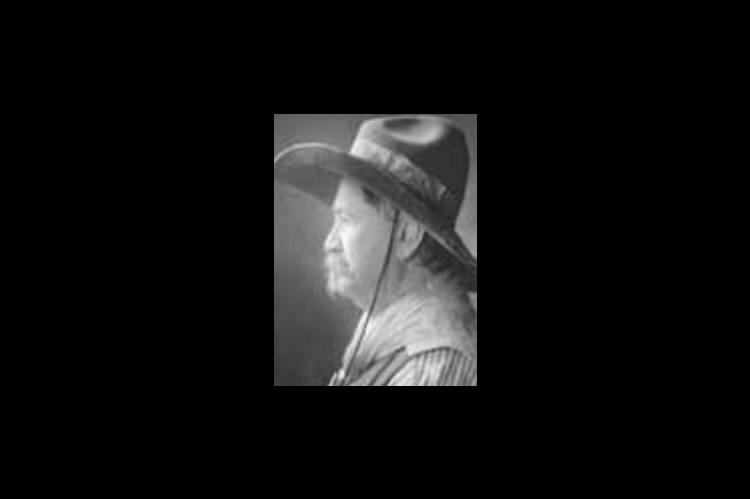
In late March, 1877, newspapers across the state of Kansas carried the tragic story of the death of J. Clarke Swayze, editor of the Topeka Blade.
The Emporia Gazette began with,“ We deeply regret to announce that the bitter and inexcusable personal warfare which has been kept up in the Topeka Blade, for some two years, on John W. Wilson, formerly of the Topeka Times, ended in the killing of J. Clarke Swayze, the editor of the Blade, on Tuesday evening (March 27, 1877).”
Jason Clarke Swayze was born in Hope, N.J. , in 1830. He learned the printer’s trade in the employ of Horace Greeley, the editor of the New York Tribune. Greeley was known for hiring the best talent that he could find and under Greeley’s guidance the young printer matured into a journalist of note. Along the way he married an actress, wrote plays, toured the South, and with the opening of the Civil War was conscripted into the Confederate Army.
He escaped to the north and immediately enlisted in the Union Army, gaining an appointment to Gen. Sherman’s staff as a scout. His expectant wife was unable to return north with him, and died giving birth to their third child at Griffin, Ga.
When peace was declared Swayze returned to Griffin, his wife’s burial place, and his surviving children.
Swayze purchased the local newspaper and renamed it The Bugle Horn of Liberty. His outspoken ways brought destruction to the paper in a raid that nearly cost him his life.
For the next several years his life was filled with intrigue. He founded the American Union at Griffin and moved it to Macon, Ga., in 1868.
His children helped around the office and years later his son, Oscar, recalled, “Being kukluxed, ridden on a rail for refusal to shout for Jeff Davis (former president of the Confederacy), shot at on the streets and threatened with hanging was a part of the life of the Union editor.”
At the urging of his mentor, Horace Greely, Swayze moved to Kansas in 1873.
In the capital city he established the Topeka Blade, described as “... a Blade in every sense of the word, and will be used to cut off rotten limbs.”
Swayze intended to continue the fight for the common man that he had begun in Georgia. The motto of the paper declared, “We will not hurt anyone unless they deserve it.”
Topeka already had two newspapers, the Commonwealth and the North Topeka Times.
In May of 1875, the North Topeka paper began a daily edition in Topeka proper, called simply the Topeka Times. Owner Vear Porter (V. P.) Wilson had previously published the Abilene Chronicle and had recently served as a Kansas State senator.
Wilson had opposed the venerable Joseph McCoy at Abilene, calling him contemptible, unscrupulous, and a “poor corrupt man,” among other things.
According to McCoy, a scheme to gain a monopoly in the milling business in Dickinson County was exposed while Wilson served a senator.
At first Swayze noted mistakes and printing errors in the Times revealing an incompetent carelessness. The accusations continued and grew in intensity until Wilson charged in the July 1, 1875, Times that Swayze had abused his wife. Swayze denied the accusation and countered that Wilson’s wife was a prostitute and Wilson was nothing more than a pimp. Wilson retired from the Times in August, turning management over to his son, John Wilson. The younger Wilson marked the occasion by confronting Swayze on the courthouse steps, warning him to stop attacking his family in the Blade.
Swayze promptly returned to his office and published an uncomplimentary illustration of V. P. Wilson in the next issue. That was followed with an illustration of John Wilson as a drunken editor. With a hickory stick in hand John Wilson accosted Swayze with “disgustingly dirty language.” A police officer arrested Swayze even though Wilson was the aggressor.
The vitriol continued. Over the next two years, Swayze brought the Topeka Commonwealth into the fray alleging editor Floyd P. Baker’s involvement in a lottery scam and a close association with prostitution. By March 10, 1877, John Wilson was working for Baker at the Commonwealth. Swayze published a new attack, claiming Wilson was procuring customers for prostitutes. Wilson found Swayze and beat him within an inch of his life.
The unshakable J. Clarke Swayze responded as he always had. In the very next issue of the Blade, Swayze unmasked Wilson’s involvement in a prostitute ring headed by Baker. When the two men next met in an alley each man pulled his pistol, fired, and Swayze “clinched” Wilson in a death grip. Wilson beat Swayze over the head until bystanders separated them. Swayze fell to the ground and died soon after.
Swayze’s Blade had cut through corruption with the sharp edge of his written word, but the crusade for truth did not always win the day on the Way West.
“The Cowboy,” Jim Gray is author of the book Desperate Seed: Ellsworth Kansas on the Violent Frontier, Ellsworth, KS. Contact Kansas Cowboy, 220 21st Road, Geneseo, Kan. Phone: (785) 531-2058 or kansascowboy@kans.com.