
Cutting a wide swath
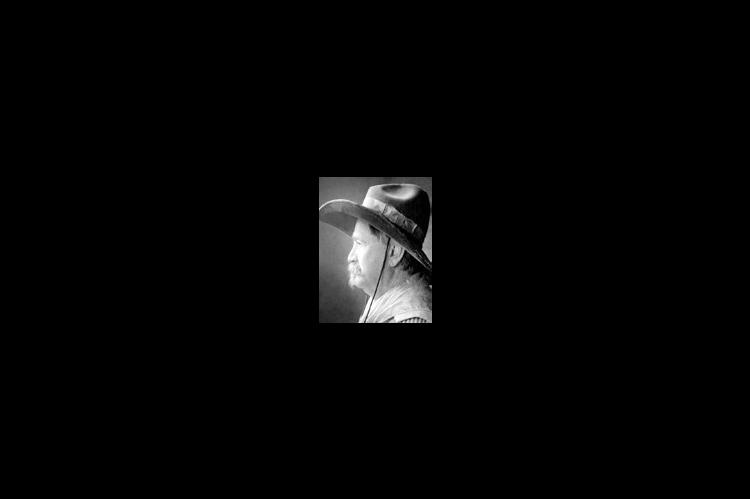
Drury J. Warren moved his family from Arkansas to Grouse Creek south of Silverdale, Kan., in 1875. He was born in Tennessee and defended the Confederacy as 2nd Sgt. in Company H, 30th Tennessee Infantry Regiment. After the fall of Fort Donelson, Tenn., in February of 1862, he enlisted in an undisclosed cavalry unit, later finishing out his service in Anderson’s Battalion, Arkansas Cavalry. Captured by Union soldiers at Mound City, Kan., Warren was held as a prisoner-of-war at Alton, Ill., until released in a prisoner exchange at James River, Va.
Warren’s new Kansas home was just north of the border with Indian Territory southeast of present-day Arkansas City. His Arkansas connections gave him access to cattle that could be purchased at low rates and driven overland to his ranch.
Having established friendly relations with the Kaw Nation, Warren was allowed grazing rights on the reservation south of his ranch. In 1880, a band of Big Hill Joe’s Osage tribe raided his herd. Warren, with the help of a friend from the Kaw Nation, found the remains of 37 slaughtered cattle in an Osage settlement. Their agent promised federal reimbursement for the lost stock. By this time, the Arkansas Traveler referred to Warren as “the well-to-do cattleman of Grouse Creek.”
While he took advantage of the vast open range on the Kaw reservation, his headquarters served as a bountiful farm of 520 acres. It was considered one of the most valuable farms in Cowley County, producing corn, potatoes, onions and “good hogs,” among those mentioned by the editor of the Traveler.
By 1883, Warren was a member of the Cherokee Strip Livestock Association, grazing cattle in the territory on Duck Creek and the Chikaskia River. Life on the range was risky business, and conflicts could turn deadly. Roundups were organized to allow for an orderly exchange of stray cattle that had drifted together on the open range.
At the June roundup, Warren claimed a steer that John Beach believed to be his. The dispute grew ugly as both men drew knives and proceeded to have a carving match. The June 14, 1883, Winfield Courier reported, “Drury had his shoulder and part of the muscle of his left arm cut, but not seriously.” Nothing was said pertaining to the final ownership of the steer.
Tragedy visited the Warren family on Feb. 7, 1884, while Mr. Warren was away tending to his growing cattle business. Three-year-old William broke through the ice on Grouse Creek. Eightyear- old Jackson went to his rescue, caught him, but was unable to get out of the water before they were both carried under the ice and drowned. Mrs. Warren almost drowned with them, but an older daughter was able to pull her out.
By 1884, cattle carrying Warren’s “boot” brand were grazing on Sweetwater River in Wyoming Territory. In April 1885, Warren partnered with Alex Harvey to drive flocks of sheep to Arizona. The Arizona range was also stocked with cattle. In November 1884, Navajos stole some horses from his outfit, resulting in “a small battle” between his herdsmen and the Navajos. The paper reported, “Mr. Warren came out victorious.” Three-year-old Gracie died April 2, 1886, and Mrs. Warren was not well, prompting Warren to return from Arizona. Despite the tragedy, Warren expanded his cattle interests. By May 8, the Traveler reported that Warren had “gone to Texas to go into the stock business.”
One would think a man of such great success would have acquired a notable bevy of enemies, and though detractors were known, for the most part, Warren’s benevolent disposition won him an army of friends. He could easily be described as too trusting. A trip to Texas in 1894 revealed his trusting nature.
While in Texas, Warren fell sick and during his recovery, he was attended by a young man who was very attentive to Warren’s service. According to a story in the Traveler, “Mr. Warren took quite a fancy to the young man and apparently, he took quite a “shine” to Drury.” The young man, Charles H. Cook, told a sad tale of being alone in the world. He called Warren “father,” and was willing to work “as only a dutiful son could.” Warren brought Cook back to Kansas and gave him a job. He didn’t last two days before he disappeared with Warren’s shotgun. Officers found him in Arkansas City preparing to hop a freight out of town.
In Mid-December 1901, Warren stepped down from his buggy outside his home, slipped and fell, striking his head on a rock. The blow fractured his skull. He lingered for nearly 10 days, passing away at 7:55 p.m. Dec. 20, 1901.
In his 70 years, Warren had cut quite a swath. He only had 26 years in Kansas, but in that time, Drury J. Warren turned a bare piece of Kansas prairie into one of the most successful ranches to be found anywhere on The Way West.
The Cowboy,” Jim Gray can be reached at 220 21st Rd., Geneseo, KS 67444, (785) 531-2058 or kansascowboy@kans.com.