
In the dead of winter
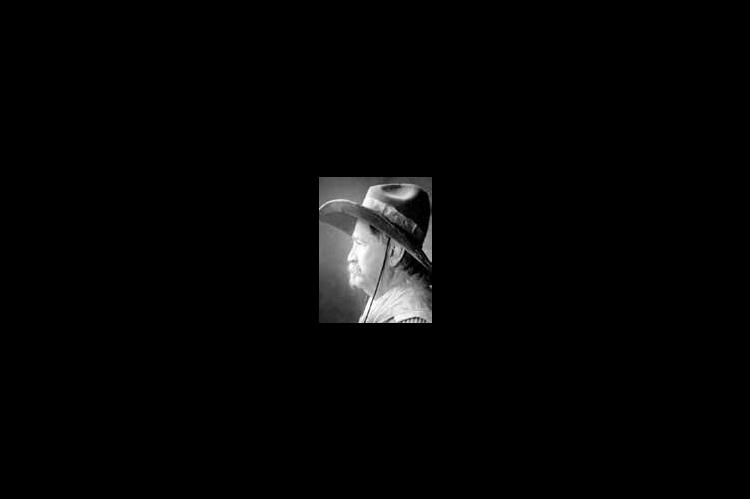
William Sublette answered an advertisement in early 1823 for “Enterprising Young Men” to ascend the Missouri River in a company of fur trappers. William Ashley, Missouri’s first lieutenant governor, and famed mountain man Andrew Henry, organized the company. Henry had been trapping beaver in the mountains since 1807.
William Sublette, 23, was born Sept. 21, 1799, at Stanford, Ken. In 1817 he moved to Missouri Territory. His father opened a tavern, speculated in land and engaged in farming along with town politics in St. Charles. Sublette served as the St. Charles town constable from 1820-1823 when, on March 10, he left St. Louis with more than 70 men to trap beaver in the mountains. Each trapper was to be paid $200 a year and allowed to keep half of his catch. Among Sublette’s companions were 40-yearold Hugh Glass, 31-year-old James Clyman and Thomas Fitzpatrick, 23.
Henry and Ashley had previously sent a company of men to the mouth of the Yellowstone in 1822. That year, 22-year-old Jedidiah Smith and 19-year-old Jim Bridger were among the young men seeking adventure in the wilds of the Rocky Mountains. Moses “Black” Harris was with them, but was already known as an old and experienced mountaineer. The company was known as “Ashley’s Hundred.”
Henry left the company in 1824 and by the fall of 1826, Ashley was ready to retire from mountaineering. The company was sold to Sublette, Smith and David “Davey” Jackson. Ashley’s contract offered attractive prices for supplies and goods if the company of Smith, Jackson and Sublette delivered their order in St. Louis by March 1, 1827.
In late December 1826, Smith was in California and Jackson was supposedly in the Snake River country. From the Cache Valley rendezvous site in present- day northern Utah, Sublette put his order together. In the absence of his partners, Sublette prepared to complete the all-important contract with Ashley. The task would require a trek of 1,400 miles to reach St. Louis in a span of two months.
The snow was too deep to travel by horse, so he and Harris set out on Jan. 1, 1827, wearing snowshoes, for a very long winter walk.
Harris was famous as a man of “great leg,” able to walk great distances alone and for extended periods. Alfred Jacob Miller, foremost artist of the Far West, described Harris as “wiry of frame, made up of bone and muscle with a face composed of tan leather and whipcord finished up with a peculiar blue black tint, as if gun powder had been burnt into his face.” An Indian-trained pack dog carried a pack of sugar, coffee and other supplies. Each man strapped on a backpack filled with dried buffalo meat, but they carried only a subsistence amount, expecting to kill wild game along the way.
After a 90-mile trek, their stock of dried meat was running low. The buffalo they expected to find on Ham’s Fork were nowhere to be found. Ham’s Fork, a tributary of the Green River, was frozen over, only yielding drinking water that came from the ice and snow melted in the flame of kindled campfires.
Another 100 miles brought them to the Sweetwater River at the South Pass, and fresh buffalo meat.
Reaching the North Platte River, the diminishing meat supply again threatened starvation. Three or four days without food brought them to a friendly Indian camp where they we able to resupply and continue on.
Along the Platte, they luckily encountered intermittent small Indian camps. However, as they reached the Platte River’s Grand Island, their supplies were depleted.
The normal route followed the Platte to its confluence with the Missouri River. That well-known route coursed far to the northeast before returning southeast to meet the Missouri. Instead, near present-day Grand Island, Neb., Sublette and Harris turned away from the river knowing that the Kansas River was below them ... somewhere.
By the first week of February, 40-50 miles southeast of the Platte, the men were again starving. Sublette had barely enough strength to scrape the snow from a spot, gather his blanket around him and fall exhausted. Harris kindled a fire, and as he bent over it for warmth, his eye turned toward the dog that had faithfully carried the little supply that had brought them so far. The next few minutes were just too gruesome to express.
“They both ate heartily in the morning.” The meat lasted a couple of days, just enough to get them to an old Indian trail that led to a main Kansa village at the mouth of the Big Blue River near present-day Manhattan. From there, they followed the Kansas River to its confluence with the Missouri River and on to St. Louis.
Despite their travails Sublette and Harris arrived March 4, 1827, three days too late to satisfy the contract. Even so, Ashley honored the agreement. The supplies were put in order in time for a west-bound party of 60 men to leave St. Louis on March 15 with Sublette’s order. The company of mountain men, guided by Sublette, assumed a line of march along the new “Sublette’s Trace,” forerunner of the California-Oregon Trail, forged in the dead of winter on The Way West.