
Dog Soldier Resistance
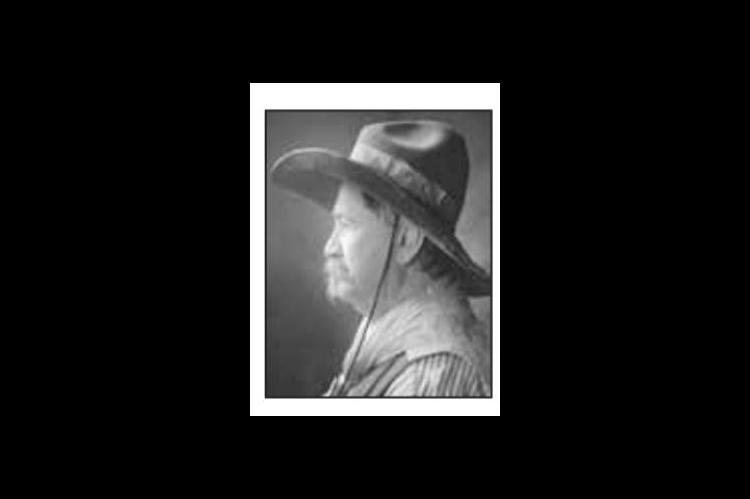
After gold was found in the foothills of the Rocky Mountains in 1858, several attempts were made to convince the Cheyennes and Arapahos to abandon their roving ways and settle on a designated reservation.
The Cheyennes wanted to live peacefully with the Americans but reservation life held no interest to people who had known no material boundaries for generations. Luckily for the Cheyennes the Civil War delayed the realization of any kind of reservation.
However, rumors persisted across Colorado’s front range that Confederate agents were actively encouraging the plains tribes, especially the Cheyennes, to attack frontier settlements.
Hostile sentiment against the Cheyennes grew ever more unpleasant as the long-drawnout war continued. Even so, the frontier remained peaceful as far as the Cheyennes were con cerned.
All that changed when the “Dog Soldier” Cheyenne warrior society began to push back in the spring of 1864.
Making peace meant losing the culture of the ancestors. Losing that culture meant losing what it meant to be Cheyenne. For the Dog Soldiers, the old ways were worth fighting for; a holy crusade to save “the people.”
Herders for the Atchison, Kan., freighting firm of Irwin and Jackman were taken by surprise when the previously friendly Cheyennes stole one 175 head of cattle used for oxen in the Bijou Basin of Eastern Colorado. The oxen were growing fat on the lush buffalo grass on Big Sandy Creek (southwest of present-day Limon, Colo.). Two Cheyenne camps were a short distance east of the herders.
Just as neighbors would be aware of one another, both sides knew exactly where the other was. Although they would later say they were planning to return the oxen for a reward, evidence suggests the Dog Soldiers were beginning a campaign of resistance.
The herders reported their loss to officials at Camp Weld, a military post near Denver. The afternoon of April 8, 1864, Lt. George S. Eayre led a force of 54 men in pursuit of the stolen oxen. His Independent Battery Colorado Volunteer Artillery sported two 12-pound mountain howitzers. An additional 26 troopers of Company D, First Colorado Cavalry under command of Lt. Charles E. Phillips complemented Eayre’s command.
Eayre met with a Mr. Routh on Beaver Creek on April 11, 80 miles southeast of Denver. Routh had been in charge of the oxen when they were stolen and was engaged by Eayre “in the capacity of guide.”
Eayre’s command reached Big Sandy Creek (Sand Creek) the next day. Unknown to Earyre, Lt. Clark Dunn engaged another band of Dog Soldiers at Fremont’s Orchard, 75 miles north of his position. The Indian War of 1864 had begun.
A winter storm forced the soldiers to remain in camp until the morning of the 14th, making a 20-mile march later that day.
Eayre’s report notes “a broad and distinct Indian trail” to the “northwest.” Here the lieutenant commits the common error of inserting northwest in place of northeast as he then says that he followed the trail to the headwaters of the (South) Republican River, which is northeast of the Big Sandy Creek. Tracks indicated that at least 100 head of cattle were being driven ahead of them.
On April 15 a scout reported that “an Indian village was ... about 1 mile in advance ...” Lt. Phillips took two men to investigate. In less than 10 minutes an excited trooper returned at a gallop. Warriors were approaching!
Eayre immediately put the column in motion toward the oncoming warriors, only to find a single Cheyenne about 50 yards away. Two troopers were ordered to take him prisoner, but this was no ordinary warrior. He was a Dog Soldier, pledged to protect his village.
An arrow from his bow split the air with perilous accuracy, dangerously wounded one of the men and causing Eayre to halt his strike. In that delay the entire village fled into the wilds of the South Republican River. The pursuit resumed but Eayre’s men were unable to locate the fleeing warriors or their families.
In the abandoned village Eayre found “immense supplies of beef and buffalo, dried and packed in the manner peculiar to the Indians ...” His troopers found another abandoned village on April 16. Both villages were burned. Nineteen head of the oxen were recovered before Eayre returned his command to Camp Weld with the knowledge that the Cheyenne had indeed stolen the Irwin and Jackman oxen. Dog Soldier resistance had begun, and with that resistance nothing would ever be the same on The Way West.
“The Cowboy,” Jim Gray is author of the book Desperate Seed: Ellsworth Kansas on the Violent Frontier, Ellsworth, Kan. Contact Kansas Cowboy, 220 21st Road, Geneseo, Kan. Phone: (785) 531-2058 or kansascowboy@kans.com.