
An English cowboy
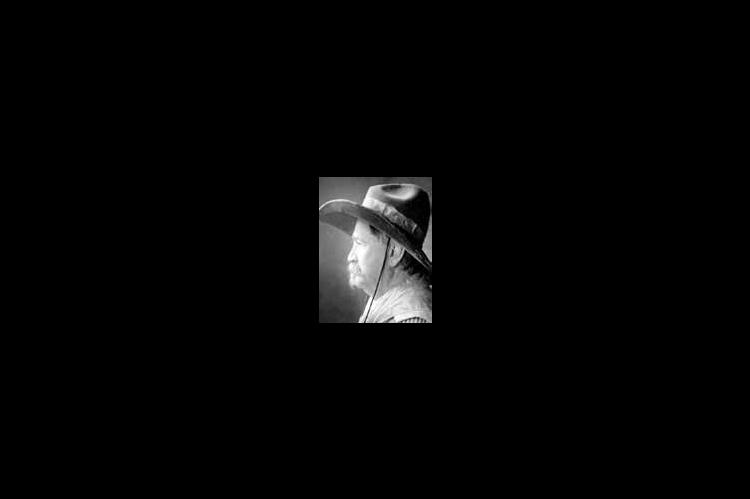
During the summer of 1878, Reginald Aldridge and his partner freeranged their cattle on the open prairie. Aldridge recorded his cowboy experiences in “Ranch Notes in Kansas, Colorado, the Indian Territory and Northern Texas,” published in 1884. Aldridge was an Englishman who recorded, quite faithfully, the captivating attraction he held for American cowboy life.
As winter approached, they moved to a little stream called Red Creek about seven miles from Medicine Lodge.
Aldridge explained, “The country there is rather rough and broken, but with a fair amount of timber along the river. We now turned our cattle loose for the winter; that is to say, we no longer herded them nor rounded them up at night. We simply rode round the range (line riding) about twice a day, and turned back anything that was straying beyond what we considered to be the limits.”
The object of this system of range herding, as it was called, was to save the cattle as much as possible from being driven about or interfered with. During the winter, the cattle lost conditioning on the open range and became more or less weakened. As Aldridge noted, “Any attempt at close herding would certainly cause the loss of a good many that would otherwise have managed to pull through.”
As the chill of fall began to settle in, having spent the summer grazing cattle, Aldridge found himself short of warm clothes. A wagon trip to Newton was in order “to fetch a supply of winter clothing.” On his return trip, our adventurous Englishman discovered just how suddenly the weather can change on the open prairie. As he later observed, “One day you may be glad to go about in shirt sleeves, and the next it is so cold that you cannot put on enough clothing to keep yourself warm. It is therefore necessary to go prepared with plenty of warm clothing on a journey of any length in the winter, however genial the weather may be at the hour of starting. Many a poor fellow caught in “a cold snap” has had his feet frozen so badly that he has been obliged to lose one or both in order to save his life.”
The young cowboy drove his wagon and ponies all afternoon in an effort to reach a particular house along the trail, but the sun set before arriving at his destination. The ponies were tired, so Aldridge resolved to stop and camp for the night. After a little bite to eat, he rolled himself up in a buffalo robe and drifted off to sleep.
By morning, snow was falling. The faint trail was disappearing under the cover of the fresh snow and thoughts of becoming lost quickened his movements as he hitched the team to the wagon. He threw his buffalo robe on top of his packages in the back of the wagon and hurried on.
Luckily, the house was only four miles from his camp, but somewhere along the route, his precious buffalo robe had blown out of the wagon. Fortunately, there was really no danger of getting lost in this “little snowstorm,” but the experience taught Aldridge to never take Kansas weather for granted.
After that first snowstorm, the weather warmed and life at Red Creek was pleasant for about six weeks, but towards the middle of December winter really set in. The ice on Medicine River became so thick, riders could cross it on horseback. That winter the cattle didn’t cross the frozen river, which allowed the cowboys to “hole up” in the dugout during the coldest weather.
Of course Christmas was celebrated with as much festivity as possible. A turkey was purchased from a neighboring settler. The postmistress agreed to cook it for the bachelors. On Christmas day, two cowboys rode side-by-side, “bearing the turkey carefully between them in a large tin pan, covered over with a cloth.”
“As they neared the house, the horses became restive and wanted to go in opposite directions and a few moments of fearful suspense ensued, but to the great relief of the anxious spectators, one of the men managed to catch hold of both sides of the pan while the other let go his hold, so that the precious freight was saved from peril and eventually landed triumphantly on the table.”
The old dugout may have been primitive, but that Christmas the cowboy shelter was as warm a palace as any place that could be found on The Way West.