
A Fateful Day
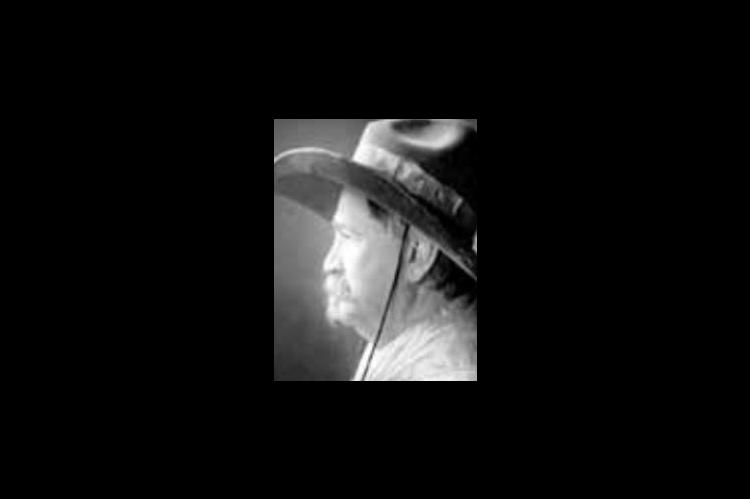
Like so many who had served in the terrible Civil War, Warren Young Jenkins returned to Illinois from the Civil War in 1864, and “went to housekeeping” with his new bride, Sarah V. (Boone). Together they worked rough timbered land with stumps and sprouts that “worried and disgusted” Jenkins to such a degree that he determined to move to the promised land of Kansas.
His first attempt in 1867 was thwarted by reports that matters were still very unsettled in Kansas. He reluctantly continued the struggle of farming stumps and sprouts until in 1872, the opportunity arose to travel to Kansas with a neighbor, Mr. Cuno Clawson.
Jenkins would be a great help to Clawson. The circumstances were perfect. Help out a neighbor and scout for a piece of land for his growing family of four children by that spring of 1872.
Twelve days on the road in the neighbor’s wagon brought Jenkins to Crawford County, Kan., at a place called Cherokee Station. From there he set out on foot to find his own quarter section of homestead land further west. After a few days on the road he came to a good-sized plank house with the sign “Meals and Lodging” on the right side of the road. Hoping to get something to eat, he approached the Inn, situated on a rise in the open prairie. On that higher ground he could see the village of Cherryvale in the distance and concluded to go on, “even if it made dinner a little late.” Like so many travelers Jenkins was unaware of the danger that lurked within the walls of that infamous Inn.
Jenkins ultimately returned to Illinois to gather his family. The following year of 1873, with a fifth child in Sarah’s arms, the family moved to Wilson County Kan., “near the five mounds,” four miles east of the town of Altoona.
Many years after their arrival Jenkins learned just how close he had come to losing his life on the way to Cherryvale in 1872. The very Inn that he had decided to pass by belonged to the notorious “Bloody Benders.”
Stories about the Benders are many and some border on the fantastic. Mysterious murders had taken place in the area. People were found with their heads bashed in. Then travelers along the Osage Trail began to come up missing without a trace. Despite suspicions the Benders eluded detection.
According to a report in the Thayer, Kan. Headlight, the Benders had come to Kansas during the Christmas season of 1870. The family consisted of John Bender, Sr., and Elvira, who went by Ma and their grown “children” Kate and John, Jr. The whole arrangement seemed strange, and family relationships were in question. Along the well-travelled Osage Trail, between Osage Mission (present-day St. Paul, Kan.) and Independence, Kan., the Benders set up an Inn in the plank house described by Warren Jenkins. A small stock of groceries, flour and liquors were kept. Travelers could find a meal or a room if needed.
When George Longcor and his young daughter went missing, Dr. William H. York, a neighbor of Longcor, began an investigation. Then York went missing. Dr. York’s line of travel could be traced to the Bender place and seemed to vanish. His brothers, Col. Edward York and Sen. Alexander York, mounted a search supported by a force of armed men. After a visit from the York party the Benders fled, going north to Thayer, where they took a train into Indian Territory.
At the abandoned Inn a trap door was discovered under one of the chairs at the dinner table. A canvass curtain divided the public from the private quarters, but it also concealed John Sr., who laid in wait behind the curtain with a hammer. The victim was easily disabled with a crushing blow to the back of his head. Pouncing on the disoriented victim a knife finished the job, cutting his throat from ear to ear, whereupon the body was dropped through the trapdoor to the basement.
A tunnel led to the garden and orchard at the back of the Inn. Upon closer inspection a depression was discovered in the recently plowed ground, suggesting the presence of a recent burial. The first body found in that gruesome field was that of Dr. York. When he was recognized, “men sat down and cried like children, others turned away sickened, while with others the sight only nerved them to continue the search.” Accounts differ. From eight to 15 bodies were found.
A posse headed for Indian territory. Officially, the Benders got away. Over the years fantastic stories placed the Benders in various parts of the country, but none were the real Benders. According to Warren Jenkins the “committee” found them near present-day Claremore, Okla., where they were “put out of business,” along Dog Creek.
No one can say for certain what became of the Benders, but it seems unlikely that they could have repented of their ghastly sins, never to kill again. All Warren Jenkins knew was that “it was well” that he had not stopped for a meal the fateful day that he turned toward Cherryvale on The Way West.
“The Cowboy,” Jim Gray is author of the book Desperate Seed: Ellsworth Kansas on the Violent Frontier, Ellsworth, KS. Contact Kansas Cowboy, 220 21st RD Geneseo, KS. Phone (785) 531-2058 or kansascowboy@kans.com.