
Fearless to the end
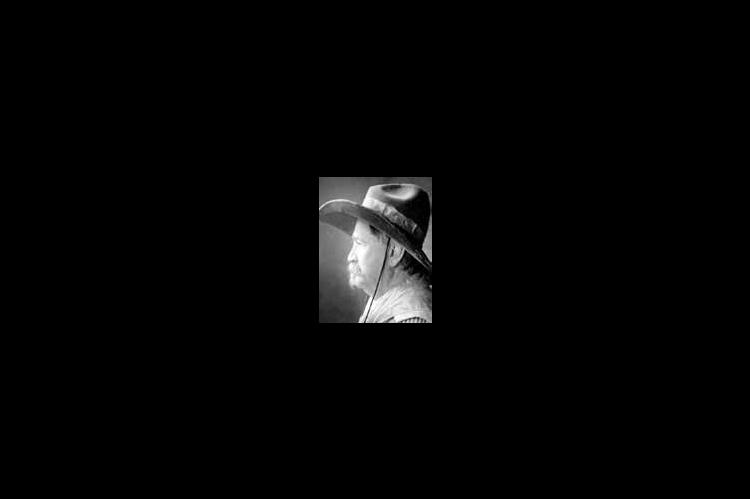
Capt. Jack Harvey is not well known today, but in the late 1860s, his every move was followed by the general public. He and Wild Bill Hickok had cut their teeth on death and daring in Missouri and Arkansas during the Civil War.
The two became government scouts during military campaigns against the Plains tribes.
In his book “Wild Bill and His Era,” William E.
Connelly wrote of a reunion of sorts at Hays City. Theodore (Theo) Bartles had ridden with Hickock during the war.
Bartles was a renowned scout in his own right.
Some said he was a better shot than Hickok. He knew Jack Harvey well and was in Hays City with Harvey’s old saddle pal Walt Sinclair.
The visitors were invited to go on an excursion across the Plains into the heart of Indian Country in the valley of the Republican River. Of course, they found themselves fleeing a large party of warriors.
Drawing upon their days of Johnny Reb, they turned and rode straight for the center of the charging warriors. Each man was a dead shot and every bullet brought down a warrior. Lesser men would have been run down and scalped.
Few men could identify with the clandestine encounters these men had lived through.
Undoubtedly, their shared life experiences contributed to the trusting, inseparable nature of the relationship between Capt. Jack and Wild Bill.
They were active during General Hancock’s campaign in the spring of 1867. In mid-May 1867, the Junction City Union reported that Capt. Jack and Wild Bill were on the “Indian front.”
Unfortunately, Capt.
Jack was on that front when his closest companion during those harrowing war years, Walt Sinclair, died of consumption (tuberculosis) on May 15, 1867.
Sinclair was another man who, in his time, was famous for his exploits.
The Wathena Reporter noted that Sinclair had contracted the disease during the late war while in service of the government along with Capt.
Tough and Jack Harvey.
A short life was not unexpected for bold and reckless men like Walt Sinclair and Capt. Jack Harvey.
Harvey was in Junction City in late June, probably in or out of Fort Riley. The editor of the Union wrote, “The Junction Union is indebted to Jack Harvey, the scout, for the particulars of another outrage, committed on Monday, the 17th, about noon on Plum Creek 18 miles west of Fort Harker.”
Capt. Jack happened upon a survivor of an attack on a government wagon train as it approached Plum Creek (present-day Holyrood).
A party of Indians suddenly appeared and cut off two men who were riding in advance of the train. One of them, a stone mason from Leavenworth, was known to Capt. Jack. He was killed instantly, scalped and mutilated. The other man escaped on foot to the ranch at the crossing of Plum Creek, 200 yards from where the attack had begun. The Indians watched the train from a distance but left it alone.
The stage coach at the station was compelled to lay over until the Indians moved on.
Indians remained a constant threat to frontier Ellsworth. Hancock’s failure to bring peace to the plains kept everyone on heightened alert.
Capt. Jack and Wild Bill were constantly on the lookout, and the denizens of the fledgling frontier town eagerly looked to the hills for the scouts and news of the Indian war. When the scouts came in, the citizens gathered around them “with anxious faces and listening ears.”
The government scouts were celebrities wherever they traveled. They could find their way into the papers by riding the train or visiting a favorite hotel. One editor wrote, “Wild Bill, the celebrated scout, with Jack Harvey and some dozen of their companions, were upon the train, having just come in from a scouting expedition under Gen.
Sherman... How long these athletes will be able to stand such a mode of life — eating, drinking, sleeping (if they can be said to sleep) and playing cards with their pistols at half cock, remains to be seen.”
At Ellsworth, Wild Bill proudly dangled a brandnew gold pocket watch before his friend. Capt. Jack was certain that he could shoot a pistol ball through the ring without harming anything. A bet was made. Wild Bill stood resolute, holding the end of the chain at arm’s length. Capt. Jack fired and blew the watch to smithereens.
Bill declared that he owned Jack for the next month.
“Jack showed his white teeth, twinkled his blue eyes and said, “All right Bill.”
The next day, Wild Bill spotted Capt. Jack walking across Fort Harker’s parade grounds. Bill ordered Jack to halt and hold his hat over his head.
Drawing his pistol, Wild Bill shot a ball parting Capt. Jack’s hair just above his forehead. Jack “never winced but put his hat on and walked away as though nothing had happened.”
Unfortunately, the wild life was about to catch up with Capt. Jack Harvey. He followed Walt Sinclair to the grave, dying of consumption in Ellsworth on March 13, 1868. The Leavenworth Daily Conservative pronounced him, “Brave. Cool in the hour of danger, and one of the best shots on the western border, Jack was always ready for a bold ride or a fight with the enemy. He was as generous and true-hearted as he was brave...” and fearless to the end on The Way West.