
Fifer’s Quest
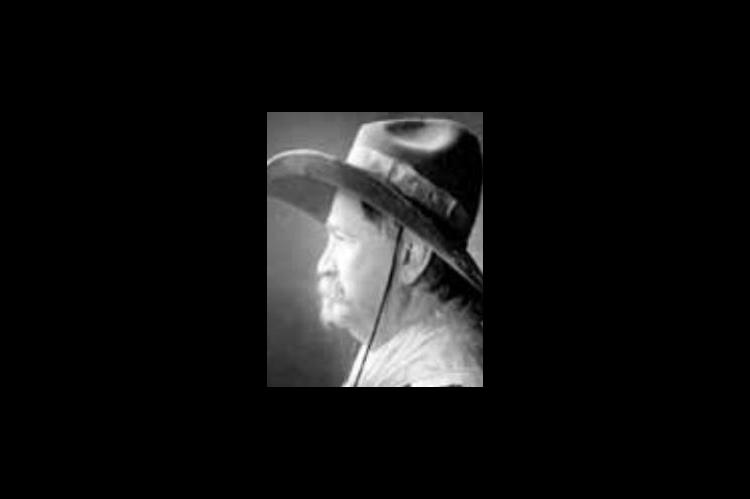
While perusing through books at an estate sale, a friend found a book about celebrated Civil War nurse Mother Bickerdyke. A passage from “Mother Bickerdyke and The Soldiers” described the defense of Corinth, Ms., from Oct. 3 and 4, 1862.
Through the day siege guns filled the air with powder and smoke. The air seemed to quake with “a rolling peal.”
Hearing that an approaching brigade had marched all day to reach Corinth without food, Mother Bickerdyke requested a rest for the men before going into battle. When the request was refused “The men heard a strong voice call ‘Halt’ as they were passing.” It was Mother Bickerdyke. “With all possible dispatch each man was given a bowl of soup or coffee. While they were drinking, their canteens were filled with water and a loaf of bread was supplied to each.”
With the “Forward march” order “their steps were lighter and their faces brightened.” To the boys that day she was not only “Mother,” she was “the General.”
During the night, Confederate missiles showered destruction into the heart of Corinth. The hospital’s 1,800 patients were evacuated to a field hospital at Kincaid’s Grove. In the midst of what would appear to be orchestrated chaos a “wounded” musician laying on the ground was overlooked. He would have remained that way had Mother Bickerdyke not made a final “round of inspection” with her lantern.
When he was found, he exclaimed in a voice that was like that of a frightened child, “Oh Mother Bickerdyke! I am so glad you found me, for it is awfully lonesome here.”
At the bottom of the page a note was written in pencil stated, “That must have been me, and I was not wounded but was sick, and she took care of me and nursed me back to life and health. W. Y, Jenkins, Co. H 9th Ills. Vol. Infty.”
Being curious, a search found that Warren Young Jenkins was a fifer in the 9th Illinois Volunteer Infantry. There was much more to learn about Mr. Jenkins.
He published a family history, The Jenkins, Boone, and Lincoln Family Records, in 1925. Jenkins was born northeast of Hillsboro, Ill., Feb. 13, 1839 to Wickliffe B. and Artemesia R. (Thomas) Jenkins. The family later lived on Shoal Creek, west of present-day Panama, Ill. (about 50 miles northeast of St. Louis).
Jenkins relates many stories of frontier life in his Family Records, such as living through one winter on hominy and buffalo hide soup made from small bits of boiled hide.
For three winters having no shoes, he wrapped his feet in old rags or sheep hide. In that way he chopped firewood. The winter of 1847 he froze his feet so badly he couldn’t walk for three months.
Clothes were “flax patch and sheep backs.” Hats were made of “platted straw” and “caps of possum, coon or wild cat hide.”
Descriptions of Civil War battles were just as fascinating. After fighting at Fort Donaldson, Shiloh, and Corinth, the regiment became known as the Bloody 9th. More than half the men were either killed, wounded, or taken prisoner. By the end of his enlistment 338 men remained from a total of 1,368. He returned home New Year’s Day, 1864, and married Sarah V. Boone Feb. 2, 1864.
By 1873 he moved his family, including four children to Wilson County, Kan., “near the five mounds, four miles east of Altoona.” After 26 years in their beautiful Kansas home, Jenkins and his wife pulled out in 1899 for Gunnison, Colo. They were seeking a more healthful climate at a higher altitude. South of the great bend of the Arkansas River they passed through a virtual “desert of sand hills.” At Kinsley they crossed a bridge over the river and camped west of town. “Here one of the most terrific storms I ever witnessed came on us, compelling us to anchor our wagons to the earth to keep them from being blown over. When daylight came, June 8, the country for miles in every direction was s sheet of water.” Unable to continue overland, Jenkins loaded his wagons and teams on a railcar to take them over the flooded western prairies to Pueblo, Colo.
Mr. and Mrs. Jenkins returned east to Canon City, Colo., in 1911, where he was living when he penciled his note in “Mother Bickerdyke and The Soldiers.” A later page recalled that news of General Lee’s surrender “was borne throughout the land on the wings of lightning.” The Civil War was at an end. No more would the dreadful bloodshed and devastation which it had caused continue to make home a place of desolation, and fill the land with soldiers’ graves.” At the bottom of the page Warren Jenkins wrote simply, “The end.” But, of course, it was only the beginning of a young fifer’s quest to build a new life on The Way West.
“The Cowboy,” Jim Gray is author of the book Desperate Seed: Ellsworth Kansas on the Violent Frontier, Ellsworth, KS. Contact Kansas Cowboy, 220 21st RD Geneseo, KS. Phone (785) 531-2058 or kansascowboy@kans.com.