
Frontier entrepreneur
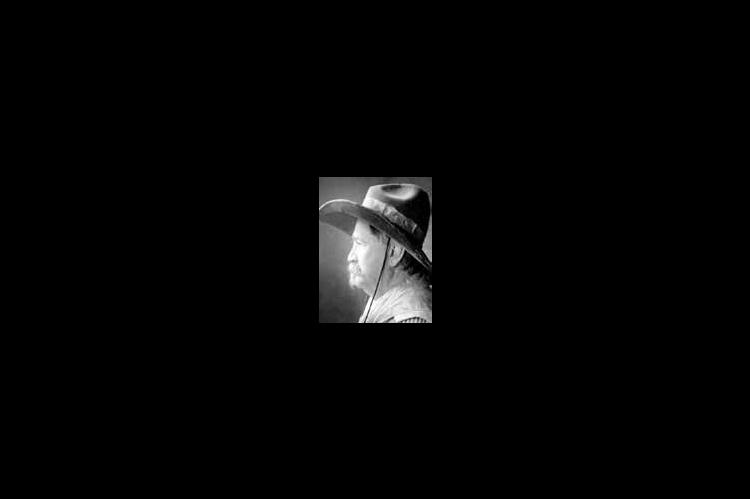
At Caldwell, Kan., on the southern border of Kansas, “Curly” Marshall is still remembered for establishing the First Chance/Last Chance saloon in 1869.
The notorious dive was located just west of the Chisholm Trail on Bluff Creek. Located just above the state line with Indian Territory, travelers were able to get their first swig of whiskey. Below the state line, the federal government ordered Indian Territory dry. Alternately, anyone entering into “The Territory” from Kansas found the log saloon to be the last chance to down a shot of alcohol. The Last Chance was popular with Texas drovers and a notorious hangout for desperados.
Marshall was a suspected compatriot of the horse thief set, but a direct connection was never proven.
Marshall’s early record is not well-known. George D. Freeman, in his book “Midnight and Noonday,” said he was a government scout during the Civil War. We do know that he was in the 2nd Maryland Cavalry, Confederate States of America.
Some accounts say he had been a railroad engineer in an eastern state before coming to Kansas. The Dec. 5, 1872, Ellsworth Reporter recalled that he had killed at least one man in Ellsworth’s wild end-of-track days of 1867-68. Did he work for the railroad, or could he possibly have been one of the hundreds of unnamed men who helped build the railroad across the plains?
Some accounts said he was a scout during the Indian campaigns. It’s possible that he served in some capacity with the 19th Kansas Volunteer Cavalry when they supported General Sheridan’s “Winter Campaign” into Indian Territory over the winter of 1868-69. The 19th Kansas composed the eastern prong of the campaign, traveling down the Chisholm Trail before turning west across uncharted territory to rendezvous with U.S. troops on the Cheyenne-Arapaho reservation in present-day western Oklahoma.
The connection with the 19th Kansas seems probable, as he was the first to recognize the advantages of a border saloon along the Chisholm Trail when the winter campaign came to an end. One account says he “came down” to Wichita from Hays City and Ellsworth with “the Walker boys.” “They were reported as bad men and killers, and all had a record and a private graveyard.”
Ike Walker notoriously operated a hotel and stable in Delano, the “anything goes” town across the Arkansas River sometimes called West Wichita.
Besides carrying the same nickname, the other Walker, “Curly Walker,” was cut from the same cloth as Curly Marshall. Walker was known as a desperate man who “placed no higher value upon the life of a fellow being than that of a fly.”
Marshall and Walker surrounded themselves with recognized desperate characters. It seemed their main goal in life was to get drunk, get in a row and shoot the lights out of something. Shooting was a favorite pastime. At the Buckhorn Tavern and Hotel, founded and operated by Mr. and Mrs. Henry Vigus in 1869, boarders included cattlemen, merchants, gamblers and a few of Marshall’s friends. At dinner, the boys especially enjoyed throwing dishes in the air and shooting at them with blazing six-shooters, all while never leaving their place at the table.
Marshall may have been a tough hombre, but his entrepreneurial spirit set him apart from his devilmay- care pals. George Freeman described the Last Chance, Marshall’s most famous enterprise: “The ranch consisted of a double log house in which were kept whiskies, provisions and feed for horses...”
Marshall hired a manager to operate the Last Chance, splitting his time between the isolated saloon and Wichita. Not content to operate a single enterprise on the border, Marshall opened a dance hall in Wichita; some say it was across the river in Delano. Times were never dull. He once had to quell a disturbance with his pistols when Texans “full of bug juice” started shooting out the lights. With “pistols out” and covering the hearts of two of their leaders, the Texans wilted and were driven out by Marshall, the determined “dance-house keeper.”
The rougher element was thoroughly involved in the administration of early Wichita. In July, 1870, Marshall’s compadre, Isaac Walker, was appointed city marshal. Later in the year, Marshall was persuaded to fill Walker’s position and served as Wichita’s city marshal into 1871.
When Deputy U. S. Marshal Jack Bridges entered Wichita on Feb. 28, 1871, supported by 25 soldiers from Fort Harker, he was looking for one of Curly Marshall’s friends, Jack Ledford.
Ledford was a known horse thief, one of Wichita’s finest citizens. Even though Curly was Wichita’s city marshal, he didn’t help the invading officers but had two horses saddled in an attempt to get Ledford out of town. He was too late. The officers discovered Ledford in his hiding place and shot him down as he attempted an escape.
Back on the southern border, the Last Chance was making money. Marshall made plans to expand the favorite resort of the desperado and horse thief. If a dance hall made money at Wichita, there was plenty of money to be made entertaining lonely border men. All the enterprising frontier entrepreneur needed was a proper dance hall next to the Last Chance, but folks in Caldwell were growing uneasy with Curly Marshall. Trouble was stirring on The Way West. (Next Time – A Short and Dangerous Life)
“The Cowboy,” Jim Gray, can be reached at 220 21st Rd., Geneseo, KS 67444, (785) 531-2058 or kansascowboy@kans. com.