
A frontier romance
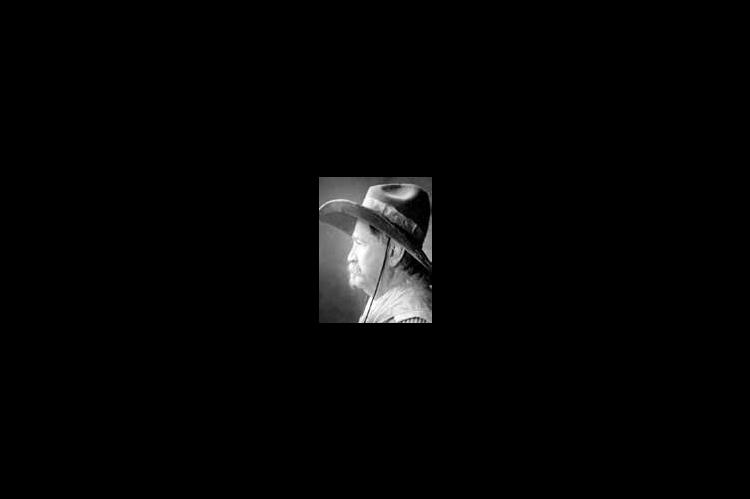
Phillipe St. George Cooke arrived at Jefferson Barracks near St. Louis in 1827. Jefferson Barracks was established the previous year of 1826 to serve as an Infantry School of Instruction. Having recently graduated from West Point, Second Lieutenant Cooke reported to the 6th Infantry Regiment under the command of Maj. Bennett Riley. Construction of the new post was the priority of the day. The ready made workforce from the 1st, 3rd and 6th Infantries supplied the labor.
During the summer of 1828, the Pawnees declared war on the freighters and their long wagon trains traversing the plains along the Santa Fe Trail. Caravans were attacked, leaving traders devastated and left mostly on foot to find their way back to Missouri. The following spring, William Clark called for troops to escort the traders across the plains.
Four companies of the 6th Infantry boarded the steamboat Diana with families in tow. Cooke’s journal recorded “the boat swarmed with their wives and children, the deck was barricaded with beds and bedding...” Crying babies and cackling chickens left the boat captain laboring in a state of confusion.
The troops rendezvoused at Cantonment Leavenworth, Fort Leavenworth’s earliest designation. Two weeks later, Maj. Riley led 200 troops out of the post bound for a rendezvous with the caravan of 79 men and 38 wagons at Round Grove. The grove was a campsite on the headwaters of Cedar Creek in presentday Johnson County.
The summer passed amid encounter after encounter with Comanche and Kiowa warriors. Cooke recalled, “I never failed for months to sleep in pantaloons and moccasins, with pistols, and a loose woollen coat for pillow; my sword stuck in the ground in the mouth of the 10, with my cap upon the hilt ... in less than 10 seconds, I was out and prepared to perform my duty.”
The 6th Infantry returned to Cantonment Leavenworth on Nov. 8, having successfully defended the Santa Fe traders for the 1829 season. Second Lt. Cooke was not impressed with accommodations at the post, writing in his journal that the 6th Infantry “took quiet possession of the miserable huts and sheds left by the 3rd Infantry the preceding May.”
Nevertheless, Cooke threw himself headlong into the work before him. Hamilton Gardner, author of “Romance at Cantonment Leavenworth,” wrote of the opportunities for professional education at the isolated frontier post. From the Summer 1956 issue of Kansas History magazine, opportunities included “...drill, study, the handling of men, a broadening outlook on the developing frontier, an insight into the personalities pushing persistently towards the unknown West, contact with Indian tribes and above all, the sense of duty performed. All had its permanent effect of the young officer...”
Cantonment Leavenworth quickly developed into an important Indian affairs post. U. S. Indian Agent Maj. John Dougherty administered Indian Department policy to the tribes living in the expansive watershed beyond the mouth of the Kansas River at its confluence with the Missouri River. Few men alive could have known the Indian mind better than Dougherty.
He had traversed the Upper Missouri country as a hunter for the St.
Louis Missouri Fur Company. He knew seven native languages and the French language commonly spoken among the fur trappers.
He had been with Maj.
Stephen H. Long on his famous expedition to the Rocky Mountains.
In the early spring of 1830, Mrs. (Mary) Dougherty invited her sister, Rachel Hertzog, for an extended visit to the post. Hamilton Gardner wrote, “Picture the heightened interest, even excitement, especially among bachelor officers, occasioned by the presence of an attractive and eligible young lady, fresh from civilization,” a setting very reminiscent of Olivia de Havilland creating a stir between Errol Flynn and Ronald Reagan in the 1940 movie, “Santa Fe Trail.”
Cooke’s words from his 1857 book “Scenes and Adventures in the Army” reveal a certain level of enthusiasm for his fortunate circumstances.
“Blessed with an harmonious and congenial, though small society, the days, the months, flew by. Our duties performed, and studious improvement not neglected, the pleasures of female society gave the greater zest to diversions and exercises. Often the whole of us, in a party, would canter for miles through prairie and grove and spend the day on the shady banks of a pretty stream, there, where the world had never made its mark — forgetful of its very existence — we gave our whole hearts to sylvan sports, to feast and merriment, to happiness.
A week seldom passed without dancing parties, to which rare beauty and fine music lent their attractions.”
Conditions were nearly perfect for romance.
In time, Miss Hertzog’s attentions were drawn to “the tall, slender lieutenant from Virginia.”
The following notice was published in the Nov. 16, 1830, St. Louis Missouri Republican.
“MARRIED: On Thursday evening, the 28th ultimo, by the Rev.
Mr. Edwards, at the residence of Maj.
Dougherty, Cantonment Leavenworth, Lieutenant PHILIP ST.
GEORGE COOKE, U.S.A., to Miss RACHEL WILT HERTZOG.”
A more detailed account of the happy event would have been desirable, but a fuller story has not survived.
However, one can imagine the newlyweds dressed in their finest attire, walking in Army tradition under the crossed sabres of the attending 6th Infantry officers at the very first military wedding recorded in a place called “Kansas” on The Way West.
“The Cowboy” Jim Gray can be reached at 220 21st Rd., Geneseo, KS 67444, (785) 531-2058 or kansascowboy@ kans.com.