
A frontier turkey hunt
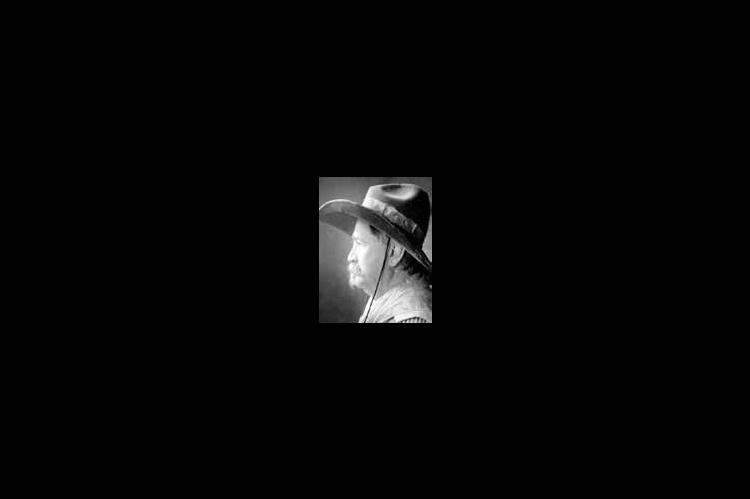
William Sternberg was one of 10 children born to Levi and Margaret Sternberg. The family established themselves at an early date near Fort Ellsworth in Ellsworth County.
Will’s older brother, George, was the surgeon at the frontier military post. George immediately recognized the unique opportunity to establish a homestead on quality Smoky Hill River bottom land. He easily persuaded his father, a Lutheran minister, to bring his family west. Within a short time, the entire family was making plans to establish a ranch and reap the rewards from providing produce, milk and beef to Fort Ellsworth.
Once established on their “Cottonwood Ranch,” each family member took on particular responsibilities. Turkey hunting became one of Will’s favorite activities. Every wooded stream and ravine seemed to be alive with wild turkeys. Over the years,“many a royal bird” fell before him.
Winter snow provided the perfect opportunity for fun and adventure. Will took great delight in flushing flocks of wild turkeys while galloping on horseback over the prairie. Once they landed, it was an easy task to pick up their tracks in the snow and flush them again. He would keep flushing them until they became tired. The exhausted birds would not flush as a flock, but would allow Will to approach them, “making it an easy matter to get as many as you can carry.”
When there was no snow on the ground, more conventional means of hunting were required. One particular turkey hunt in December 1867 turned into a memorable adventure. Will and his older brother Theodore walked along Ash Creek, a tributary near a “badlands” horseshoe bend of the Smoky Hill River approximately a mile west of Sternberg’s Cottonwood Ranch. Deep ravines filled with wild sumac provided perfect habitat for turkeys. The boys soon discovered a large flock feeding in a patch of sumac at the bottom of a short ravine. Will crawled into a narrow, well-concealed location from the upper reaches of the ravine and waited. Theodore made a wide circuit around and below the ravine, being careful not to alarm the turkeys as they quietly fed beneath the cover of dense sumac branches.
Theodore pulled off his task perfectly, catching the hidden turkeys completely by surprise. Instead of flying, the flock ran directly towards Will, but as they ran past the young hunter, he excitedly began using his shotgun as a club, swinging wildly without so much as one blow taking effect. Realizing that danger was so near, the turkeys finally flushed into the air.
Will recalled, “As they took flight, I remembered what the gun was for and fired quickly, killing a fine young gobbler.” That would make at least one turkey for the table. “Had I kept cool, being a good shot, I should have killed several of them.”
But the day’s adventures had just begun. The boys bagged two more birds before they turned toward home. The warm winter day turned unpleasant as a cold wind forced them to seek shelter by walking in the bed of the creek.
The boys were lost in the things that boys do as they talked, joked and enjoyed their hunt along the way. As they neared the river, the young men walked over the creek bank to suddenly find themselves in the very midst of an Indian encampment.
“Instinctively, we both dropped to our stomachs in the hope of escaping observation, but they had seen us, so with as much calmness as we could assume, although greatly alarmed, we arose and walked into the camp.”
As Will explained it, “Happily for us, they proved to be a large party of friendly Kaws on their annual buffalo hunt.”
The Kansas people were commonly referred to as the Kaw and traditionally camped in that bend of the Smoky when traveling to their hunting grounds. The camp was bustling with activity as the band moved quickly to set up their lodges. The storm enveloped them along the banks of Ash Creek while women were hustling up the tepees and children gathered bundles of dry brush for the fires.
Few in the camp paid any attention to the young hunters. However, one brave was attracted to the pistol that Will was carrying on his hip. Imagine Will’s surprise when the Indian suddenly leaned forward and deftly drew the pistol from its holster. Taking quick aim “at a small, blazed spot on a tree about 60 feet away, he fired and gave a pleased chuckle as he handed me the pistol … He had fairly centered the mark.”
The boys were happy to continue their trek home, and conversation around the supper table surely turned to the amazing turkey hunting adventures that could be encountered when hunters ventured beyond their homes on The Way West.
“The Cowboy,” Jim Gray can be reached at 220 21st Rd., Geneseo, KS 67444, (785) 531-2058 or kansascowboy@kans.com.