
The Geneseo Jungles
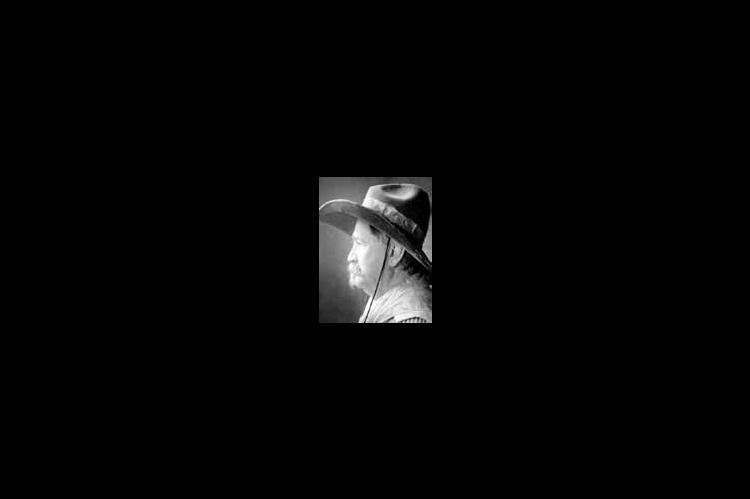
I get a little of my penchant for story-telling from my father, Bruce Cody Gray Jr. Riding over the countryside in the pickup, his thoughts would turn to earlier times, and, well, I was a captive audience.
He talked of family, friends and a few not-sofriendly. He talked about cows and cowmen and horses he had known. I soaked up a lot of it, but must admit, the greater portion of his stories have been forgotten.
If you are trying to get a picture of him in your mind, I would say he was a classic “Junior,” and Junior was what he answered to. He was a small fellow, ornery and a bit of a leprechaun. Maybe it was in the water, but he wasn’t the only ornery one in good old Geneseo, Kan.
A lot of the farmers and ranchers gathered most mornings at the Geneseo Grain Company to see who was going to tell the best story. Of course, no one came right out and suggested they were there for any other reason than business.
One of dad’s stories was that of hiring men to help do farm and ranch chores. Geneseo was a railroad town, and the local hobo camp was usually well-populated with men looking for work.
When grandad Gray needed men, all he had to do was drive his team and wagon to the Park Hotel, a block north of the transient camp known as the Geneseo Jungles. A short interview of the men in front of the hotel would gain the laborers needed. The men selected would step out from the line of others standing along the street in front of the hotel and climb into the wagon. Some might hire for a day and others for several weeks.
Railroads had brought the country closer together with their iron rails crisscrossing even the most remote parts of America. For folks with limited means to travel, riding the cars became the universal way to get from one place to another.
The main line of the Missouri Pacific Railroad passed through the middle of town, connecting Kansas City to Colorado Springs. From the south, a line ran from Wichita through Hutchinson and Lyons before merging into the main line at Geneseo. Another branch line ran north to Kanopolis to connect with the main line of the Union Pacific. At the east edge of Geneseo, a Santa Fe line crossed the Missouri Pacific connecting Little River to Geneseo and towns further northwest. The connections made Geneseo a popular crossroads for tramps riding the rails.
An empty rectangular plot of ground across the street from the stockyards of the main line served as “the kitchen, dining room and council chamber” for tramps and the disciples of John Barleycorn, the legendary champion of intoxicating spirits. The hallowed council grounds of the Geneseo Jungles were within easy reach of passing trains as well as downtown Geneseo.
Jungle camps could be found across the country, especially at popular crossroads. The proximity of the Geneseo Jungles to town was unusual, for most jungles, while situated close to idle or slowmoving trains, were usually in isolated locations away from prying eyes.
As described by Michel Wakin in the book “Hobo Jungles,” the itinerant camps began as an outgrowth of Civil War bivouacs, “which taught men to live off the land.” Cooking and camp supplies were ever-present, left by former travelers. Rules of the road obliged the weary, hungry, “side-door-Pullman tourists” to leave utensils clean and the camp in proper order.
Sociologist Nels Anderson wrote in 1923, “The hobo enters this life as he does no other. Here he turns his back on the world and faces his fellows and is at ease. This sense of freedom, community and danger, coupled with a simple and anonymous ‘no strings attached’ form of domesticity, is, and remains, central to the jungle’s appeal.”
A former “rider of the rods” submitted “The Harvest is Over” to the Geneseo Journal, a poem of carefree life in the jungles. In part, he paid homage to the hobo.
He travels here and he travels there He knows no troubles, no woes nor care. He hikes to the jungles and makes him a stew And if you are hungry there’s plenty for you. With a can for a kettle and a can for a cup, From the black steaming java you’re invited to sup. Then around the campfire the cheerful voices ring. Around many a spread that is fit for a king. In the fall of 1919, it looked as though the Geneseo Jungles had come to an end. Charley Guiliford leased the property from the railroad. The Geneseo Journal described the annihilation of the Jungles as the camp yielded to the plowshare “under the dominion of progress … and this favorite resort of the itinerant bum (is) now wiped off the map ...”
But the proclaimed death of the Geneseo Jungles was considerably premature. A new jungle sprung up in the isolated triangle of land at the crossroads of the Missouri Pacific and Santa Fe railroads at the east edge of town.
When the Geneseo Jungles finally disappeared has been lost to time, but they certainly left an impression on Junior Gray. I can hear him now, telling stories of men living free and easy and singing “Hallelujah I’m a Bum!” on The Way West.
The Cowboy,” Jim Gray can be reached at 220 21st Rd., Geneseo, KS 67444, (785) 531-2058 or kansascowboy@kans.com.