
Harrowing Adventure
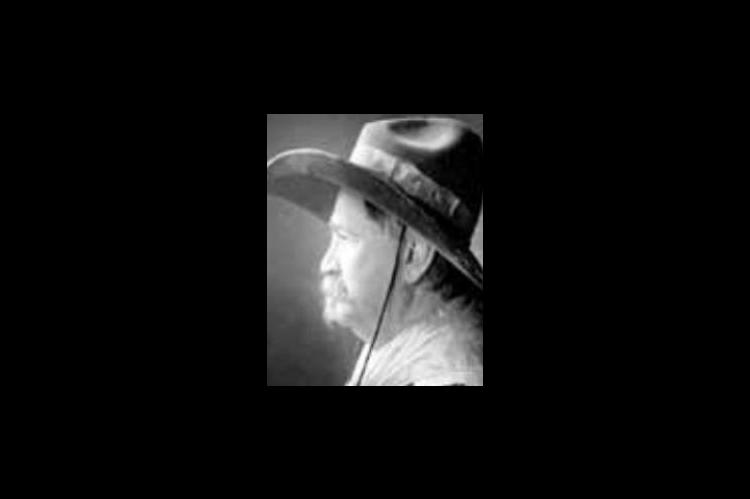
The Autobiography of Capt. Richard W. Musgrove was published in 1921, seven years after his death.
Musgrove was born in Bristol, N.H. and served in the 12th New Hampshire Infantry during the Civil War. Toward the end of the war, on April 24, 1864, Musgrove was promoted to captain in the 1st Regiment U. S. Volunteer Infantry, made up of Confederate prisoners of war who had taken the oath of allegiance to the Union and organized for service in the West. They were commonly referred to as “Galvanized Yankees.”
Musgrove and elements of the 1st U. S. Infantry arrived by riverboat on the shores of Fort Leavenworth in late October, 1864. Musgrove noted the difference between the waters of the Mississippi River, which he described as clear, but the Missouri River was so muddy that one could not see an inch below the surface.
The battalion was under the command of Lt. Col. William Tamblyn, who was to build the new post of Fort Fletcher. Capt. Strout was to establish a post at Monument Station, and Musgrove’s destination was Pond Creek Station, 450 miles west of Fort Leavenworth in far western Kansas. All of the locations were along the Smoky Hill Route of Butterfield’s Overland Despatch, a newly established freight and stage line from Atchison, Kansas, to Denver City, Colo.
The troops left Fort Leavenworth in the rain with the support of five wagon trains, making a total of 109 wagons filled with company supplies, tents, commissary, and quartermaster’s stores, as well as many wagons of lumber for constructing the posts.
By the time the entourage reached St. Marys, Musgrove found himself “prostrated with what was called the dumb auge,” the result of sleeping on wet ground and “breathing “malarial air:’
For the first time in his life he rode in an ambulance because he was unable to sit in the saddle. In the ambulance Musgrove proceeded ahead to Fort Riley where he rested in one of the officer’s quarters.
Following a short rest at Fort Riley, the march continued through Junction City and Salina where they passed a public house that displayed on its wall an immense sheet of canvas lettered with the words, “The last chance to procure a square meal:’
Salina would hold their last sight of an acceptable dwelling, as the open frontier lay before them. With 300 miles still before them the troops entered, “the domain of the Indians, the buffalo, the antelope, the deer and the wolf:
Indeed, the troops passed through stampeding buffalo and were serenaded at night by coyotes known to some as “prairie wolves:’ The air filled with howls “that lulled us to sleep many a night:’
In the heart of Indian country Col. Tamblyn established Fort Fletcher, south of present-day Walker, Kan. An Indian camp had only recently been abandoned before their arrival. Two of the wagon trains, or about 50 wagons, were unloaded before beginning their return to Fort Leavenworth.
After a rest of a couple of days, Company A under the command of Capt. Strout and Company I under Captain Musgrove resumed their western march along the Smoky Hill River. The two companies were supported by 59 supply wagons
Beyond Fort Fletcher the men were initiated into life among the wild tribes of the prairie. Mules were run off Butterfield stations were raided and burned. Men were found mutilated and tortured to death. The entire command was surrounded by mounted warriors at Monument Station. West of Monument harrowing adventure awaited the troops with every step.
Musgrove’s command finally reached their destination in late November. Musgrove thought Pond Creek resembled a small New Hampshire trout brook. Capt. Dewitt C. McMichael’s troopers from the 13th Missouri Cavalry were already established at the creek and following the example of the Missouri boys, the former Confederate boys dug holes in the bank of the creek for shelter. The “dug outs” were excavated six feet into the bank. They were 10 feet wide and eight feet deep. Poles were cut from trees along the river bank and laid over the holes and covered with a layer of brush and prairie grass held in place by a final layer of soil. The dugouts were completed just as winter snows began.
And when winter began it began in earnest. Storms struck relentlessly, covering the land to a depth that inhibited travel. Supply trains, long overdue, failed to arrive. One hundred twenty men were looking at certain starvation. McMichael attempted an evacuation of his Missouri troops on Jan. 8, 1865, but weather forced his return to post later that day.
Extreme cold and snow incessantly continued to fall, leaving them no choice but to evacuate. The morning of Jan. 15, 1865, Capt. Musgrove’s troops joined the Missouri troops to bid adieu to Camp Pond Creek. Their underground quarters had been reasonably comfortable. But for the want of foodstuffs they would happily have endured every onslaught that winter could deliver on The Way West.
“The Cowboy,” Jim Gray is author of the book Desperate Seed: Ellsworth Kansas on the Violent Frontier, Ellsworth, KS. Contact Kansas Cowboy, 220 21st Road, Geneseo, Kan. Phone: (785) 531-2058 or kansascowboy@kans.com.