
Ho for Kansas!
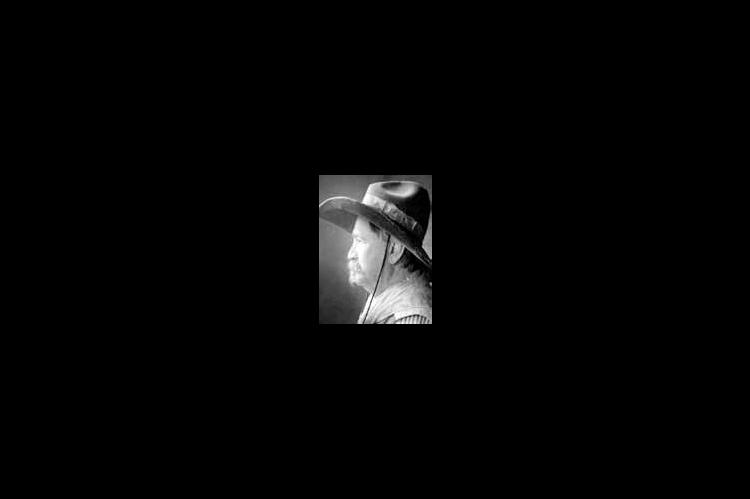
William H. Middaugh arrived on the front range of the Rocky Mountains in the middle of the 1859 gold rush. Middaugh was born near Painted Post, N.Y., in 1814. By 1836 he married Mary Marvin and was living in Erie, Penn., building wagons.
Pennsylvania Germans were master wagon makers, producing every kind of wagon used in the mid-19th Century. The state was especially known for the massive Conestoga wagons, the “prairie schooners” that carried freight to every corner of the frontier.
By 1853, Middaugh moved his family to New Castle, Penn., and in 1859, he set out alone. It was “Ho For Kansas!”, for the towering Rockies were on the far western frontier of Kansas Territory.
When Middaugh arrived, the twin towns of Denver City and Auraria were overrun with gamblers, murderers and thieves. Vigilante justice, sustained by “the people’s court,” kept the citizens as safe as possible.
Although never directly stated, all indications are that Middaugh played a significant role in vigilante defense of regular law and order. References maintained that he was “active in his campaign against the rough element.”
Middaugh maintained a farm 2 miles north of town where he planned to raise “all varieties of garden and farm produce.” In town, he operated a two-story frame boarding house.
Auraria was, unfortunately, home to a band of men known appropriately as “Bummers,” whose apparent goal in life was to make life a burden to the town’s peaceful, thrifty citizens.
On Feb. 1, 1860, Middaugh witnessed the theft of a couple dozen wild turkeys from the back of a settler’s wagon. When justice was demanded, the bummers took to the streets, halting and threatening peaceful citizens “with cocked pistols and glittering knives.” Twice, the bummers tried to assassinate Middaugh, before Marshal Tom Pollock, the local blacksmith, rounded them up with his Hawken rifle.
A peoples’ court was convened at Cibolo Hall and the bummers were given five hours to leave town or leave this life at the end of a rope. They left town, and the Turkey War of 1860 was over.
By April 5, 1860, Auraria merged with Denver City to establish a single mode of authority. To curb the growing violence, the people’s court, in separate considerations, tried and sentenced four men for hanging offenses in the first half of 1860, but that didn’t deter James Gordon.
Friday evening, July 20, 1860, a drunken Gordon beat John Gantz. As he lay prostrate against the side of the bar, Gordon put his pistol to Gantz’s head and pulled the trigger. Mounting a fleet horse, Gordon eluded the vigilantes and disappeared. Through the discretionary weight of vigilante law, Middaugh was designated sheriff of Arapaho County and immediately initiated an epic manhunt.
Setting out on Aug. 9, 1860, Sheriff Middaugh tenaciously tracked Gordon for eight days and an amazing 700 miles into eastern Kansas. On Aug. 17, Middaugh executed a flawless arrest at Humboldt, Kansas Territory.
At Leavenworth, U.S. Marshal Philip T. Colby appointed Middaugh Deputy U. S. Marshal, granting authority beyond Arapaho County. In spite of angry mobs bent on hanging Gordon, Middaugh eventually delivered his prisoner to Denver City and the people’s court. Within hours, James Gordon was found guilty of murder and sentenced to hang.
Several thousand people gathered to witness Gordon’s execution. Standing on the gallows, the condemned man turned to Sheriff Middaugh and asked him to fix the rope “so that it would break his neck quick.” A few minutes later, James Gordon was launched from this life into eternity.
After weeks of grueling service to Arapaho County, Middaugh boarded a Pikes Peak Express coach with five additional passengers, bound for “the river,” which meant the Missouri River on the Kansas-Missouri border. The coach was reportedly transporting $9,000 in gold dust.
Three months later, Middaugh was still in eastern Kansas when Kansas gained statehood on Jan. 29, 1861. Middaugh was working to help establish election districts for the new government of Colorado Territory.
Once Middaugh was back in Colorado, he offered to lease his Denver City building to Arapaho County Commissioners for use as a county court house. The proposal was accepted for use beginning in January 1862.
In late March, Middaugh was on the move again. Instead of traveling by stage coach, he chose to travel alone driving a team and buggy. Twenty miles east of Julesburg, he stopped to stay overnight at Diamond Springs, operated by Mr. and Mrs. John Robinson. It was Monday, March 31, 1862.
According to the April 3, 1862, Rocky Mountain News, Mrs. Robinson was preparing dinner when her husband came in from the stable to get his shotgun. Robinson grumbled that “he allowed no man to draw a pistol on him, and passed around the corner of the house.”
When Mrs. Robinson heard the report of the gun, she reached the door in time to see Middaugh fall.
“His death was instantaneous, there being 13 buckshot lodged in his head and face.”
Willaim H. Middaugh’s body was taken back to Denver City on the west-bound stage coach. With that, Robinson saddled up and galloped away, never to be heard from again, on The Way West.
“The Cowboy” Jim Gray can be reached at 220 21st Rd., Geneseo, KS 67444, (785) 531-2058 or kansascowboy@ kans.com.