
Home by Christmas
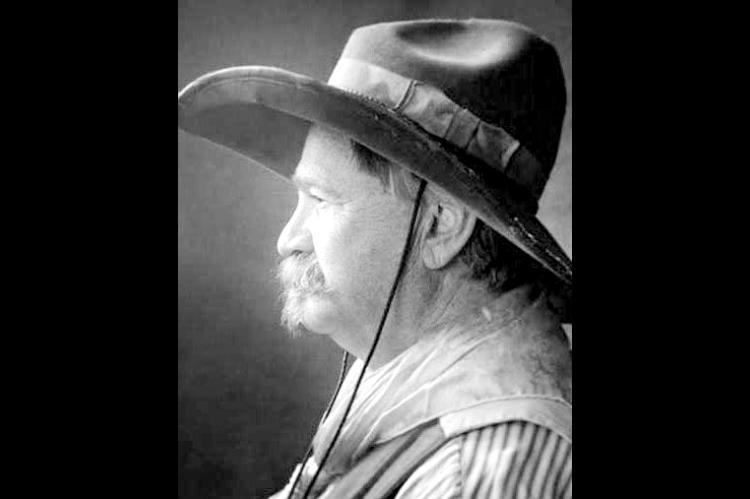
Jacob William (J.W.) Jackson was 9 months old when his parents arrived in Bell County, Texas, in September 1851. His parents, Jacob and Jane, purchased land along Donohue Creek and built a solid log home. In a memoir written circa 1920 for the book “Trail Drivers of Texas,” compiled by the Old Time Trail Drivers Association of San Antonio, Texas, Jackson recalled a carefree childhood of chasing rabbits and lizards, trapping birds and fighting “the old ganders.” He rode the calves penned away from their mothers in “the milk pen,” and went to country school when he couldn’t find an excuse to stay home.
The 1860 census shows nine children in the Jackson home, from B.S. at 20 years of age, to 1-year-old Ellen. J. W., listed as William, was 11. He was born Dec. 29, 1859.
Having been bestowed with his father’s name, J.W. was known by his middle name, which was affectionately transformed to “Billy.”
Initials were given instead of names for the boys in the census; Billy was the exception. There was another Jackson in the home — R. H. Jackson, 28, was listed as a laborer. He may have been an older brother from an earlier marriage, but memoirs do not mention him.
When the Civil War broke out in 1861, B. S. Jackson was called to fight. No further mention has been found. Unfortunately, the father died that same year, Christmas day, 1861. J.W. turned 12 just four days after the death of his father. His sister, Louisa, 14, would help their mother with the rest of the children.
With all of the able-bodied men away in at war, J. W. recalled that “they left their cattle and horses almost at the mercy of the world.” The carefree days were over, and J.W. was expected to do the work of a man in the cattle business.
Leaving the ranch work to his younger brother, G.W., J.W. set out “in early manhood” to work for Tom Lane on the open range. Lane’s ranch was east of the Jackson ranch in Milam County, Texas. Over the winter of 1871-72, Lane secured a government contract to deliver 2,100 head of cattle to Cheyenne, Wyo., as part of the government’s program to supply beef to one of the Indian reservations in the north.
But when Lane began to look for a trail boss to take the herd north, he unexpectedly discovered that trail bosses were hard to find. Having no one else to turn to, Lane went to J.W. and asked, “Billy can you take this herd to Cheyenne?”
J. W. looked at Tom Lane and told him straight up that he didn’t know, “but if it was possible for any man to take (them) he could.”
J. W. was 21 the spring of 1872 when he started the herd of 2,290 head up the Chisholm Trail. In his memoir published in “The Trail Drivers of Texas,” J.W. noted, “The old trail drivers who were out that year can tell what heavy and constant rains we had all through the spring and summer.”
J.W. recalled that every river, and even creeks, were running deep water, “but I think we had the best herd to cross water that was ever driven up the trail.” The herd of 2,290 head of cattle included 300 wily, old longhorn steers, “from 10 to 15 years old.” They had been among the cattle that had gone wild in the brambles of Brushy Creek and Little River,
northeast of Austin.
“When we gathered them, they were as wild as deer,” J.W. said. “There was a big bunch of these old steers that worked in the lead of the herd, and when we came to a river or creek that was swollen, these old steers would walk right into the muddy water and pull for the other side, the balance of the herd following.”
When they reached Ellsworth, Kan., the Smoky Hill River was so swollen that it looked to be a mile wide. They moved west and held the herd until the water returned to its banks. Even then, they hired a boat to carry their supplies and equipment across the river. Once across, they pointed the herd north to Fort Kearny, Neb., turning west along the south bank of the Platte River.
The wide valley was fertile and green with lush grass. Wild game was in abundance. J. W. even roped a couple of buffalo along the way. For nearly 400 miles, the herd slowly grazed their way west. J. W. thought the Platte River stretching before them looked “like a ribbon in the sunshine.”
The cattle were turned over to the government at Cheyenne. The outfit returned to Texas over the same trail with the saddle horses and chuck wagon and reached home in Bell County, Texas, just before Christmas, ending J.W. Jackson’s first long cattle drive on The Way West.
“The Cowboy” Jim Gray can be reached at 220 21st Rd., Geneseo, KS 67444, (785) 531-2058 or kansascowboy@kans.com.