
Jim Lane’s torment
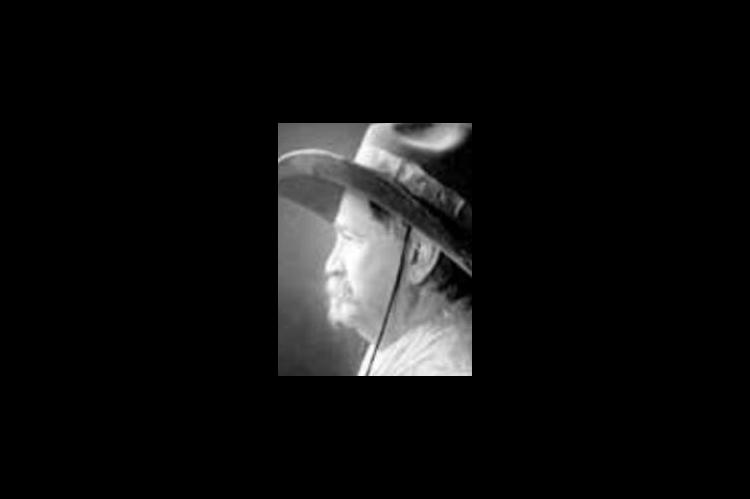
There are names from days of Territorial Kansas that every Kansan should know. They were our heroes. The men that fought to make Kansas a Free State. Among the dozens, perhaps hundreds that should be remembered, many who have graced the pages of The Way West.
Three specifically come to mind.
Charles Robinson governed over the final Free State administration and when Kansas became a state he served as our first governor.
John Brown is and was a highly controversial character. Some say he was mad; some say he was a paragon of righteousness. There is absolutely no doubt that Old John Brown lit the fire that ended slavery.
Jim Lane was charismatic with every bit the anti-slavery passion of John Brown. If Brown lit the fuse, Jim Lane carried the torch through years of enmity, injustice, and turmoil, overcoming all odds.
Jim Lane was thought to be mad as well. Gov. Robinson did not approve of Lane and would probably abhor the idea of being mentioned in the same breath with Lane, although both men contributed considerably to the founding of Kansas in their own way. Lane famously ended the torment from his personal demons with a bullet to the brain. This is a little-known story of at least a portion of Jim Lane’s torment.
James H. Lane was born June 22, 1814, in Lawrenceburg, Ind. He studied law and participated in the Mexican War as Colonel of the Indiana Brigade, Third Regiment. His officers and men later presented a splendid sword to Lane as an esteemed former commander.
He was elected lieutenant governor of Indiana in August of 1849 and elected to the U. S. House of Representatives in 1853. In 1854 Congressman Lane voted to pass the Kansas-Nebraska Bill that created both Nebraska and Kansas Territories.
As a classic northern Democrat, Lane embraced the concept of territorial citizens having the right to choose or reject legal slavery. But popular sovereignty held pitfalls for both abolitionist and pro-slavery supporters. Lane found himself walking a fine line that angered both sides.
Early in April, 1855, Lane made preparations to move to Kansas. Lane wore a disguise as he traveled through Missouri. When he reached Lawrence Lane claimed a piece of land just west of the original town. Within weeks tragedy struck the family when a daughter died on June 18, 1855. Some have recorded her name as “Annie,” but Anna lived until 1928. The child was buried on the claim southwest of their log cabin home. A “neat paling fence” enclosed the poignant grave.
Death and the uncertainty of frontier life shattered Lane’s marriage. His wife, Mary Baldwin Lane, returned to Indiana with their three surviving daughters. Seven-year-old James Jr., stayed with his father.
In March of 1856 Lane was elected to represent Kansas Territory in the United States Senate. In Washington, D. C. Sen. Lane focused on Kansas’ admission to statehood under the Topeka Constitution. Rejection of the Topeka Constitution by Democratic leaders, including President Franklin Pierce, caused Lane to change to the emerging Republican Party. It was a tumultuous change from an outward appearance, but even more so within the heart of a dedicated Democrat. Popular sovereignty and Kansas itself meant more.
Lane returned to Lawrence in August of 1856 to find his home occupied by Gaius Jenkins, formerly of Kansas City. A company of soldiers evicted Jenkins. The entire territory was in a state of war. Lane was placed in charge of the Free State militia. When in September Gov. Geary disbanded all militias Lane was advised to leave the territory until things quieted down.
When he returned in the spring of 1857, he found that Jenkins had once again taken over his claim. Lane moved back in and suffered what was described as a violent attack from Jenkins. A considerable portion of the claim had been plowed. To Lane’s dismay all traces of his daughter’s grave were gone. Several days were spent hunting and digging for the coffin but it could not be found. It was said that until the day of his own death Lane believed that Jenkins had dug up his daughter and threw her remains away!
Jenkins built his own cabin on a separate part of the same claim, the two living a very contentious relationship. Their final confrontation occurred June 3, 1858, when Lane locked the fence to a well used by both men. Jenkins brought friends. They argued. Lane produced a shotgun and fired when Jenkins continued toward the well. Lane was hit in the leg from a pistol shot, but Jenkins was dead.
On June 29, 1858 three Justices of the Peace found that James H. Lane had not committed the crime of “willful murder.” That would not be the end of turmoil for Lane. The shadow of a lost grave haunted his tormented brain until on July 2, 1866, when he ended his pain with a single gunshot on The Way West.