
Kansas River confrontation
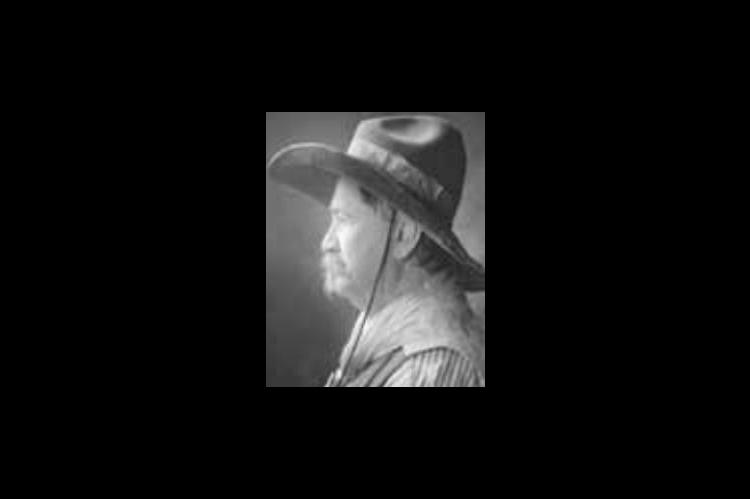
In 1762 the French ceded Louisiana, including the lands west of the Mississippi River, to Spain through a secret treaty.
Capt. Francisco Riu, the first Spanish governor of Louisiana, did not arrive in New Orleans until 1766. Rebellion and border tension plagued the transition. Esteban Miro’, acting governor of Louisiana, found it necessary to completely reconstruct the Spanish understanding of Louisiana for a report to King Louis XV, recorded Dec. 12, 1785.
Fortunately, French traders were not inclined to leave when their country ceded Louisiana to Spain. Miro’ referred to the French traders as “the masters of this province:’
Their information had been gained through years of dangerous interchange with people of strange and often unpredictable customs and behaviors. Based on their information, Miro’ compiled his summary of the tribes on the “immense prairie” beyond the Mississippi River.
In describing the prairies Miro’ further explained that,’:.. the immense plains do not put the least obstacle in the way of the north winds, which, together with the other physical causes, make these regions much colder than the same latitude in Europe.
“The healthful quality of its water and the general excellence of the soil and the meadows, formed by nature, is the reason that they are covered with buffalo, goats, deer, does, etc:’
Those animals were the basis for important trade with the prairie tribes, trade that supported the Spanish economy. Even so, the trade that the French had so carefully fashioned wavered under the Spanish.
The tribes were all hostile toward one another. Miro’ wrote that the “Cances” (Kansas) were “the best hunters on the Missouri:’ They were at peace with the Little Osages and the Missouris. Their main village of approximately 200 warriors was at the mouth of the Big Blue River on the Kansas River (near present-day Manhattan).
Further northwest Miro’ noted that the hunting grounds of the Panis (Pawnees) extended from their village on the Chato (Platte) River south across the plains to the Rio San Francisco de Arkanzas (Arkansas River).
Their warriors “consist of 400 men capable of bearing arms” making the Pawnee a very formidable armed force. Another 220 warriors were in the village of the Panis Republic.
Despite the primitive conditions beyond the Missouri along the banks of the Kansas and Platte rivers, trade was wellorganized and generally accomplished in regular order.
The same could not be said for developments along the Arkansas River. The Arkansas name was originally applied to the Quapaw people that lived at that river’s confluence with the Mississippi River. The Illinois tribes that had close associations with the French referred to the Quapaw as the Arkansea, and so their home river became the Arkansas River. Arkansas Post was established to facilitate trade a short distance above the confluence.
The Osage became particularly troublesome over a wide-ranging territory between the Missouri and Arkansas rivers of the present-day states of Missouri and Arkansas. Frenchmen, feeling no allegiance to Spain, organized outlaw bands that openly defied government control. They encouraged the Osage to do the same and generally lived scandalous lives of debauchery with captive Indian women. According to a traveler at the time the French renegades,”... have no other rule than their own caprice:’
Under the influence of the French outlaws, the Osage and others traded in illegal contraband, murdered traders, and plundered even beyond their normal range. The tall, seemingly superhuman warriors, with shaven heads, and painted for war, struck fear in the hearts of all who came into their presence. To punish them, Miro’ ordered an end to all trade with the Osage people.
The ban spilled over into the Kansas River valley in the spring of 1791. August and Pierre Chouteau of St. Louis had secured the license to trade with the Kansa people. Pierre Chouteau spent the winter of 1790-91 camped near the previously mentioned Kansa village, expecting to trade for the winter’s harvest of furs.
His efforts were frustrated when the Kansa traded a good portion of their furs with “Mississippi river Indians” who were loyal to English traders from east of Spanish control. To add to his woes “some 90 Big Osages with all their chiefs and head men” came to his camp in early March, 1791, angry that Chouteau had not visited them.
When asked why traders were no longer allowed in their villages Choteau explained that depredations on the Arkansas had angered the Spanish. Warriors threatened to take Choteau’s supplies and for a moment the reckless argument became dangerous. Luckily, the chief defended the trader. Choteau survived the confrontation on the banks of the Kansas River and became a close confidant to the Osage on The Way West.
“The Cowboy,” Jim Gray is author of the book Desperate Seed: Ellsworth Kansas on the Violent Frontier, Ellsworth, KS. Contact Kansas Cowboy, 220 21st Road, Geneseo, Kan. Phone: (785) 531-2058 or kansascowboy@kans.com.