
Life and times of a frontier town
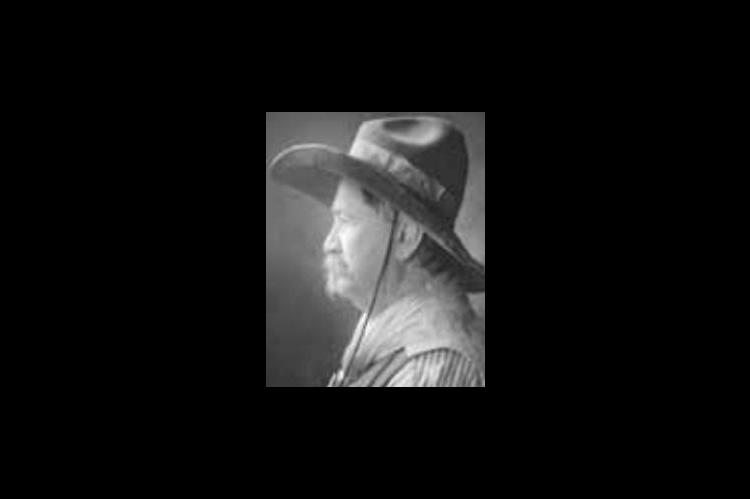
Twin Springs, Kan., began with an application for a United States Post Office by Dexter Risor.
Like so many early post offices Risor planned to distribute the mail from his pioneer home. The Twins Springs post office, approximately 20 miles north of Mound City, was recognized Oct. 19, 1857.
By 1861 the settlement grew into a village with its first store built by Lafayette (Lafe) Dunbar and operated by William Trovinger. Cady & Lane followed with a second store. Businesses soon lined its streets, supported by a population of 300 people.
Its location as a stop on the Barlow and Sanderson stage line bolstered the town’s commerce with as many as six stages a day passing through between Kansas City and Fort Scott. A military express also ran daily between Fort Leavenworth and Fort Scott.
During the boom years Cady & Lane reported annual receipts of $37,000.
When the town was organized in 1861 William Trovinger was postmaster. He served in that capacity until Thursday, Jan. 15, 1863.
On that day Trovinger was playing cards with Lafe Dunbar, his brother-in-law. In spite of their family tie the two were known to quarrel regularly. They had argued several times during the game.
Customers came and went and several were in the store when an exasperated Trovinger stood up saying, “We can never agree on anything. We might as well shake hands and quit.”
As Trovinger reached forward to put out his hand, Dunbar jumped up shouting, “You can’t draw a knife on me.”
With that he drew his revolver and shot his brother-in-law. The lead ball struck Trovinger just above the heart. Dunbar was seized immediately and talk of lynching spread through the excited crowd, but cooler heads prevailed.
Trovinger lingered for 24 hours until death finally won the battle. No weapon was found upon his person and it was determined he was unarmed when shot by Dunbar. Trovinger was buried on Saturday. A legal examination was begun on the 19th. Nothing more was published in subsequent newspapers.
Twin Springs was a Union town that harbored no support for the failed Southern cause. The town received national news when a letter to U. S. President Andrew Johnson was published in the New York Tribune.
The letter dated June 18, 1865, expressed the sentiment that Jefferson Davis, the former president of the Confederacy, should be hung.
The letter concluded, “If you don’t hang him, there might be a few men from Kansas to do it for you.” It was signed “Many Citizens. Twin Springs, Linn Co., Kan.”
In the Sept. 22, 1866, edition of the Miami County Republican published at Paola, items from district court included the trial of N. C. Lane of Twin Springs.
Lane was accused of the murder of Adam Reed, who had been found “suspended in the air without any visible means of support — for his feet.”
Lane was acquitted, which gained the full approval of the editor who wrote, “If Reed had not been hung, Lane ought to have been hung, and perhaps the Jury might have hung.”
In mid-July a woman identified as Mrs. Stout was arrested when about 30 chickens died after being fed some “dutch cheese” that she had intended for the family that was renting her farm two miles west of Twin Springs. She escaped, but was found hiding inside an empty overturned flour barrel. Her choice of refuge proved to be her undoing as the unventilated barrel in 90-degree heat was more than she could tolerate. There was no report as to her punishment, however the Mound City Sentinel observed that, “This seems like (the) beginning of hell on earth.”
The liberal use of the hangman’s noose was the accepted cure for lawbreaking, especially in the lawless years following the Civil War.
In the fall of 1867 several men in the vicinity of Twin Springs rushed to fight a prairie fire that had erupted in their neighborhood. “... their attention was called to a man who was riding along the road, dismounting and setting fire to the prairie in different places.” He was summarily captured and hung!
Early in 1868 Twin Springs appeared to be destined to gain a railroad connection but the failure to secure the expectation proved to be the town’s undoing. Nearby La Cygne, Kan. was established in 1869 when they were assured that the St. Louis and San Francisco Railway would build track to that location. La Cygne’s railroad also severely limited the stage coach business. Citizens and businesses abandoned the town for La Cygne or Fontana, another railroad town a few miles away in Miami County.
The Twin Springs post office was closed and reopened in 1875, but the die was cast. The post office closed for good on Aug. 10, 1876. In due time, Twin Springs quietly returned to the sod from which it had emerged on The Way West.
“The Cowboy,” Jim Gray is author of the book Desperate Seed: Ellsworth Kansas on the Violent Frontier, Ellsworth, KS. Contact Kansas Cowboy, 220 21st Road, Geneseo, Kan. Phone: (785) 531-2058 or kansascowboy@kans.com.