
Lighthearted revenge
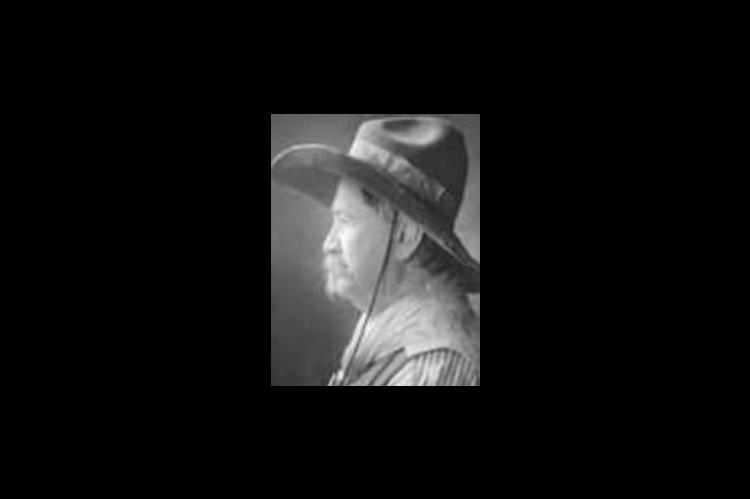
In the November election of 1880, Kansans voted to adopt prohibition making the manufacture and sale of intoxicating liquors illegal. However, individual counties could pass a local option in support of liquor sales.
Wild and woolly Dodge City, the county seat of Ford County, had its reputation to consider.
Intoxicating spirits were a mainstay of an economy that thrived as a cowboy resort on the Western Cattle Trail. Saloon men, known as “the Dodge City Gang,” were determined to keep Dodge City a free and open sporting town.
Free and open as it may have been, even Dodge City found that the growing reform movement was threatening the saloon faction.
M.C. Ruby, agent for the Adams Express Company, wrote a particularly scathing letter about Dodge City’s attitude toward temperance and mailed it to the Oskaloosa (Iowa) Herald. His comments were pointedly aimed at the city fathers running Dodge City. The letter was published March 17, 1881, and was subsequently reprinted in the Ford County Globe.
Ruby began by relating a conversation he had overheard between a saloon man and the unnamed city attorney.
Of course, everyone who read the letter in the Globe knew Ruby was talking about Harry Gryden. Gryden, who had been the city attorney for several years, bragged that he could sway any jury with $100.
According to Ruby, a “responsible citizen” divulged that Gryden made $50 a week in payments “by not prosecuting gamblers and cutthroats ...”
Ruby described Mayor James “Dog” Kelly as “a flannel mouthed Irishman.”
Being a saloon man was not unusual in Dodge City, but the occupation drew Ruby’s condemnation. Ruby then turned on the town’s lawmen.
“The city marshal [ Jim Masterson] and assistant [Neil Brown] are gamblers and keep a ‘woman’ — as does the mayor also ... The sheriff [George Hinkle] owns a saloon and the deputy sheriff [Fred Singer] is a bar tender in a saloon.”
“The mayor and a ‘bruiser’ from Texas had a kind of prize fight the other night, in which the mayor got severely punished. The marshal and friends stood by with drawn revolvers to see fair play. No arrests are made except for killing or attempt to kill unless strangers should come to whom they think has plenty of money. They will arrest him on slight pretext and bleed him.
“The ex-chairman of the Board of County Commissioners [A. J. Peacock] runs a saloon and dance hall, where the unwary are enticed, made drunk and robbed. Six men were knocked down and robbed one night last week.”
Mr. Ruby assured the reader that good folks were severely outnumbered in Dodge City. His advice to those immigrating to Kansas was to “... shun Dodge City as they would the yellow fever, measles, smallpox and seven year itch combined,” adding that his opinion and that of a certain Santa Fe Railroad conductor were the same.
When the conductor called for “tickets”, a drunken Texas cowboy told him he didn’t have one.
“Where are you going?” inquired the conductor. The well-lubricated cowboy answered. “Going to __ hic__ hell.” The conductor promptly recommended, “All right, give me 50 cents and get off at Dodge.”
Ruby concluded that he had come for only a certain length of time and expressed the hope that “they don’t raise my hair before I get ready to leave.”
Mayor Dog Kelly was not amused. Ruby’s timing aligned a challenge from A. B. Webster, a law and order man who had been the leader of Hays City vigilantes during that town’s roughest years. The election was only a few days away. Revenge could have been deadly, but a lighthearted spirit was often exhibited by the denizens of Dodge City and Kelly chose to make light of Mr. Ruby’s criticism.
The mayor’s disciplinary action was reported in the Ford County Globe on March 30, 1881 “The agent of the Adams Express Co., at this place, Mr. Ruby, was taken out to the railroad water tank last Wednesday, and drenched with water by Mayor Kelly and his policemen, for writing an article to an Iowa newspaper reflecting discreditably upon said officials.”
It was classic Dodge City fun! Nevertheless, Mayor Kelly and his Dodge City Gang suffered a demoralizing defeat in the April 4, 1881, elections. The entire city council was defeated. Incoming Mayor Webster fired the police force and mounted a campaign to rid Dodge City of its lower ranks, which included his political rivals, the Dodge City Gang. Nothing more was heard from Mr. M. C. Ruby after he suffered Kelly’s lighthearted revenge under the water tank. We assume he eventually left town with his hair intact on The Way West.
“The Cowboy,” Jim Gray is author of the book Desperate Seed: Ellsworth Kansas on the Violent Frontier, Ellsworth, KS. Contact Kansas Cowboy, 220 21st Road, Geneseo, Kan. Phone: (785) 531-2058 or kansascowboy@kans.com.