
A Long Jaunt
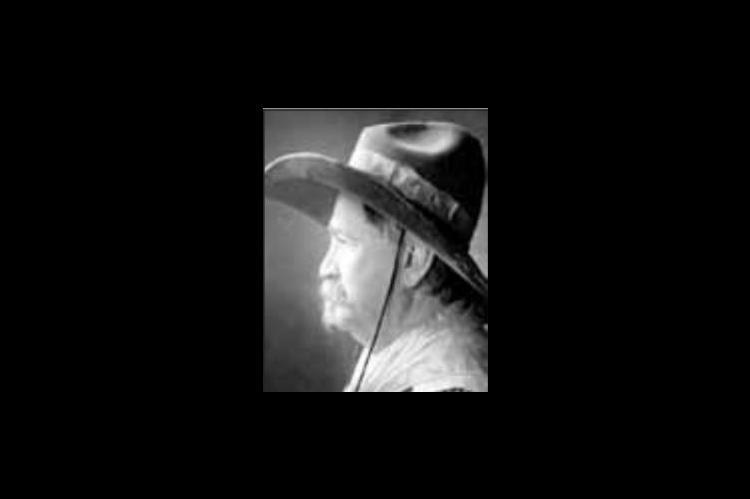
In the Spring of 1872, Warren Y. Jenkins traveled from Panama, Ill., to Kansas in a two-mule wagon with Mr. Cuno Clawson. The story was related in The Jenkins, Boone and Lincoln Family Records, written by Jenkins in 1925.
Jenkins was helping Clawson move to his claim at Cherokee station, Crawford County, Kan., from his home near Panama, Ill.
Jenkins had been thinking of migrating to Kansas since his return from the Civil War. He sold his land in 1867 with the intention of moving to Kansas, but “matters were so unsettled in Missouri and Kansas” that he decided not to risk the trip. In 1868 he bought 80 acres near Panama, Ill. The place was rough, timbered, and in need of clearing to make it productive. Jenkins persevered, but the constant struggle with stumps and incessant sprouting of new trees from the old roots “worried and disgusted” him so, that his thoughts returned to Kansas.
Neighbors told him that Kansas was rocky. Instead of stumps and sprouts, Jenkins would find stony land. To those comments Jenkins replied, “Thank the Lord the stones and rocks will not have to be sprouted.”
The wagon trip to Kansas took about 12 days. He hoped to find a nice quarter section (160 acres) to homestead, although the rush for land would leave very few opportunities near Clawson’s claim. Once Mr. Clawson was settled, Jenkins started walking to the Montgomery County seat of Independence, 75 miles away.
After a few days on the road, he came to a good sized plank house with the sign “Meals and Lodging” on the right side of the road. Hoping to get something to eat, he approached the Inn, situated on a rise in the open prairie. On that higher ground, he could see the village of Cherryvale in the distance and concluded to go on, “even if it made dinner a little late.”
Like so many travelers, Jenkins was unaware of the danger that lurked within the walls of that infamous Inn. Years later he would learn how close he came to losing his life to the “Bloody Benders,” who notoriously murdered unsuspecting travelers from 1869 to 1873.
Jenkins arrived in Cherryvale at about 1 p.m. After a late dinner, he caught a train for Independence. Disappointment was awaiting him when he found that the Independence land office was not for homesteads, but for obtaining preemptions, a procedure that required the purchase of land at $1.25 per acre. The land office for homestead application was in Arkansas City, another 75 miles west of Independence.
The next morning Jenkins “hit the trail’ for Arkansas City, but the trail that he followed diminished until it faded out completely. For hours he trudged, “over the trackless prairie,” until he came upon a squad of seven horsemen. They spoke but “in a strange jargon” that he couldn’t understand. Finally, one of them rode forward and asked in English who he was, where he was from, and where he was going. When Jenkins told him he was looking for Arkansas City he was informed that he was no longer in Kansas. Jenkins had wandered more than a mile into Indian Territory.
The squad of organized United States police patrolled the border with orders to arrest trespassers found south of the Kansas line. Seeing a bronze button on the lapel of Jenkins’ coat, the apparent leader remarked, “Well, Comrade, I see that you are a veteran, and I shall make an exception in your case.”
Turning to his men he uttered something in the Osage dialect before pointing northwest to two mounds in the distance. Jenkins was told that Arkansas City was just a little north of the mounds.
Jenkins thanked the officer and directed his steps “as suggested.” He walked for two or more hours before darkness hid the mounds from sight. Spreading his blanket “out in the bleak wide prairie,” he ate a small portion of his lunch of bread and cheese. The remainder was tucked under the blanket for breakfast. But when he awoke his breakfast was gone, taken by some prairie varmint.
Resuming his trek, he soon heard the notes of “Roll On Silver Moon,” coming from a newly-built frontier dwelling. A young lady sitting at an organ invited him in and “spread a wholesome country diet,” before him. Unfortunately, she informed him that Arkansas City was still some distance away. Adding to his dismay, she told him that all desirable homesteads were already taken in that district.
With his money getting low, Jenkins gave up his quest, bid the young lady farewell, and “struck a bee line for Cherryvale” where he paid out his last dollar for an $18 train ticket to St. Louis. He found a friend in St. Louis who loaned him $3 to make it home. He had been away from home for twomonths. Jenkins recalled how good his wife and four little children looked to him after his long jaunt, and though unsuccessful, Kansas would not be forgotten, but that is another story to be told on The Way West.
“The Cowboy,” Jim Gray is author of the book Desperate Seed: Ellsworth Kansas on the Violent Frontier, Ellsworth, KS. Contact Kansas Cowboy, 220 21st RD, Geneseo, KS. Phone (785) 531-2058 or kansascowboy@kans.com.