
Lost Summer
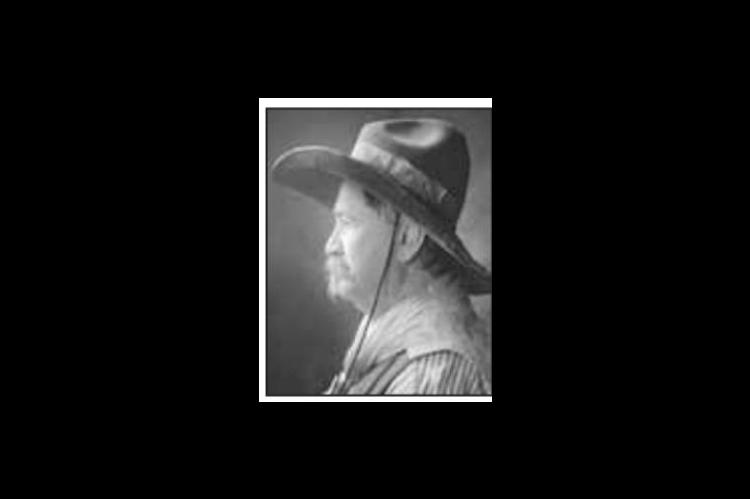
In the year 1868, the Union Pacific Railroad, Eastern Division had extended its ribbon of iron rail to the latest “end of track” town of Sheridan, Kan., named for Gen. Philp Sheridan.
The new railroad across Kansas meant that wagon trains bound for Santa Fe no longer had to begin travel at the Missouri River. Freighting operations set up warehouses at each end of track location beginning with Junction City in 1866. Each time the track moved west, new warehouses were built and the trail to Santa Fe was that much shorter.
Business houses stayed open day and night. The warehouses were quite extensive, handling every kind of commodity for the western trade. It generally took all day to load the wagons. Large trains of wagons might take several days.
Once the loading was accomplished the wagon master had to buy all the provisions needed for his teamsters, confirm the condition of the mules and oxen, sign the bills of lading for each wagon, obtain an advance of money for incidental expenses, and make out drafts of merchandise to the merchants who owned the goods that he was transporting.
Commission houses such as Otero & Sellar employed two full sets of bookkeepers, salesmen, clerks and porters to keep things running smoothly. One shift worked all day and another shift throughout the night. The trails to Santa Fe and Denver City became well-beaten highways carrying continual traffic both to and fro.
Between the Santa Fe Trail along the Arkansas River on the south, and the California-Oregon Trail along the Platte River in the north, was Smoky Hill country and the range of the buffalo, elk, and antelope. The vast Smoky Hill prairies were the lifeblood of all native prairie bands. Foremost among them were the Cheyennes who ranged from the foothills of the Rocky Mountains to the rolling grasslands of central Kansas.
The old Cheyenne leaders tried to find a road to peace, but the likelihood of preserving the old ways was doubtful. The Dog Soldiers, a warrior society made up of Cheyennes, Arapahos, and Sioux, vowed to protect the traditions no matter the odds against them.
Like the calm before the storm, all was quiet as the winter of 1868 turned to the spring of 1869. When Dog Soldiers returned to the Smoky Hill Trail and the busy freighting business the calm was broken. One of the warriors, known to the Americans as “Headache,” later recounted that he was with a band associated with Tall Bull and White Horse.
At Sheridan, wagon trains waited on the prairie for their turn to load freight the morning of May 26, 1869.
Herders for the trading firm of William A. Moore & Company were grazing 260 mules when at high noon 15 warriors, including Headache, charged among them. In the few moments of excitement and confusion, the herders were able to capture the “Bell” mare and hold 43 head of mules, but they lost 215 of the mules to the Indians.
The raiders had planned well as they raced onward to another nearby herd of mules owned by Bradford Dailey. Another 81 mules and two horses were sent hurdling over the prairie.
Wagonmaster Robert Poisal knew the ways of the Cheyenne well. He was half Arapaho, the nephew of Chief Left Hand, and fluent in the Cheyenne language. For the past 15 years he had made his living freighting goods across the frontier. Poisal organized and led a small group of men in pursuit. The Indians were driving hard to the south toward the Arkansas River. The pace was too much for the horses in Poisal’s contingent. After a 30- mile chase they had to give up, even though they could see the Indians on the horizon.
Poisal had only enough mules to deliver seven wagons to Fort Union, N.M. The remaining 125 tons of freight had to be carried by hired teamsters for transportation to Fort Union which required a 30-day delay. Poisal returned to the prairie in search of the lost mules. No mention was made of Dailey’s arrangements after the loss of all but one of his mules.
Some of the mules were recaptured, not in the south, but far to the north when Major Carr destroyed Tall Bull’s camp at Summit Springs, Colo. Carr’s men drove them from the battle site to Fort Sedgwick (near present-day Julesburg, Colo.). Poisal was obliged to travel to Fort Sedgwick to identify and claim 60 of the mules. One hundred fifty-five head were never recovered. Poisal finally returned to Fort Union on Oct. 20, 1869, having spent his entire summer in search of mules that had vanished with the Dog Soldier raiders on The Way West.
“The Cowboy,” Jim Gray is author of the book Desperate Seed: Ellsworth Kansas on the Violent Frontier, Ellsworth, Ks. Contact Kansas Cowboy, 220 21st Road, Geneseo, Kan. Phone: (785) 531- 2058 or kansascowboy@ kans.com.