
Manhunt!
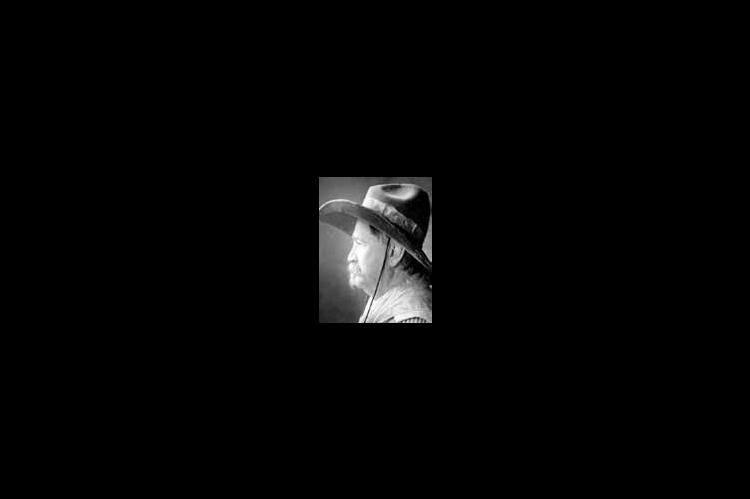
From 1910 until his unfortunate death in 1940, Tom Mix was America’s foremost cowboy movie star. He came onto the scene when the Old West was fading.
Fortunately, old timers were around to tell the stories.
Outfits like Miller’s 101 Ranch Wild West Show were a bridge from that era into modern times, and Mix was fortunate to find work with Miller’s outfit early in his cowboy career.
The 101 had men like bronc rider Johnny Brewer, bulldogger Bill Pickett, steer roper Jim Hopkins, trick roper Will Rogers and of course, a young fellow that just looked good in the saddle by the name of Tom Mix.
During his career, Mix crossed paths with both lawman and outlaw. He was friends with a fellow by the name of Napoleon “Nip” Vann. Vann had a less than reputable reputation that Mix felt obligated to explain because of their close relationship.
Vann was from Caney, and part of a family “riding act” that included his mother, two brothers and a sister. Mix described Vann as part Cherokee, tall, dark and handsome. Furthermore, Mix felt that Vann was an expert athlete, rider and showman with a great future. When the Vann family moved to Bartlesville, Okla., Mix was instrumental in getting Nip hired on with the 101 Ranch.
Many of the earliest movies of the silent film era were produced at the 101, and quite a number of 101 cowboys like Mix gained fame on the silver screen. Nip even starred in one called “The Escape of Jim Doolin.” He was in the Calgary Stampede rodeo in September 1912, but trouble was about to put an end to his rodeo and film career.
“The Escape of Jim Nolan” was due to be released Nov. 13, 1913.
The evening before, Vann and his half-brother, Alfred Bell, and H. C. Lannon went to Caney to celebrate. They were already drunk when they tried to enter the Elks Club, and being a bit too boisterous, were turned away at the door.
Caney City Marshal John McInroy was an old friend of Vann’s, and when the lawman could not calm Vann down, he placed him under arrest.
Vann suddenly pulled a pistol from his boot and shot the marshal. As Marshal McInroy lay dying on the brick street, Vann and Bell jumped into an automobile and headed south into the Osage Hills of Oklahoma. Lannon turned himself in, saying he had nothing to do with the shooting.
Montgomery County Sheriff and Deputy Bert Ziegenfuss were attending a night session of district court in the county seat of Independence when they received a telephone call in the court room just before 10 p.m. Court was immediately adjourned and the two lawmen drove a motor car the 24 miles to Caney. By the time they arrived McInroy was dead.
McInroy’s funeral brought 1,500-2,000 mourners to honor a good man who held the highest respect of all who knew him. Mix regretfully wrote, “The saddest part of this story is that Nip Vann, John McInroy and Bert Ziegenfuss had been friends since early childhood. They attended the Caney public schools, played sandlot ball and participated together in early adulthood activities.”
Nip had even been a lawman himself. He was a police officer in Bartlesville and ran there unsuccessfully for Washington County Sheriff. Nip would later claim that as he was trying to relinquish the pistol to McInroy, it snagged the hammer in his coat and discharged accidentally. According to Tom Mix, whether it was an accident on not, “when Nip fled the scene that night, there was no doubt that he ruined his life and a potentially brilliant career.”
Deputy Ziefenfuss swore that he would avenge McInroy’s death by bringing Nip Vann to justice at any cost. The manhunt turned out to be one of the longest manhunts in American history. Ziefenfuss followed Vann across the country, pursuing a fugitive who constantly changed his name. The persistent lawman traced leads into Italy, South America and Mexico.
Twenty-three years later, Ziefenfuss received a telegram from the sheriff at Nogales, Ariz., informing him of Nip Vann’s capture. Kansas Governor Walter Huxman issued the proper requisition papers and Vann was relinquished to Kansas authorities. In July 1937, Vann was convicted of second degree manslaughter. The question of whether the shooting had been accidental, plus Vann’s weakened condition from tuberculosis, figured into the sentence of two years. He was released in 1938 and disappeared from history. His death and place of burial are unknown at this time.
Thus ended the tale of a promising young actor whose life changed forever one tragic evening while traveling along the trail we call The Way West.
“The Cowboy” Jim Gray can be reached at 220 21st Rd., Geneseo, KS 67444, (785) 531-2058 or kansascowboy@kans.com.