
A miraculous escape
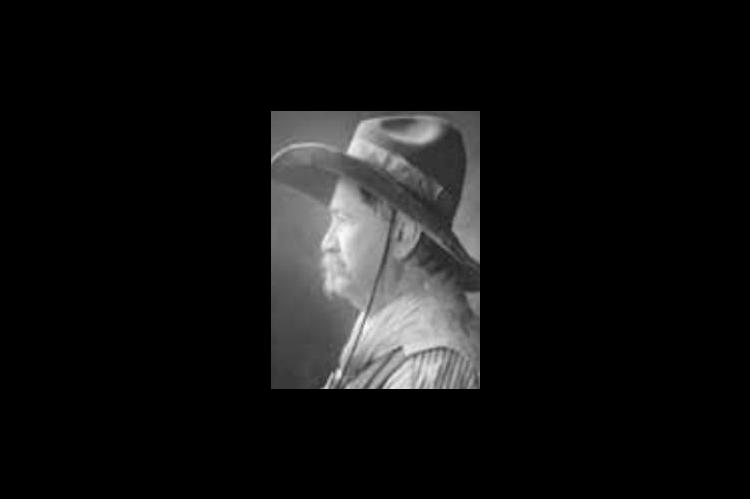
James Schuyler, a novice surveyor, wrote a harrowing account of survival in western Kansas for the New York Post.
He recorded that on June 18, 1869, the survey team was “running rapid trial lines” across a rolling prairie some 15 to 20 miles northwest of Sheridan, approximately a dozen miles or so southwest of present-day Goodland.
His brother, Capt. Howard Schuyler, supervisor of the team, worked several miles ahead, throwing up mounds of dirt to indicate the line to be surveyed. His men followed, strung out over a mile or more, measuring angles and distances.
Suddenly, the sound of a shot and the deadening thump of a bullet struck the Captain’s horse. Warriors were attacking from three sides. The only direction the warriors had left open was seemingly blocked by a set of deep, narrow ravines.
“It took only a moment to decide his line of action.”
Capt. Howard Schuyler was no stranger to battle. He arrived at Council City (later Burlingame), Kansas Territory in 1859. His father, Philip Schuyler, was instrumental in organizing territorial government opposed to slavery.
In the opening days of the Civil War, displaying the courage of his father, 16-year-old Howard lied about his age and enlisted in the Second Kansas Infantry. He later served in the Eleventh Kansas Calvary and finished the war as a captain in the Fourth Arkansas Cavalry.
The experienced cavalry man never doubted that the horse that he was riding, even though wounded in the hip, would carry him through. Dashing for his life he was soon, “... leaping over the ravines, one after the other ... with the assurance that the warriors could not follow him, as none of their ponies were equal to the work.”
Looking back and congratulating himself at his skillful escape, he unexpectedly met a line of warriors directly in front of his retreat. Before he could realize his new predicament, the others were finding their way around the ravines to form a circle of about 100 warriors.
As they tightened the circle about him the warriors taunted him with insults and the tortures he could expect when captured. For a moment he trembled at the thought, but when the trembling ceased, he raised his rifle and shot the nearest man, “killing him instantly.”
He had left his pistols in camp to be cleaned, and the 12-shot Winchester was his only weapon.
He fired two more shots to clear the way and dashed into the gap forged with hot lead. Warriors grasped at his legs and thrust lances at him. In the confusion he was nearly brought down by a warrior riding at his side. In a gripping moment of despair Schuyler thrust the muzzle of his rifle against the warrior’s side and pulled the trigger, causing blood to erupt over himself and his horse.
Bullets kicked up dust all around as he broke free. One warrior rode a horse that displayed endurance equal to Schuler’s mount, following him nose to tail for two miles. Schuyler could almost feel the breath of the nostrils of the horse galloping close behind.
With pistols blazing the warrior emptied three six-shooters at Schuyler. Four more bullets hit the already wounded horse. One bullet cut through Schuyler’s clothing without piercing flesh. Bullets were flying all around. His field glasses fell to the ground as another bullet cut through the strap. One spur was shot from the heal of his boot. Several bullets struck his saddle. He almost lost his rifle when a bullet nearly blew it out of his hand.
Finally, Schuyler’s valiant horse stumbled and fell to his knees. The warrior, now out of bullets, closed in for the kill with his lance, but Schuyler’s horse wasn’t done. He struggled back to his feet, and in that instant Schuyler thrust his rifle against the Indian’s body and fired with deadly effect. When the poor horse fell for the last time, the rest of the warriors began to move in. Schuyler laid down behind his horse and waited for a good shot. One more warrior fell.
That was the end of the fight. “Within three minutes not an Indian was in sight.” Schuyler turned his attention to his saddle. When he began to loosen the girth, the horse unexpectedly “took a deep breath and struggled to his feet.” When he arrived at camp leading his badly shot-up horse, the entire outfit quickly decided to return to Sheridan.
On their retreat the warriors returned to harass the party, with intermittent charges that always stayed just out of rifle range. James wrote that Capt. Schuyler “was quite exhilarated by the excitement. He gave them a challenge by walking alone several hundred yards on one side. They charged, but retreated when he kneeled and fired. Sheridan was safely reached late that afternoon.
James later conveyed the noble hero of the day to the family home at Burlingame, Kan., where he was carefully fed and pampered for the rest of his life. Capt. Schuyler’s miraculous escape “was long a subject of wonder” and one of the most marvelous feats of courage on The Way West.
“The Cowboy,” Jim Gray is author of the book Desperate Seed: Ellsworth Kansas on the Violent Frontier, Ellsworth, KS. Contact Kansas Cowboy, 220 21st Road, Geneseo, Kan. Phone: (785) 531-2058 or kansascowboy@kans.com.