
A monumental loss
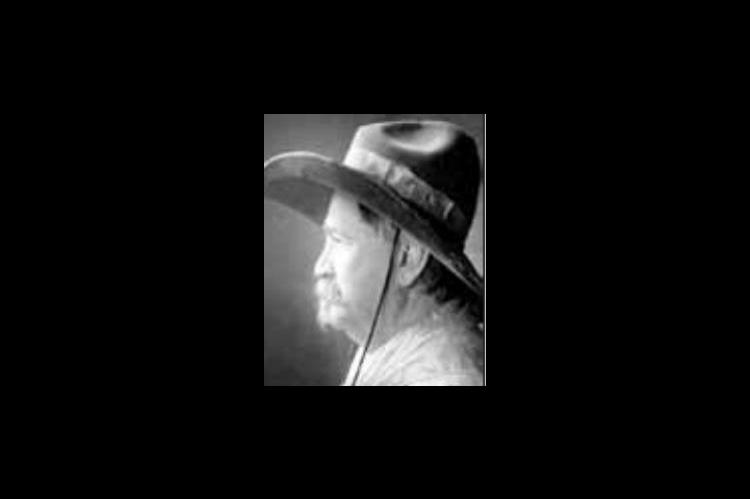
Assembling a government for the new Territory of Kansas was a monumental task following the adoption of the Kansas Nebraska Act in 1854. A pro-slavery legislature was rejected by the abolitionist Free State citizens.
In Leavenworth the election over the 1855 Topeka Constitution was disrupted. The officer in attendance was beaten and the ballot box stolen. The following Saturday night, Dec. 23, Mark Delahay’s newspaper, the Territorial Register was destroyed while he was in Lawrence tending to coming election plans.
A new election was slated to elect territorial officers under the Topeka Constitution on Jan. 15, 1856. Politics again boiled over at Leavenworth. The Free State mayor and two councilmen resigned amid ongoing conflict. The remaining President of the city council issued a proclamation forbidding polls to open for the January election. However, the election was informally held by carrying the poll-books around for individual votes.
Twelve miles northwest of Leavenworth the polling place was attacked at Easton, Kan. Maj. Reese Brown of Jim Lane’s First Brigade of Kansas Volunteers, a candidate for the House of Representatives, led a rescue party to disperse the “slave party.” Brown arrived in time to rescue Stephan Sparks from being hanged. Shots were fired, wounding John Cook, a pro-slavery man. Cook later died at Easton.
Thinking the fight was over, Reese Brown and his party set out for home in the early morning hours of Jan. 18. On the road to Leavenworth 30 men of the Kickapoo Rangers, a pro-slavery militia from the town of Kickapoo (north of Leavenworth), ambushed Brown’s men, taking eight men prisoner. Returning to Easton, the prisoners were kept under guard throughout Friday, Jan. 18, 1856.
Capt. John W. Martin of the Kickapoo Rangers evidently had second thoughts about the situation that was unraveling before him. His men were celebrating, and considerably intoxicated, threatening to “hang them all.” Brown was separated from his men and put on “trial” in an adjoining room.
One of Brown’s men, Joseph Bird, was brought in to give testimony that Brown had shot John Cook during Stephan Sparks rescue. Suddenly another group of drunken men, led by a man named Robert Gibson, with a Sharps rifle in hand, burst into the room during Brown’s interrogation. With the muzzle of Gibson’s rifle pressed to his heart Brown took hold of the barrel and pushed it away. Gibson then struck Brown across his temple with a hatchet.
Several of the men “set upon” Brown as he tried in vain to defend himself. A number of the Rangers beat and kicked Brown with yells of “kill him” until he fell to the ground.
Brown could be heard calling out, “Don’t abuse me — it is useless — I am dying.”
Realizing that he had lost control of his men, and unable to defend Reese Brown, Capt. Martin fled the room, taking Joseph Bird with him. In the chaos, Martin released the rest of the prisoners before he mounted up and rode away.
Brown’s assailants continued to drink and revel over his presumed death and for some time Brown lay in an unconscious state. When he stirred into consciousness, the surprised “Ruffians” resumed beating and kicking him. Just as the sun was disappearing in the west, Brown was placed in a wagon to carry him home. The 10-mile drive to Brown’s home was a cold journey over a dark, frozen road while life was slowly ebbing. A short respite was taken at a saloon in Salt Creek valley, Brown’s assailants imbibing copiously before resuming their trip to Brown’s home.
About midnight, Martha Brown heard them coming, “shouting and halloing like so many wicked fiends let loose from the infernal Regions of darkness.”
The wagon was backed to the front door. Brown was dragged out of the wagon by his feet, his body falling to the ground “with a thud onto the frozen ground.” As Martha knelt beside her helpless husband, she heard him whisper, “I have been murdered by a gang of cowards, in cold blood, without any cause.”
Without any help from the men, Mrs. Brown was able to get her husband to bed. Inappropriate advances were made toward her until she pulled a small revolver and shouted, “The first villain that lays a hand on me, I’ll kill ...” With that the men retreated through the door and disappeared into the darkness.
Brown died in the early morning hours of Jan. 18, 1856. The head wound left his body covered in blood leading to exaggerated stories that he had been stabbed and chopped up by the crazed pro-slavery men.
He was buried at Pilot Knob cemetery “amid the howling wind and drifting snow.”
The Territorial Legislature passed several resolutions commending the life of Reece Brown with the recommendation to erect a monument to his memory “with suitable inscriptions, and that the State make liberal contributions in aid of such an enterprise.”
For a time, his gravesite was a fitting memorial to one of the first Kansas martyrs for freedom and justice. Pilot Knob was Leavenworth’s first cemetery, renamed Mount Aurora. The city abandoned the cemetery. Today, Reece Perkins Brown’s final resting place has been lost. Sadly, there is no monument to a man who sacrificed his all on The Way West.
“The Cowboy,” Jim Gray is author of the book Desperate Seed: Ellsworth Kansas on the Violent Frontier, Ellsworth, KS. Contact Kansas Cowboy, 220 21st RD Geneseo, KS. Phone (785) 531-2058 or kansascowboy@kans.com.