
A more urgent battle
The Way West
Ellsworth County Sheriff E. W. Kingsbury surprised everyone on the Kansas frontier when he abandoned his post without notice.
Ellsworth County Commissioners had no choice but to declare the office vacant at their Feb. 11, 1869, meeting. His absence gave the impression that Ellsworth was just too tough for him.
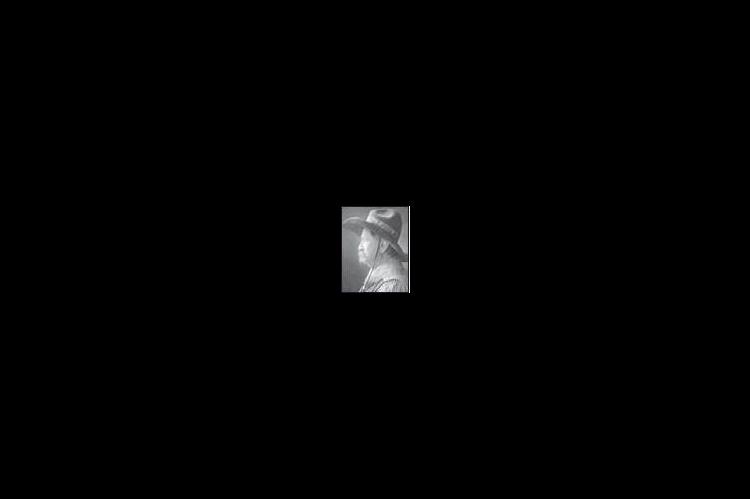
The notion that Capt. Ezra Wolcott Kingsbury was bullied out of town just did not make sense. He had never shied away from a fight.
At age 29. Kingsbury joined the 1859 gold rush to Colorado, becoming a trader. He preferred “mining” his gold from the prospectors by selling them trade goods.
During the Civil War he organized a company of recruits for the Third Colorado Volunteer Infantry. His outfit arrived at Fort Leavenworth on April 23, 1863, after a march of 700 miles.
At Benton Barracks in St. Louis the Second and Third Colorado Volunteer Infantries were reorganized on Dec. 19, 1863, as the Second Regiment of Colorado Cavalry Volunteers. Kingsbury’s regiment returned west where they scoured the western Missouri border for bushwhackers in a campaign of intrigue and excitement.
Kingsbury and his troops never failed to follow them into the brush and timber where others weakened their resolve. Quantrill was said to have complained, “Will nothing ever stop them?”
In September of 1864 Confederate Lt. Gen. Sterling Price invaded Missouri with 18,000 troops. As Union Gen. James Blunt’s forces were being pushed toward Westport the Second Colorado Cavalry joined Union reinforcements. From that time forward Kingsbury was involved in virtually every engagement along the Kansas-Missouri border until Price was forced back into Arkansas.
Kingsbury was wounded more than once, but always led the fight. According to the regimental history of the Second Colorado, Capt. Kingsbury led bold cavalry charges that thoroughly stunned the enemy at Trading Post, Kansas, and later the same day on the Marias de Cygnes and Little Osage River.
At the famous fight at Newtonia, Mo., “the regiment was in the thick of the fight and materially contributed by its audacious bravery to the splendid victory. Here it formed a part of the 900, who faced 10 times their number, stubbornly flung themselves against the foe, and for hours stood like a rock unyielding against the storm of bullets and the hurling tide of battle which fiercely dashed against our meager lines ...”
Following the campaign against Price, the Second Cavalry was sent west to protect Kansas trails from Indian attack. Their service included escorts of stage coaches and wagon trains as well as scouting for the warrior bands actively disrupting travel.
Among the many skirmishes, engagements at Point of Rocks, Fort Larned, and Cow Creek were noted in the regimental record. The Second Cavalry, “renowned for its bravery and dash,” was mustered out of service at Fort Leavenworth on Sept. 23, 1865.
In May of 1867, in a return to his storekeeping past, Kingsbury built the first structure in the new town of Ellsworth, Kan. The log store and hotel known as the “Stockade” was quite a landmark in a town where most accommodations were mere” holes” cut in the low bluff rising above the “bottoms” of the Smoky Hill River.
The military presence of Fort Harker just four miles away provided familiar atmosphere and plenty of camaraderie with the boys in uniform. Kingsbury’s popularity carried the day in the first county-wide election when he was elected Ellsworth County sheriff over Wild Bill Hickok of Harper’s Magazine celebrity.
As Ellsworth County sheriff, Capt. Kingsbury presided over a collection of frontier misfits that could make most men tremble. The Leavenworth Daily Conservative observed that in Ellsworth no “fouler birds ever congregated around the putrid carcass of a departed ox than those which frequent and tenant the brimstone scented dens of this modern Sodom.”
In the early months of existence Ellsworth had no marshal. Kingsbury, with the help of two township constables, was expected to keep tough characters under control in a town where “Men kept their hands on their pistols.”
Kingsbury’s exploits were well-known even if his private life may not have been as evident. The wild life of the frontier was not the place to raise a family. Unknown to the denizens of Ellsworth, his wife, Celia, and three children were at home in Kansas City. When the Captain left town in early 1869, no one seemed to know that Kingsbury’s 4-month-old son was dreadfully ill. When his son died on March 21, 1869, his course in life changed direction. Capt. E. W. Kingsbury didn’t run away from the fight when he left Ellsworth. A more urgent battle required his attention away from “foul birds” and “town toughs” on The Way West.
“The Cowboy,” Jim Gray is author of the book Desperate Seed: Ellsworth Kansas on the Violent Frontier, Ellsworth, KS. Contact Kansas Cowboy, 220 21st Road, Geneseo, Kan. Phone: (785) 531-2058 or kansascowboy@kans.com.