
Natural-born soldier
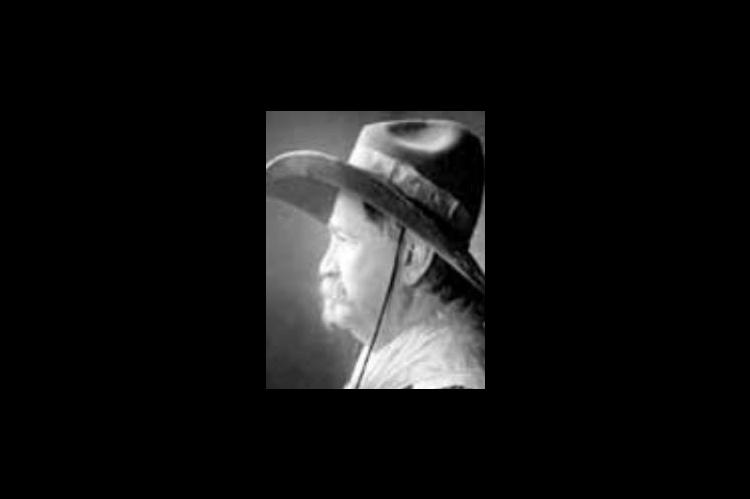
After war broke out between the North and South in April of 1861, John Arrell Johnson enlisted on July 21, 1861, as a private in the 4th Kansas Infantry, Company E.
Johnson had just celebrated his 20th birthday on July 15. Five years earlier Johnson had come from Indiana with his parents, Fielding and Mary (Veale) Johnson, to Quindaro, Wyandotte County, Kan.
Young Johnson was described as “a naturalborn soldier” and was soon elected second lieutenant. His uncle, G. W. Veal, Sr., was captain of the company. Although not completely organized the 4th Kansas was converted to a cavalry force and pressed into Jim Lane’s Kansas Brigade to repel Maj. Gen. Sterling Price’s Confederate forces pressing into Missouri and threatening to invade Kansas.
Price’s overwhelming force drove them back to Fort Scott, Kan. After Price moved north Lane rallied with a campaign to “clear out” southern sympathizers across the border from Kansas. Burning and looting was the order of the day as they passed through scattered towns.
At Osceola, Mo., the bank was shelled, and the town overrun on Sept. 23, 1861. Three thousand citizens fled as the town was looted and burned. Two hundred slaves were liberated and over $1 million in property was either destroyed or taken away by Lane and his now infamous Kansas Brigade.
In March of 1862 Johnson’s Company E, under the command of Capt. Veal, was transferred to the 6th Kansas Cavalry. Johnson was promoted to 1st lieutenant in the newly designated Company A. The 6th Kansas deployed its various companies along the Missouri and Indian Territory borders.
At the time small bands of bushwhackers operated out of the ravines, hills, and hollows of the Sni-a-bar Hills southwest of Independence, Mo. Federal troops dared not enter the bushwhacker stronghold, however Capt. Veal and Lt. Johnson were not deterred.
They divided Company A into two detachments and entered the “Sni Hills.” When they returned Company A had struck eight camps, killed 37 bushwhackers, and wounded an equal number, capturing small arms and 60 head of horses with equipment.
In late July Lt. Johnson led a small reconnaissance party guided by three Indian guides into northwest Arkansas. From rebels captured during the operation Johnson learned of a plan to attack Fort Scott.
The information kept troops on the scout in Western Missouri to discourage the rebel plan.
At Fort Scott in late August, Gen. James Blunt took command of two brigades that included the 6th Kansas. In September Lt. Johnson led 50 select men out of Fort Scott to the vicinity of Sarcoxieville, Mo., where the 4th Brigade of Missouri State Militia had encamped.
One half mile from the camp Johnson’s troops ambushed rebel scouts on their return to camp. Five rebels were killed, several wounded men escaped on their horses and 10 rebels were taken captive.
The prisoners were taken away by a detachment of five troopers while Johnson led an attack, driving the rebel pickets into their camp. In the confusion of the unexpected attack Johnson retreated, returning to his camp without the loss of single man.
Blunt’s forces followed the Confederates to Arkansas border. Upon learning in late November that a large force of Confederate cavalry had assembled in the Boston Mountains, Blunt moved into Arkansas. At Cane Hill on Nov. 28, a two-hour fight put the Confederates to flight. The 6th Kansas followed the retreat with a saber charge through a narrow valley and into a staggering artillery ambush. Johnson and others went down, turning the advance into a panicked retreat.
Blunt regrouped. As he prepared for a renewed attack, the Confederates called for a truce to remove the dead and wounded from the battlefield. Lt. Johnson was shot through the lung, tearing out bone from his spine. The truce undoubtably saved his life. His surprising recovery allowed him to remain in the service, being promoted through the ranks to major and the position of inspector of Blunt’s District of the Frontier.
On Dec. 23, 1863, at Fort Smith, Ark., the officers of Company A presented Maj. Johnson with a pair of Remington revolvers. The revolvers sported silver-plated barrels, gold-plated cylinders, and ivory handles. Silver plates on the handles list his military promotions and the battles fought with the 6th Kansas. Company M presented a Damascus steel saber with a silver hilt and a gold-plated guard. The battles are listed on one side of the blade and the inscription “One Country, One Flag,” on the other side. The revolvers and saber are in the collection at the Kansas Historical Museum in Topeka.
Johnson suffered from his wound the rest of his life. He passed away at 52 years of age, June 30, 1894. In the words of O. H. Coulter, editor of the Western Veteran, July 25, 1894, ... Should the flag of our country be again assailed, I hope Kansas will not be wanting in men to emulate the example of [Maj. John Arrell Johnson] who gave his all fighting rebels on the Way West.
“The Cowboy,” Jim Gray is author of the book Desperate Seed: Ellsworth Kansas on the Violen Frontier, Ellsworth, KS. Contact Kansas Cowboy, 220 21st Road, Geneseo, Kan. Phone: (785) 531-2058 or kansascowboy@kans.