
A noted character
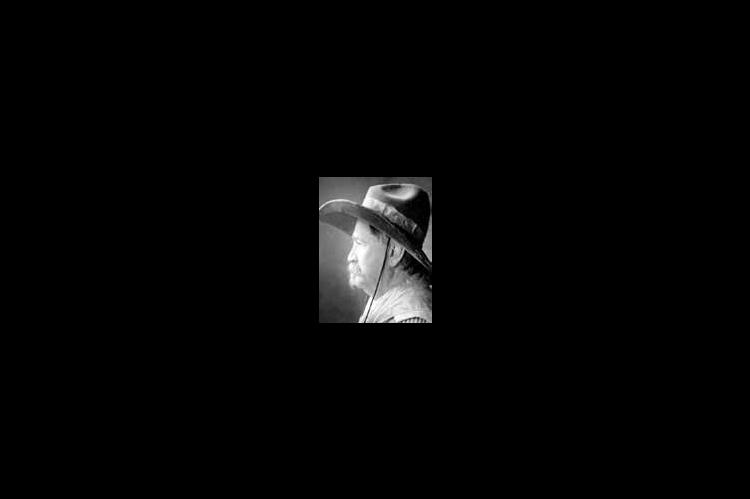
One of my favorite characters of old west Kansas was a gambler by the name of Bobby Gill. His name has come up in several stories, but never as the main attraction, which made the newspaper article on the front page of the Oct. 9, 1888, Wichita Star stand out as I was perusing pages while researching another story for The Way West.
Bold letters announced “NOTED CHARACTER” followed by “Bobby Gill The Great Ward Politician of the State and the Inveterate Gambler.” I was intrigued. I knew Bobby Gill as a cowtown character with a tendency to draw more than his share of attention. “Bobby the Gill” was the razzle dazzle type. Known among the members of the sporting crowd throughout Kansas, he rarely used his full name of Robert Gilmore.
The reference to Gilmore as a ward politician was a tongue-incheek mention to his ability to sway constituents in one direction or another. Gill really didn’t have that kind of influence, but his way with words led one to believe that he could do just about anything short of walking on water.
Gill was well-read and could talk his way into trouble quicker than any man on the frontier. Those same skills usually helped him slide through just enough to stay alive. From the gist of the story in the Wichita Star, he also stretched the truth, giving himself the role of “hero” in any adventure in which he had supposedly taken part.
The writer of the Star article described Gill as formerly “a wealthy cattle dealer” out of Dodge City, and with the mysterious Shotgun Collins, the leader of a gang of gunmen during the famous Dodge City Saloon War.
Gill continued to reach for the stars, telling the editor a fabricated story of leading the Shotgun Collins Gang. The gang, he said, brought down a band of bold bank robbers in Caldwell. Never mind that nothing of the sort had happened at Caldwell. The author of “Noted Character” pulled all the stories together in a grand finale saying, “As a ward politician and bummer, as an old settler and a champion storyteller, as a man who has had hundreds of hairbreadth escapes and has witnessed Indian fights and treaties signed as an old soldier, or a beer drinker or a gambler or a sure thing, our ‘Bobby’ Gill has few, if any, equals in the state of Kansas.”
It so happened that Gill turned up in another column of the same paper under rather unsavory circumstances. The fire alarm had sounded, calling the “fire boys” out to extinguish a burning awning at the front of the Garner and Bevis Shoe Store. Just before the fire, four shots were fired in a nearby alley. Suddenly a drunken yell was heard “a yard long” and emphasized by “a shot from a heavy revolver.” No one was found, but “an old soldier named Robert Gilmore” was amusing himself, calling people vile names. The amusement “landed him in the cooler.”
I have said that Bobby Gill is one of my favorites, but that doesn’t mean I would have chosen to spend my idle hours in his company, although I must admit, I would probably find it hard to resist his stories.
escapade was the plot to “skin” a former Kansas governor in a rigged Dodge City poker game. When all the cards were laid on the table, Governor Carney found himself staring at four aces over his kings. The boys had even tossed the governor a joker to boot.
Gamblers ride a roller-coaster of ups and downs. When flush with money, the world is bright and gay, but when Lady Luck turns against him, a gambler can often be reduced to the lowest level of poverty. Bobby boldly rode that roller-coaster, sometimes having to rely on friends to bail him out. The newspapers were rife with accounts of Bobby Gill being placed on a train with enough money donated to give him a fresh start in another town on down the line.
Reading the “Noted Character” story led me to the realization that I had not given Bobby Gill’s story enough attention. A quick search of newspapers gave me a clue to his final days.
Unfortunately, he fell ever deeper into a disparaging life. His gray hairs saved him from chastisement many times, but his abusive language had grown intolerable and he found himself unwelcome in all of his old haunts.
During the winter of 1899, he moved into the Soldiers’ Home at Leavenworth. Taken with pneumonia, he died April 12, 1900. Robert Gilmore is buried in the National Cemetery at Fort Leavenworth. His brother, John S. Gilmore, owned the Wilson County Citizen at Fredonia, Kan. A warmhearted notice of Gill’s death was published in a subsequent issue.
I was struck by a brother’s observation of one who had lived beyond the bounds of polite society. “Likely in disposition, versatile in an unusual degree, active in spirits and quick of perception, his presence meant animation and diversion whenever he appeared in a crowd.”
Ah, yes, he is still a favorite! For Robert Gilmore, aka Bobby Gill, there are yet many more stories to tell on The Way West.
“The Cowboy” Jim Gray can be reached at 220 21st Rd., Geneseo, KS 67444, (785) 531-2058 or kansascowboy@kans.com.