
One Man’s Staple of Life
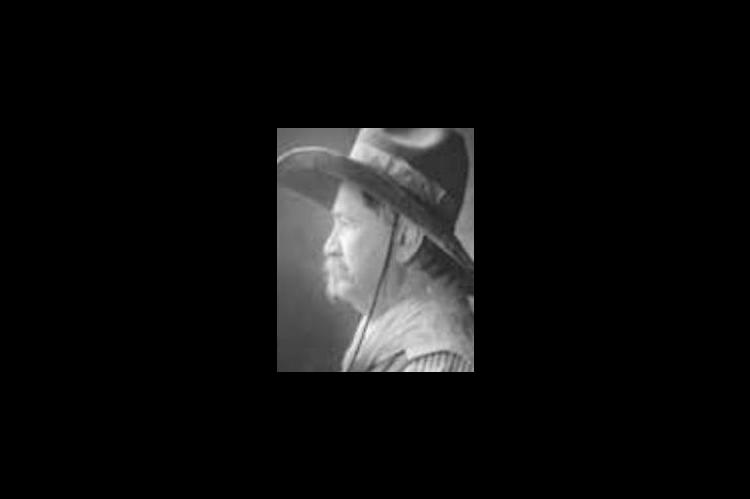
In the late 1700s French trader Pierre Chouteau encouraged a large portion of the Osage people to move into today’s Oklahoma valleys of the Arkansas, Verdigris, and Neosho Rivers.
By that time the greater Chouteau family had been trading on the frontier with various tribes for almost 100 years. Their footprints are imbedded in the very earliest history of St. Louis and Kansas City.
Pierre Chouteau and Gerald Pappin expanded north into present-day Neosho County, Kan., with a trading post in 1837 (southeast of present-day Erie, Kan., near today’s St. Paul, Kan.,). The Catholic roots of the early French traders brought a Catholic Mission to the location in 1847.
Other traders were attracted to the area. Among them was Andrew Bernard (A.B.) Canville who began to trade with the Osages in the early 1840s. Some say he built up his trade to open a trading post on the Neosho River in 1847.
Louise Barry in her tremendous chronicle The Beginning of the West: 1540-1854, says that he did not move to the Neosho river until 1852. Both dates could be correct considering that he might have employed others to manage the post through the early years while he maintained a home in Jackson County, Mo., near Kansas City.
Barry’s account referenced an August, 1858, Kansas City newspaper that recognized Canville as a resident and storekeeper in Kansas City since 1840. He was credited in that article with building “several of the oldest houses in town.”
Canville married Mary Terrien on Jan. 2, 1842, at Kaw’s Mouth, (Kansas City). Mary was the daughter of Ignatius and Louise [Valle] Terrien. Ignatius was a French Canadian who had come to the Missouri River country when the American Fur Company expanded to St. Louis. Mary Terrrien’s mother, Louise, was the granddaughter of Chief Pa-Hue-Scah White Hair, who died circa 1809-1810. Pawhuska, Okla. is named for him.
A. B. Canville and family left Kansas City to live and trade among the Osages in 1852, as noted before. His post was northwest of present-day Erie, Kan., at a reliable ford over the Neosho River, “long used by the Osages.”
The ford offered a long stretch of shallow water where a solid rock bottom provided an even depth of but a few inches. From the ford a great thoroughfare, in the form of a well-beaten path, stretched westward carrying hunters and traders to the vast buffalo plains.
White Hair was a popular name among Osage leaders. After the death of Mary’s grandfather, the original Chief White Hair, another chief of the same name established an Osage “town” west of the Neosho ford in 1815. White Hair’s Town had eight log houses and 100 bark and grass houses. The progressive Indian town featured flagstone sidewalks and a grist mill.
Canville’s trading post was across the river situated on a knoll about a quarter mile southeast of today’s unincorporated town of Shaw, Kan. Three walnut log houses approximately 25 x 40 feet were the predominate buildings. One served as his home. One was an inn to serve travelers, and one was a store for his trade business.
Although 1852 represents Canville’s permanent residence along the Neosho, he had made trading expeditions to the area for years before.
He was witness to the devastating flood of 1844.
Speaking of the flood in a later interview Canville recalled that, “... the water of the river reached from mound to mound and over that valley where the tall grass exists so abundantly,” adding that the depth of water in the valley could have floated a large Mississippi steamboat.
Trade was not the only activity at Canville’s post. When horse thieves were captured by Osage men on the prairie, they were escorted to the Canville post where a trial of twelve Osage jurors found them guilty. They could confess, save their lives, and go, minus half their hair (shaved from one side), and relinquish one ear to their captors. Chief White Hair spoke for allowing the men to keep their ears. Because his word was law, the half-shorn men were set free with their ears intact.
The Osage treaty of 1865 was the most significant event that occurred at the Canville trading post. Settlers were pushing into eastern Kansas and encroachments on Osage land had already occurred. The treaty was concluded Sept. 29, 1865. Although some Osage lands were retained in Kansas, the stage was set to remove the Osage Nation from the state of Kansas by 1870. Canville followed them into Indian Territory in 1871.
Seven years later, July 26, 1878, A.B. Canville died among the people who had been the heart and soul, and the staple of his life on The Way West.
“The Cowboy,” Jim Gray is author of the book Desperate Seed: Ellsworth Kansas on the Violent Frontier, Ellsworth, KS Contact Kansas Cowboy, 220 21st Road, Geneseo, Kan. Phone: (785) 531-2058 or kansascowboy@kans.com.