
Pardner
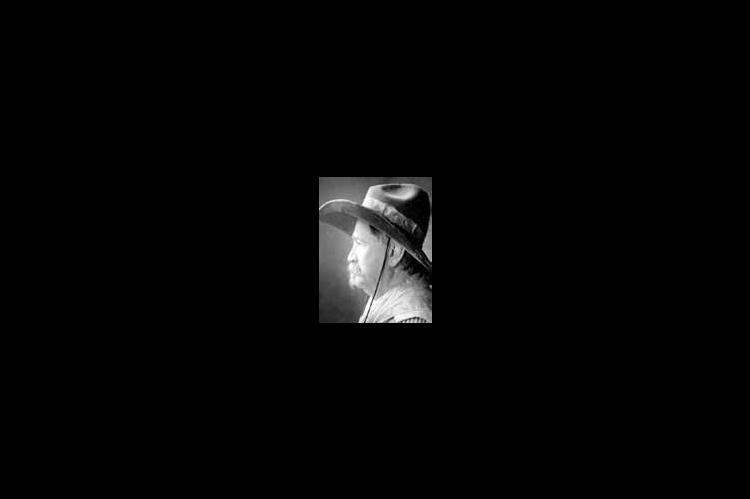
The story of Bill Blocker and his “Pardner” is one of the best stories to come out of the trail driving era. It is one that I have told many times. It bears repeating, for this is a story that should never be forgotten.
In the chronicles of trail driving history, the Blocker Brothers of Blanco County, Texas, are legendary. The brothers were schooled at the Swan Coats School and the Texas Military Institute. Schooling was important to the family, however, growing up in the cattle business resulted in an education all its own.
Bill, the oldest of the three, began to go on roundups when he was 10 years old. John and Abner Jr. soon followed. The brothers mastered the tools of the trade, and were known as expert stock handlers.
At age 19, Bill quit school to round up cattle for a drive up the long trail to Abilene. That spring of 1870, Bill reached his 20th birthday while following a trail herd of Texas cattle to Kansas.
At the Pedernales River, the drovers encountered a herd of wild cattle and added a few of them to the trail herd. One particular animal caught Bill’s eye. He was carrying the A P B brand, indicating he was a Blocker animal.
Bill later recalled, “He looked so proud and free that he reminded me of the way I felt. I wanted him for company.”
The cattle in one herd often carried several brands. For that reason, all trail herds were required to carry a special “road brand” to identify the animals trailing north in a particular herd. The big steer was roped and branded with the backward 7 road brand and turned in with the Blocker herd.
Bill Blocker rode to the right of the herd, placing him on the northeast corner at “right point.” He was next to the lead cattle as they slowly marched up the trail. Lead steers were not chosen for the important position; they usually chose themselves.
Before the day had ended, the big steer was in the lead. The steer seemed to know that the “free-riding young point man” was a kindred spirit. “Within 10 days, this steer, which ran with the wildest bunch in the roughs of his home range, which would still have stampeded at the drop of a hat, which carried himself so ‘proud and free,’ was walking with Blocker’s horse, never quite even with him, but with his noble head so near that the rider could put out his left hand and grasp the right horn.”
Bill named him Pardner as they ambled up the trail to Kansas. Pardner walked in rhythm with the horse while Bill rested his hand on that horn.
Upon reaching Red River, the outfit found several herds backed up, waiting for the rampaging river to go down. After two or three days’ wait, Bill told the other drovers that if they would let him take the lead into the river, he could get the cattle to cross.
Bill ordered the herd to be driven back from the river 3 or 4 miles. Making a wide arc, the herd was soon turned back toward the river and strung out in traditional fashion, walking a steady gate up the trail. Bill took his customary position with his hand resting on Pardner’s long horn.
At the water’s edge, Bill and Pardner walked steadily into the river and were soon swimming as the herd spontaneously followed the Pied Pipers without hesitation. The entire herd crossed with- out incident. Other trail bosses had prepared their herds in case the Blocker cattle were successful, and now they, too, were crossing on the tail of their leaders.
At the Salt Fork of the Arkansas River near presentday Pond Creek, Okla., the herd began to mill while crossing in the middle of the river. A milling herd turns in on itself in a never-ending circle, often drowning themselves from exhaustion.
Bill rode into the river, in an effort to break up the mill, when a steer pawed his horse, driving it under water. Bill was in the water, struggling to stay on the surface, when Pardner broke from the mill. That big steer passed by Bill close enough to allow him to grab for his tail. Pardner headed for the north bank with Bill in tow, and the rest of the herd followed Pardner out of the mill. The proud steer from the Pedernales had saved his life!
Fully 300,000 head of cattle reached Abilene in 1870. The market was hot as buyers swarmed into the prairie boomtown. Three- and 4-year-old fat cattle ready for slaughter could bring from $25 to as much as $60 per head for exceptional animals. Unfortunately, Pardner was an exceptional animal and was slated to be shipped.
At the shipping pens, Bill offered one last grasp of the horn and bid the lead steer, “Adios, Pardner. I hope you break loose and come back to Texas.”
Bill knew Pardner would never again be free, but he will never be forgotten as long as stories are told of trailing cattle to the Kansas railheads on The Way West.
“The Cowboy” Jim Gray can be reached at 220 21st Rd., Geneseo, KS 67444, (785) 531-2058 or kansascowboy@kans.com.