
A passion to learn
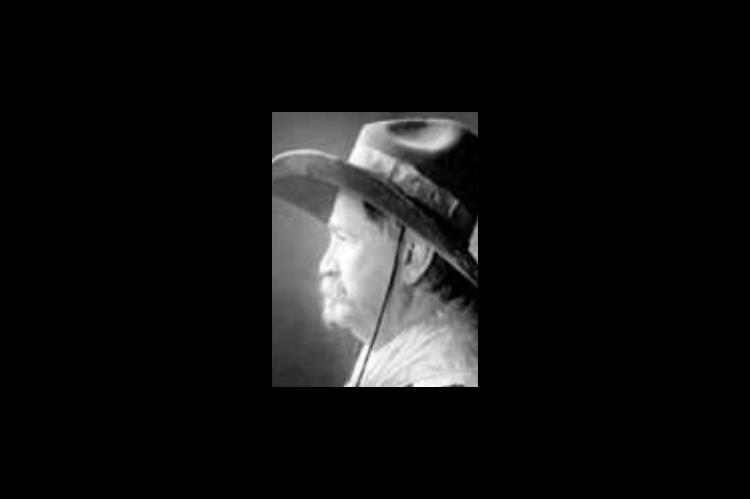
Owen Bassett’s everpresent cheerful nature and genial spirit could win over even the most adamant antagonist. He was an early resident in the novel Kansas Territory experiment known as popular sovereignty.
Born July 16, 1834, to Samuel and Jane (Bradford) Bassett at Troy, N. Y., Owen with his family moved to Iowa in 1837. As his first teacher his mother instilled in his young mind a passion to learn. In 1845, his mother transferred his education to the Denmark Academy at Denmark, Iowa. The academy, established “to instruct the youth of both sexes in science and literature,” perfectly fit Bassett’s desire to learn.
At age 16, he taught public school at Fort Madison, Iowa, while continuing his own studies to become a civil engineer. From engineering he advanced to a study of the law.
By 1855 he was working in the United States Land Office at Fort Des Moines, Iowa.
With Kansas Territory in his sights, Bassett joined Stillman H. Blood and George C. Bracket to establish a real estate and legal firm. He arrived at Leavenworth by steamboat on April 5, 1856. To his dismay, Bassett found himself surrounded at midnight by a mob “intent on learning who he was, whence he came, and what was his purpose.”
From the steps of the Leavenworth Hotel, Bassett surprised his tormentors by thanking them in his usual delightful way. The mob was completely disarmed and Bassett retired quietly to his room.
At Lecompton, Bassett again found himself sur rounded by a mob. Gen. Joseph C. Anderson came to his rescue. The two men had previously drank together, having thus secured a warm friendship. Upon Anderson’s advice Bassett left Lecompton for Lawrence where he devoted his attention to the free-state cause.
He was present May 21, 1856, when Sheriff Jones led the sack of Lawrence. When Gov. Reeder’s life was threatened Brackett and his partner, George Brackett, safely escorted Reeder out of the territory. Having safely reached Illinois, Brackett and Bassett returned to Kansas by the “overland route” through Iowa and Nebraska. Bassett arrived in Topeka July 4, 1856, in time to witness Col. Edwin Sumner disperse the free-state legislature with bayoneted federal troops from Fort Leavenworth.
At Lawrence, Bassett joined the First Rifle Guards in defense of his adopted home. The Guards preferred to call themselves “The Stumps” because the majority of the men were of short stature.
His first night with “The Stubbs” a sixpound field cannon known as “Old Sacramento” was proudly captured from pro-slavery forces at Franklin, Kan. Victory was sweet, for “Old Sacramento” had been used against Lawrence just days before. From that time forward Bassett served as an engineer and quartermaster.
In 1857 Bassett was elected to the Kansas Territorial Legislature. As the youngest member of that body he introduced a bill to repeal every general law introduced by the earlier bogus pro-slavery legislature. At the close of the session the pro-slavery laws were publicly burned on Massachusetts Avenue in Lawrence, “and Kansas was proclaimed a free Territory for all mankind.”
He was admitted to the bar of Douglas County in 1858 and entered upon the practice of his chosen profession until war broke out in 1861. His first experience in the field involved carrying a dispatch from Fort Scott to Gen. Lyon at Springfield, Mo. Lyon’s death at Wilson’s Creek forced Bassett to overtake retreating Union forces at Rolla, Mo., where he was able to deliver his dispatch to Maj. Sturgis.
In November he actively worked to raise the 9th Kansas Cavalry and was commissioned lieutenant colonel. By the spring of 1862, the 9th was incorporated into the 2nd Kansas Cavalry. Not content to command from a field tent, Bassett rode at the head of his regiment. Kansas Gov. Charles Robinson had appointed him colonel in command of the 2nd. However, the charm that served him so well apparently failed with Brigadier Gen. James Blunt. Blunt blocked the promotion and did all that he could to keep Bassett from advancing.
At Fort Wayne, Indian Territory, under Bassett’s command the 2nd Cavalry routed Confederate troops in a bold charge that drove panicked rebels across the Arkansas River. An entire battery of cannon, a supply train, and 50 rebel soldiers were captured.
Bassett endured a spurious court martial June 10, 1863, under charges preferred by Capt. Samuel Crawford, who would rise to Kansas governor a few years later. He assumed command of the 2nd while Basset was held under arrest. Ultimately insufficient evidence to sustain the charges tipped in Bassett’s favor and he returned to his command.
Bassett rose above his detractors to serve as Chief of Staff of the Frontier Division from May of 1864 until he mustered out of service at the end of his term in January 1865.
Always the student, Bassett considered every detail of army service in all its branches, becoming an authority on all matters in his division. That passion to learn had served him well. As he returned to civilian life the maxim “never leave the subject half learned” would be his companion, but that is another story to be told on The Way West.
“The Cowboy,” Jim Gray can be reached at 220 21st Road, Geneseo, KS. Phone: (785) 531-2058 or kansascowboy@kans.com.