
The place where crying began
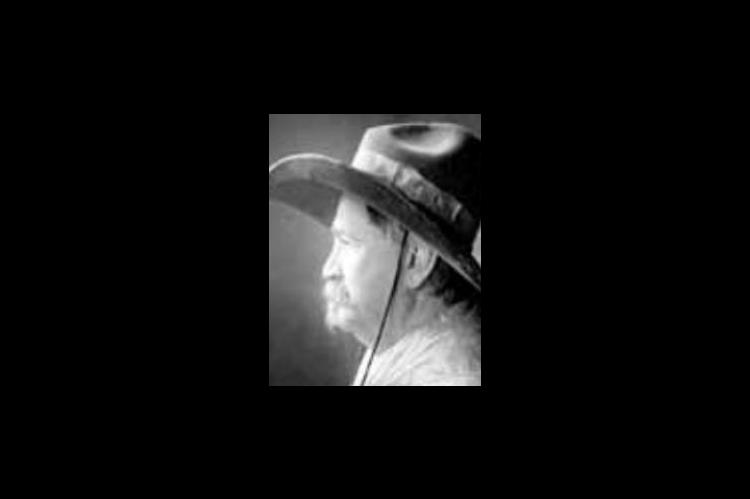
Back in May of this year, I wrote a story of Robert Poisal’s “lost summer.”
Poisal was half Arapaho, from the sister of Chief Left Hand and a Kentucky-bred trader by the name of John Poisal. Robert was wagonmaster for a train that had lost its mules to a Cheyenne raiding party.
Since the Arapahos had close ties to the Cheyennes he knew their ways and spoke the language. He spent the summer looking for the mules and finally found that the army was holding them at Fort Sedgwick (near Julesburg, Colo.).
Poisal was obliged to travel to the fort to identify them before taking them to the owner of the freighting company at Fort Union, N.M.
Anything do with the Arapaho people pulls me in right away. I cannot prove my notion that Arapaho people may have been living in the shadow of the Rockies long before any of the other tribes of that region. I like to call them the original people, which I am sure carries a good bit of personal prejudice in favor of the Arapahos.
I have held an admiration for Chief Left Hand since first learning about him and his dedication to peaceful relations with the Americans even though they were invading his homeland. Left Hand’s knowledge of the English language allowed him to make great strides toward peace.
That proficiency came from Robert Poisal’s father.
John Poisal encountered the Arapahos in the 1830s when Left Hand was a young boy. Poisal met and married Left Hand’s older sister, Ma-Hom or “Snake Woman,” at their winter camp along Boulder Creek. Today the city of Boulder, Colo., covers the traditional Arapaho winter camp.
John Poisal’s presence in Left Hand’s family afforded the young man the opportunity to learn the English language. He and his brother, Neva, became Poisal’s students, not only in language, but in the ways of American culture.
That understanding was later enhanced when in 1849 Indian agent Thomas Fitzpatrick married John and Ma-Hom’s daughter, Margaret. Fitzpatrick learned much of Arapaho ways from his marriage. For his part as agent, Fitzpatrick did all that he could to explain Indian country to the government.
By the mid 1850s Left Hand became chief. His first recorded test came when gold was discovered in Colorado. On their way to the mountains a party of gold seekers stopped to winter over on Boulder Creek.
Several cabins were already built when Left Hand’s people arrived to prepare for winter. Alarmed, the young men of the tribe threatened to drive the invaders out. With support of the elders Left Hand held the young men at bay and met with the prospectors. Assured that they would move into the mountains when winter turned to spring Left Hand guaranteed their safety.
During one of the conferences a man known as Bear Head prophetically related a dream of a great flood of water that overflowed the banks of Boulder Creek washing all “the people” away. When the waters subsided, only the white men remained. It was already dismally evident that nothing could be done to stop the tide that was washing over them.
In the coming years, Left Hand would thread the needle between peace and war, time and time again, which brings me to the strange part of this story.
Over the past several days (late November 2020) a rewind of a dream has come and gone like the unbearable “ear-worm” that plagues my thoughts of being awakened from a peaceful, sound sleep to shouts of “Soldiers! Soldiers!” From within my lodge of tanned buffalo hide I rush outside as bullets seem to shred the air. Panic and pandemonium arrests the peace of the valley. All is chaos and confusion. Soldiers are in the camp!
Perhaps the dream is the result of pandemic apprehension. Maybe all these stories just bouncing around in my head trying to get out, or maybe I am being heralded to tell this story. I wake up, but the dream returns. Not just in my sleep, but haunting and relentless in my waking hours as well.
Ma-Hom returned to live with Left Hand’s people after she was widowed in 1861. She and her daughter were part of a handful of Arapahos that survived the infamous Sand Creek Massacre. Left Hand fled with the survivors, but died of his wounds somewhere on the prairie.
Sand Creek was not just another fight, it was the place where crying began, the place from which nothing would ever be the same on The Way West.
“The Cowboy,” Jim Gray is author of the book Desperate Seed: Ellsworth Kansas on the Violent Frontier, Ellsworth, KS. Contact Kansas Cowboy, 220 21st Road, Geneseo, Kan. Phone: (785) 531-2058 or kansascowboy@kans.com.