
A railroad is better
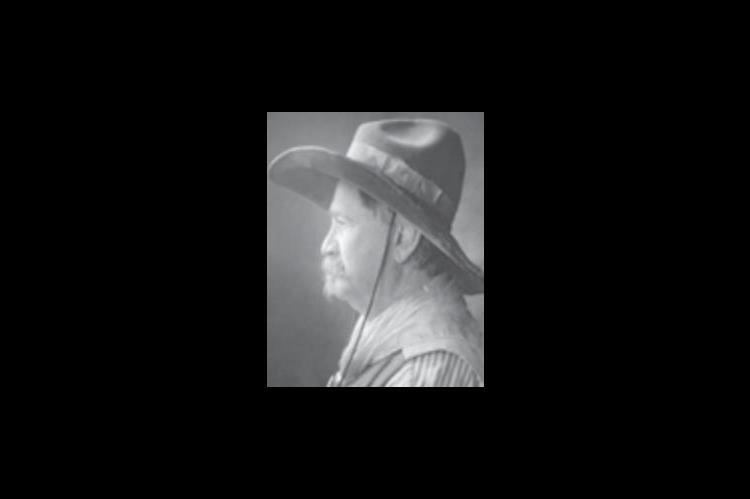
“Eleven years ago, this morning (Feb. 22, 1868) the writer stood on the high land ... and looked for the first time upon the beautiful valley of the Cottonwood, thinking then as now that a lovelier scene never filled the eye of a lover of nature.” Thus Jacob Stotler, editor of the Emporia News, began the review of his recent trip to the southwest.
“Not a sign of man or his handiwork met the eye in any direction,” when Stotler first gazed upon the valley of the Cottonwood River.
Eleven years later Emporia was a flourishing village “growing noisy with the hum of trade.” Productive farms sporting comfortable homes dotted the landscape “as far as the eye can reach.”
Mr. Stotler continued, “On this lovely morning, the exact counterpart of the one 11 years ago, I left Emporia for a trip to the southwest.” Behind a “spanking span of bobtailed bays,” he set out with his “Jovial friend” Col. Jesse Leavenworth, the Kiowa and Comanche agent. At Cottonwood Falls Stotler noted the town’s abundant water power. G.A. Britton was building a water powered flour mill “and cannot use one fourth of the power at his disposal.”
Following the South Fork of the Cottonwood River (present-day Hwy. 177) they passed through Bazaar, Kan., where they found a steam saw mill, turning fine timber found along Rock Creek into good lumber for the surrounding neighborhood.
Four miles further along the South Cottonwood they turned into the farm of James S. Mitchell for the night. There they found a productive, efficient farm of 90 acres. The fenced property featured wheat, cattle, horses, plenty of hay and grain, a rewarding orchard, and best of all shelter from a stiff south wind that had materialized that afternoon. Stotler noted that Mr. Mitchell, “of course, takes The [Emporia] News.”
A terrible wind sweeping down the valley carrying dense clouds of dust and cinders left behind by a recent prairie fire delayed their departure until the wind diminished around noon.
Mercer’s Spring was the last landmark overlooking the South Cottonwood valley. Rising from the head of the Mercer Creek and over the divide they passed into the valley of Walnut River. Sycamore Springs marked the beginning of that stream. Their route lay on the east side of the presentday Kansas Turnpike. The town of Chelsea, under the waters of today’s El Dorado Lake, had once been the Butler County seat. The Hon. G. T. Donaldson was away at the Kansas Legislature, but they were well cared for by Mrs. Donaldson, who informed them that a new steam saw mill would soon be in operation near their farm.
The following morning the sightseers traveled to El Dorado, the successor of Chelsea for the county seat. Again, Stotler noted that a good saw mill was supplying indispensable lumber for building up the community. At El Dorado they left the Walnut River, turning overland to the west.
Ten miles further they “pulled up” at James R. Mead’s trading ranch. Mead was located on Whitewater River near the “old town” of Towanda. The atmosphere was filled with bustle and excitement as Mead was preparing five wagons filled with trade goods bound for the faroff tribes of the plains. Mead offered good conversation and information on the country they were visiting.
“After a ‘square meal,’ and an additional supply of ‘antidote,’” Stotler and Leavenworth drove over “a fine level country” for 18 miles to Chisholm Creek. Despite the early season Stotler “found the spring grass quite large enough to tempt the stock away from their winter food.”
At the former ranch of Jesse Chisholm, the travelers “took up our abode” with Indian traders, Anthony G. Davis and Doctor Lewellen. Lewellen was not a physician, Doctor was his given name although he was more familiarly known as “Doc.”
Their hosts were loading wagons for the Indian trade. The next morning, they watched the wagons attempt to cross the Arkansas River taking Chisholm’s Trail into Indian Territory. The sand in the bed of the river constantly shifted and this day they found the river uncooperative and were unable to complete the crossing.
Present-day Wichita sprawls across the land between the Arkansas and the Little Arkansas Rivers, but in 1869 grape vines and plum bushes covered sand hills and ridges. The Wichita, Kechi, Waco, Caddo, and other bands of “loyal Indians” lived here in “very comfortable houses of poles thatched with the long grass of the prairies.” Texas drovers crossed at the river on their way to Abilene and the valley was expected to soon have railroad connections to the world. For now, traders with their wagons provided all that was needed.
“After carefully examining the country for miles in almost every direction, with a view to its settlement, and the construction of railroads, we started on our return ... well pleased with our trip, and satisfied that a good team is a good thing, but a railroad is better.” ... On The Way West.
“The Cowboy,” Jim Gray is author of the book Desperate Seed: Ellsworth Kansas on the Violent Frontier, Ellsworth, KS. Contact Kansas Cowboy, 220 21st Road, Geneseo, Kan. Phone: (785) 531-2058 or kansascowboy@kans.com.