
The Saga of Buckskin Bill
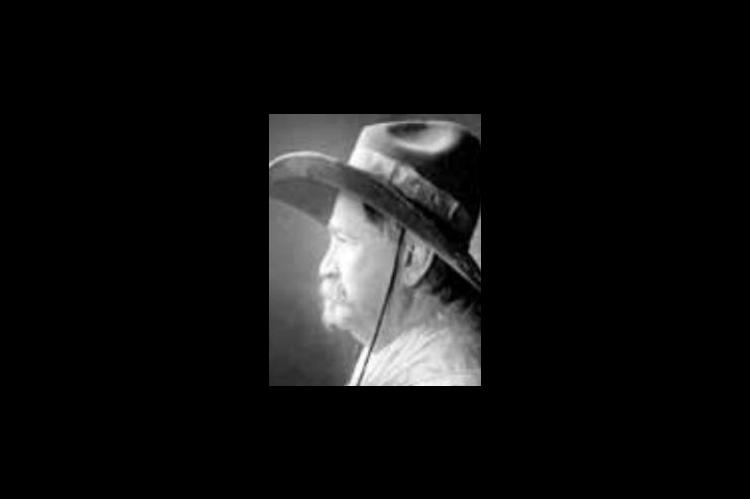
A few months ago the story was told of a gun and knife fight between “Brag” Masterson and Gasper F. Fish.
In “Those Were the Days,” Masterson walked away after firing a fatal shot into the knifewielding Mr. Fish. I was hoping to find more about Masterson, but he eluded every search I could come up with. For now, I have had to accept that Brag Masterson has regrettably faded from the pages of history.
However, my search for Masterson led to another border character, or shall I say characters. In many instances more than one character carried the same epithet. There were many Wild Bills other than the most famous James Butler Hickok. Buckskin Bill was just such a name.
Maj. Broaddus killed a man in Omaha in early October, 1868. The Omaha Herald said that Broaddus was “well known in the Western country under the cognomen of “Buckskin Bill,” and is generally denominated as a sporting man and gambler. — He has been on the plains for several years, and, it is said, was the first man to ride a pony, in connection with the famous “Pony Express” across the continent.”
Johnny Fry is generally recognized as the first rider out of St. Joe the morning the Pony Express began operations. A search for more on the Buckskin Bill of sporting and gambling reputation failed to turn up anything. It would appear that Mr. Broaddus tended to represent his encounters in larger-than-life versions.
A second Buckskin Bill actually did write himself into an historic encounter at Abilene, Kan. The first mention found was in the July 26, 1870, Concordia Empire.
Two men arrived in Concordia on Tuesday July 25, hunting a horse thief they called Buckskin Bill. They learned that their man had passed through the country five miles from Concordia driving 10 horses the previous Thursday.
An account attributed to the Abilene Chronicle reported that one mule was stolen in addition to the 10 horses.
The piece continued, “From the talk we hear among the owners of the horses hereabouts, we wouldn’t give much for the chance of any horse thief who may be caught in these parts.”
The marshal at Abilene was the first lawman to tame the town after it was overrun by Texas drovers bringing their wild longhorn cattle to Joseph McCoy’s Great Western Stockyards along the Kansas Pacific Railway. Marshal Tom Smith was the Bear River Tom mentioned by J. H. Beadle about the border characters of the west. Smith had a reputation of great nerve and an exceptional prowess with his fists. Many men tamed western towns with their guns, but Smith downed some of the toughest men with powerful blows that gained the kind of respect it took to disarm men who thought of their pistols as their best friends.
When Buckskin Bill stole those Abilene horses, Marshal Smith who also had a commission as a deputy U. S. marshal, set out with an unnamed deputy to bring in his man. Evidently Smith was one of the two men inquiring of Buckskin Bill in Concordia.
Smith tracked Bill to Brownville, Neb., with the help of lawmen from St. Marys and Atchison, Kan., and St. Joseph, Mo.
“Bill was safely lodged in jail at Brownsville.” A partner with Buckskin Bill, identified only as “Foster,” had shot a man in Nebraska City and was held in that town’s jail for the shooting. Marshal Smith then traveled to Pawnee City, Neb.,
Marshal Smith then traveled to Pawnee City, Neb., where Bill had sold some of the stolen horses. When Smith attempted to repossess the horses the Pawnee City men resisted. Smith was threatened that he had better get out of town before he had nothing to get out on. Smith did not elaborate as to how he overcame them, but overcome them he did bringing the horses away from Pawnee City to return them to Abilene. As he passed through Concordia on his return trip, the paper reported that Smith did not speak of Pawnee City in very favorable terms, saying that a man, “having anything loose about him had better give the town a wide berth.”
By Oct. 14, Buckskin Bill had been transferred to the jail at Manhattan, Kan. “ ‘Buckskin Bill’ is now in irons, he has been in our jail for some time ... And for fear he should escape the sheriff is ordered to keep him in irons all the time.”
Buckskin Bill was finally brought to trial in April of 1871. The April 13, 1871, Abilene Weekly Chronicle reported that Charles R. Phillips, alias Buckskin Bill, charged with horse-stealing, was discharged for want of witnesses ...” His principal witness was Marshal Smith, who was killed while issuing a warrant for the arrest of a settler in Dickinson County.
Buckskin Bill was as surprised as anyone saying that he had expected to be sentenced for a term of five years. His father was present in court and took his son back to his home in Peru, Neb. As far as is known the career of Mr. Phillips’ “Buckskin Bill” was ended in Kansas with his brush with the law on The Way West.
“The Cowboy,” Jim Gray is author of the book Desperate Seed: Ellsworth Kansas on the Violent Frontier, Ellsworth, KS. Contact Kansas Cowboy, 220 21st Road, Geneseo, Kan. Phone: (785) 531-2058 or kansascowboy@kans.com.