
Saving Kansas
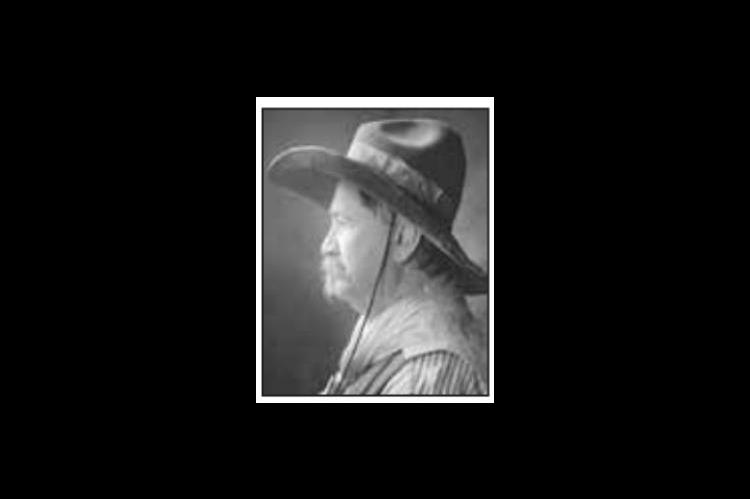
The Emporia News of March 6, 1868, headlined a story entitled The Candle-Box Under the Woodpile — How it was Discovered.
The story of the candle box is one that is relatively unknown but one that all Kansans should know, as that box figured prominently in the course that our state would take in accepting or denying slavery.
In September of 1857 the slave owning territorial legislature met in Lecompton to produce a state constitution. Territorial governor, Robert J. Walker, a proponent of slavery, had nonetheless declared his intention to fairly place the Lecompton Constitution before the people of Kansas for ratification or rejection.
The president of the Lecompton Constitutional Convention, John C. Calhoun, readily recognized that he and his pro-slavery constituents were in the minority. The alarm was sounded. It was “the South against Walker.” The January 1858 election was rife with fraud. The “free use of the Cincinnati Directory,” presented the names of Cincinnati residents as legal Kansas voters. Gov. Walker recognized the fraud and refused to accept the returns.
The proponents of the Lecompton Constitution tried to sidetrack credibility by declaring Calhoun, the soul authority in the issuance of certificates of election. The Lecompton Constitution enjoyed the support of U. S. President James Buchanan and might well have been accepted had it not been for an outcry for justice from some of the President’s closest confidants. Even so, many of the men who joined forces to defeat the pro-slavery constitution incurred the ill-will of influential leaders.
George Crawford penned the “Candle-box” article in the Emporia News. Crawford, the founder of the city of Fort Scott, wrote that while living in Lecompton he was threatened with “a polite note of invitation to leave the State, and something added about being a ‘dead man by 12 o’clock’.”
George lodged with William and Emily Brindle along with several men from Pennsylvania. Brindle, a veteran of the Mexican War, “was intense in zeal ... He never went on the streets without his brace of revolvers.”
Mrs. Brindle was known as “Joan of Arc” to the little group of conspirators who had pledged to derail Calhoun and his proslavery associates.
The fight over the Lecompton Constitution was taken to the “Halls of Congress” in Washington where, as Crawford put it, Sen. Stephan A. Douglas “made himself immortal in the championship of Kansas.”
The charge of fraud was declared and denied.
“Nothing but the exposure of these frauds, shocking the moral sense of the nation ... could give victory to the people. The exposure “would save Kansas to freedom.”
In Kansas, the Territorial Legislature instituted an investigation. Calhoun fled to Missouri.
At a dance in the Eldridge House in Lawrence, L.A. McLean, the chief clerk of the constitutional convention was questioned about the whereabouts of the election returns. McLean calmly announced that Calhoun had taken them to Missouri. The music played on, and McLean enjoyed his evening as though he had not a care in the world.
But all was not as it seemed. Charley Torry, an elderly dutchman tended to menial tasks for Calhoun.
“Dutch Charley” appeared to be a simple man. “He seemed to have no higher ambition ... than to draw his pay, poke about the fires, and smoke his pipe.” Little did Calhoun or McLean suspect that Charley was passing information to William Brindle.
Dutch Charley knew what had really happened to the returns. He and Brindle drew up a map and relayed the information to Sheriff Samuel Walker, no relation to Gov. Walker. Having done his work Charley returned to his room in the surveyor’s office. Sheriff Walker arrived the next morning with a posse of several of “the boys.” When the sheriff announced that he had come for the returns, McLean once again stated that the returns were in Missouri. Sheriff Walker told McLean that he knew where they were.
“Where?” asked McLean.
The sheriff responded, “Under the woodpile!”
McLean “suddenly grew pale.”
Seventeen of McLean’s employees seized their guns to make a stand until they discovered that their weapons had been disarmed. Dutch Charley had removed the firing caps from every gun the night before.
With the map in hand Sheriff Walker went to the woodpile. Brindle’s party and the sheriff ’s posse took down the stacked firewood and began digging at the location marked on the map. At a depth of eight inches they struck a wooden box. The box that had once held a shipment of candles was filled with hundreds of forged pro-slavery votes that ultimately doomed the pro-slavery movement and saved Kansas for freedom.
Dutch Charley Torry’s role in saving Kansas remained unknown for ten years until George Crawford revealed his role in the discovery of the candle-box in the woodpile on The Way West.
“The Cowboy,” Jim Gray is author of the book Desperate Seed: Ellsworth Kansas on the Violent Frontier, Ellsworth, KS. Contact Kansas Cowboy, 220 21st Road, Geneseo, Kan. Phone: (785) 531-2058 or kansascowboy@kans.com.