
A short and dangerous life
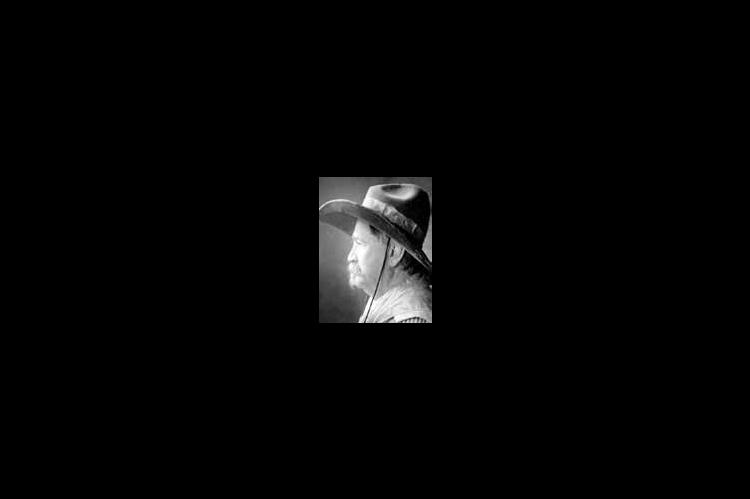
John E. “Curly” Marshall was described as a notorious border character who made his living in “nefarious ways.”
According to the Nov. 28, 1872, Wichita Eagle, “‘Curly,’ was almost the personification of masculine beauty and physical strength, with nothing in his face that would indicate the desperado. His hair was raven black, and fell upon his square shoulders in a mane of shining curls; his eyes small, black and piercing; his tread square and easy; his whole carriage being full of a kind of untutored grace, yet withal, he was destitute of every idea of obligation to mortality or humanity.”
George Freeman wrote in his history of early Caldwell, Kan., that Curly Marshall “was a fine type of physical manhood, standing about six feet in height. Physically, he was perfection as a man animal, weighing perhaps about 250 pounds, muscular, well-built and well-proportioned. In appearance, he bore the type of frontiersman, in dress neat, but pertaining to the western style of rowdyism.”
Freeman continued, “His physical courage, indomitable will and unerring marksmanship with the revolver led him to believe that he could over-awe public sentiment.”
Marshall arrived in Wichita in 1869, having come down from the end-of-track towns of Hays City and Ellsworth. Ellsworth was said to have a man for breakfast every morning. Marshall contributed to at least one breakfast while in Ellsworth.
Marshall surrounded himself with recognized desperate characters. They spent their time reveling in drink and a self-indulgent lifestyle that often included finding another’s horse at the end of their lasso.
Marshall quickly extended his influence beyond Wichita to the southern border of Kansas, where he built a double log cabin and dubbed it the First Chance-Last Chance Saloon. With alcohol outlawed in Indian Territory, Marshall had full command of the whiskey business on the border. His place offered the first chance to buy a drink when coming out of the territory and the last chance if you were leaving Kansas on the way south. The Last Chance, as it came to be known, was a notorious hangout for desperadoes and popular with Texas drovers on their way north to Abilene.
Marshall divided his time between the border and Wichita, hiring a manager to run the Last Chance. Marshall may have lived the wild life of a desperado, but Margaret Montanye, formerly of Topeka, hoped to tame her man. They took a claim in Minneha township east of Wichita; that apparently didn’t work out. The claim was abandoned by 1870 and the couple took up housekeeping at approximately 156 N. Water St. in Wichita.
In spite of his desperate reputation, Marshall was appointed constable, in some accounts, city marshal, of Wichita in 1870. When a party of noisy men entered the Harris House, a visitor from New York was told they were Curly Marshall’s boys.
“Who is Curly Marshall,” the visitor asked.
A bystander explained, “Curly is one of our celebrities. He is to Wichita very much what Buffalo Bill is to Abilene.”
An obvious mistake by the writer, as no one on the frontier would have confused Buffalo Bill with Wild Bill Hickok.
By that time, Marshall was operating a profitable dance hall. The venture inspired him to add a dance hall to the Last Chance. A frame building was built next to the saloon, and Marshall went back to recruit a bevy of adventurous Wichita women to entertain “the boys.” But trouble brought all his plans to ruin. According to Freeman, the women had yet to put in an appearance when on April 1, 1871, Mike McCarty killed Dan Fielding at a nearby claim. Vigilantes believed the bad man had stopped at the Last Chance. When the proprietor barred entry, the new dance hall was set on fire. Marshall sold the surviving Last Chance saloon to Dave Terrill and left for Wichita.
Marshall was already working on a new venture. In a move that suggests he may have been on a grading crew when the railroad was built through Ellsworth and Hays City, he subcontracted to supervise a grading crew building a Santa Fe Railroad extension from Topeka to Atchison. The contract was announced the same day McCarty killed Fielding.
Marshall was still subcontracting the following spring when, on May 27, 1872, a friend discovered Mrs. Marshall lying on a lounge and frothing at the mouth. She died of arsenic poisoning before the doctor could arrive. Her service was held the next day at the Presbyterian Church. She was 26 years old.
Six months later, the papers carried the news that Curly Marshall had passed away Nov. 25, 1872. His death was the result of “disease brought on by his intemperate habits and life of debauchery,” and thus, the explanation for Margaret Marshall’s suicide. It was said that she had told her husband that in sixmonth’s time he would be lying in the grave beside her.
Curly Marshall predicted his own death a few months after Margaret’s suicide. He had apparently passed on a social disease to his wife, prompting her to take arsenic. Almost exactly six months to the day after her death, 28-year-old John E. “Curly” Marshall was carried to Wichita’s Highland Cemetery, ending a short and dangerous life of adventure on The Way West.
“The Cowboy” Jim Gray can be reached at 220 21st Rd., Geneseo, KS 67444, (785) 531-2058 or kansascowboy@kans. com.