
Slaughter and survival
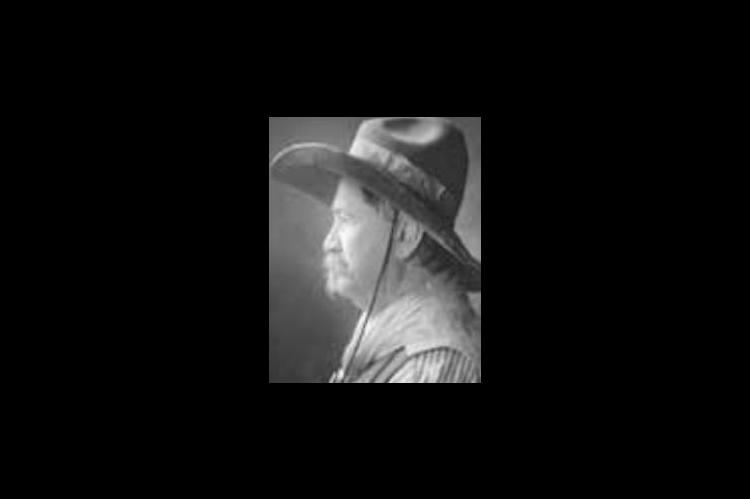
Chester Thomas and Lydia Steevens — her family retained the original double e in the name — were married in 1856. He was 46. She was 23. The couple moved to Kansas in 1858.
By the time Mrs. Thomas received an urgent message from her husband, Capt. Chester Thomas, she had lived through an amazing sequence of events that had guided the couple from Pennsylvania to Kansas Territory.
In Pennsylvania Mr. Thomas had been an ardent supporter of the Democratic Party, counting among his friends David Wilmot and Galusha A. Grow. Both men switched to the newly developing Republican Party when the Democrats tried to force the extension of slavery into the western territories.
Kansas was a hotbed for radical anti-slavery reform and germinating political action. Kansas was “the place” for Chester Thomas where he and Jim Lane were destined to become fast friends, significantly influencing the political process in Kansas. Lane as a United States senator for the state and Thomas, appointed by President Lincoln to United State Mail Agent for Kansas. During the Civil War
During the Civil War Thomas was commissioned to the rank of captain and served as assistant quartermaster at various locations. The urgent message sent from Fort Gibson, Indian Territory to Mrs. Thomas at her home in Topeka revealed that her husband was very ill and that he needed her to come to him “with all possible haste.” A neighbor, Capt.
A neighbor, Capt. Horne, was planning to go to Fort Scott and volunteered to accompany Mrs. Thomas, at least as far as that post, as the driver of her carriage and team of dapple-gray mares. Mrs. Thomas passed her 30th birthday, Oct. 3, 1863, as they prepared to leave.
At Fort Scott, Mrs. Thomas found that Gen. James G. Blunt was preparing to move his headquarters to Fort Smith, Ark. Gen. Blunt agreed to escort her to her destination at Fort Gibson.
Blunt and his entourage left Fort Scott the morning of Oct. 6, 1863. By noon the advance column halted one mile from Fort Blair, a military camp next to Baxter Springs. Kan. The General wanted to organize the rest of the escort before entering the post. Gen. Blunt and Maj.
Gen. Blunt and Maj. Henry Zarah Curtis shared a carriage followed by Mrs. Thomas’ carriage with Charles Davis, a messenger for the 3rd Wisconsin Cavalry, as her driver. Two ambulances, and 10 mounted men rounded out the advance column. When the rest of the command reached the waiting entourage, Blunt ordered the colors raised and with military protocol the band prepared to lead the troops into the post with a show of military pomp and circumstance.
As they were shaping up 300 mounted men, dressed in blue, appeared at the edge of a timber growth to their left. They appeared to be federal troops coming forward to escort Blunt and his staff to the post.
Galloping to Blunt’s carriage, Capt. William Tuff shouted that the men in blue were in fact commanded by Quantrill, the infamous rebel bushwhacker. Within moments Quantrill’s troops opened fire and broke into a charge. Blunt’s men had time to fire one volley before they were overrun. Gen. Blunt and Maj. Curtis abandoned the carriage and quickly mounted horses. Trooper Davis, Mrs. Thomas’ driver, immediately turned the team to the west, urging them into a dead run over the prairie. To shield themselves from the bullets that were splitting the air about them, Lydia fell to the floor to lay under the seat and Davis got down on his knees, remaining as low as possible while holding the reins in his left hand and whipping the horses to full speed with his right hand.
Luckily, the top was up on the carriage keeping Mrs. Thomas and Davis hidden from the bushwhackers as they careened over the prairie. Hot lead ripped through the top, but the pair remained safe. The bushwhackers turned back to the slaughter of the mostly non-combatant staff and band members of Blunt’s column. The team ran at top speed for about three miles before becoming exhausted. Davis directed them to a “sugar-bowl,” a protected hollow below the line of sight across the prairie.
Two horses, whose riders had been unseated or killed, also ran into the sugar-bowl. Davis was able to catch them, leading them to the carriage where Lydia “at once jumped astride of one.” Davis mounted the other and they galloped until they happened upon Gen. Blunt and nine men who had escaped the slaughter.
Blunt ordered one of his men to escort Mrs. Thomas across open prairie to Fort Scott. Davis remained with Blunt’s men. He later recovered the team and carriage, which was sent to Fort Scott, where Mrs. Thomas was bedridden for more than a week before she was able to return to Topeka. Meanwhile, Capt. Thomas, recovered, resigned his position at Fort Gibson, and returned to his ailing wife.
Lydia Thomas never regained her health. She died 14 months later, Dec. 3, 1865, having escaped Quantrill in a thrilling tale of slaughter and survival on The Way West.
“The Cowboy,” Jim Gray is author of the book Desperate Seed: Ellsworth Kansas on the Violent Frontier, Ellsworth, KS. Contact Kansas Cowboy, 220 21st Road, Geneseo, Kan. Phone: (785) 531-2058 or kansascowboy@kans.com.