
A stormy life
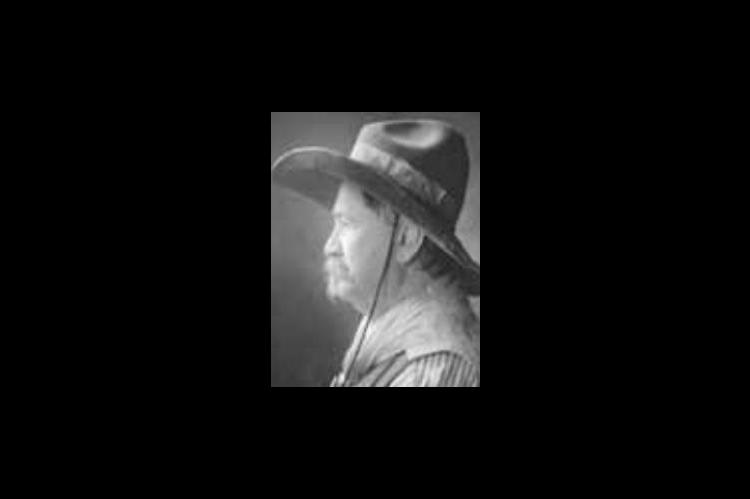
Early Kansas was filled with wild characters that left quite a legacy. Many of them may not have been the kind of person that you would want for a friend or neighbor, but they sure make Kansas history interesting!
Dr. Samuel Ashmore was said to be one of the best physicians in Kansas, but when he was drinking he was an absolute terror.
Samuel Ashmore was born March 10, 1827, at Zanesville, Ohio. After receiving a common school education, he attended the Medical School of the Western Reserve College at Cleveland, Ohio, a school strongly associated with the abolition movement. Frederick Douglass gave the commencement speech for Ashmore’s graduating class in 1854.
Ashmore came to Kansas soon after, settling at Holton. Despite the abolitionist influence at his alma mater, Dr. Ashmore, being a northern Democrat supported the pro-slavery position. In 1860 he moved to Indianola, Kan., a few miles north of the Kansas River from Topeka. At that time Indianola was the leading town with a lively business climate on the military trail between Fort Leavenworth and Fort Riley. Indianola was just the place for an energetic, adventurous man.
The limitations of this column do not allow for all the drunken, gunwielding adventures of the good doctor while living at Indianola. Surprisingly, many of the men he fought with at that time became his companions in later days.
Many of Indianola’s Southern sympathizers turned their allegiance to the Union, as northern Democrats joined the new Republican party when the Civil War broke out. Dr. Ashmore joined the 15th Kansas Cavalry, Company F, eventually serving as assistant surgeon for the regiment. At the close of the war he returned to Kansas with his comrades.
Ashmore moved to North Topeka and by 1868 married Mary McPherson Sheppo, a Pottawatomie woman, previously married to a trader from Canada. Her children used the name Sheppard.
By 1869, Ashmore conceived the idea of producing a tour of Pottawatomie Indians to eastern cities. His own life on the Kansas frontier led him to believe that the folks back east would greatly appreciate a glimpse of life on the Kansas prairie. He and two partners organized a traveling show made up of local Pottawatomie Indians.
By the spring of 1870 the troupe had traveled by train and unloaded just before entering the appointed town. From the “Indian camp” Ashmore went to town to rent horses and promote the show. Once mounted on horses the Indians rode through town in a “Grand Parade:’ The show went well with each performance until they reached Indianapolis, Ind., where Dr. Ashmore went on a drinking spree that ended the show.
His drunken sprees included shooting up the town, and on his return to North Topeka they became more frequent. He was celebrating the recent re-election of President U. S. Grant on Wednesday, Nov. 6, 1872, when he shot and killed his wife at their home. Dr. Ashmore resisted all attempts at arrest until Dr. Milligan walked directly toward him. In a violent scuffle he was disarmed and taken to jail.
While being held for trial he and five other men sawed through the bars and escaped the Shawnee County Jail on Oct. 25, 1873. He was taken into custody in Indian Territory by lawmen from Denison, Texas. A reward of $500 was paid to the officers.
Ashmore was supposedly placed in a more secure jail cell, however, on the evening of March 3, 1874, several prisoners rushed the jailer and Ashmore was once again on the loose. Traveling with E. B. Blair, a counterfeiter, the two finally arrived in Matamoros, Mexico, after a circuitous route through several southern states. The fugitives made the mistake of”falling in” with another fugitive wanted for murder. Ashmore and Blair were exposed and back in jail at Topeka by early July.
Dr. Ashmore was found guilty in December of 1874. After a motion for a new trial was overturned in January, 1875, he was sentenced to the Kansas State Penitentiary. The words then pronounced by the judge left no doubt that at a time appointed by the governor, “You be hung by the neck until you are dead; and may God have mercy upon your soul: .
For the next eight years, Dr. Ashmore languished in prison. In the final days of his administration, Gov. St. John secured a promise from Dr. Ashmore that alcohol would never again pass his lips. Citing a record of good behavior and his apparent reform, Dr. Ashmore received a pardon.
He returned to North Topeka and amazingly resumed his practice. On his death, Jan. 19, 1909, the Topeka State Journal noted that”... his past has been forgotten by all save the oldest citizens:’ His stormy life had the makings of a thrilling novel with the many twists and turns verifying that, “truth is indeed stranger than fiction” on The Way West.
“The Cowboy,” Jim Gray is author of the book Desperate Seed: Ellsworth Kansas on the Violent Frontier, Ellsworth, KS. Contact Kansas Cowboy, 220 21st Road, Geneseo, Kan. Phone: (785) 531-2058 or kansascowboy@kans.com.